Civilization101Blueprint

In the air

Kites and balloons, then gliders, the aeroplane and the jet. Every flying machine is tested unmanned before anyone flies in it.

Transport Levels 2–7 6 steps written
2
Level 2 · Forge · 1 of 6 in this track

Kites: lifting a line, signalling, fishing

3
Level 3 · Mill · 2 of 6 in this track

Balloons

t3-balloons GuideBuildSheet ×5

Balloons

Lift a load with heated air or a light gas, tether it for observation or signals, and know exactly how much it can carry and what makes it burn.

Needs first: Kites: lifting a line, signalling, fishing, Fibre, thread and cloth (Materials), Paper (Knowledge), Acids (Materials)

  • Guide Flight
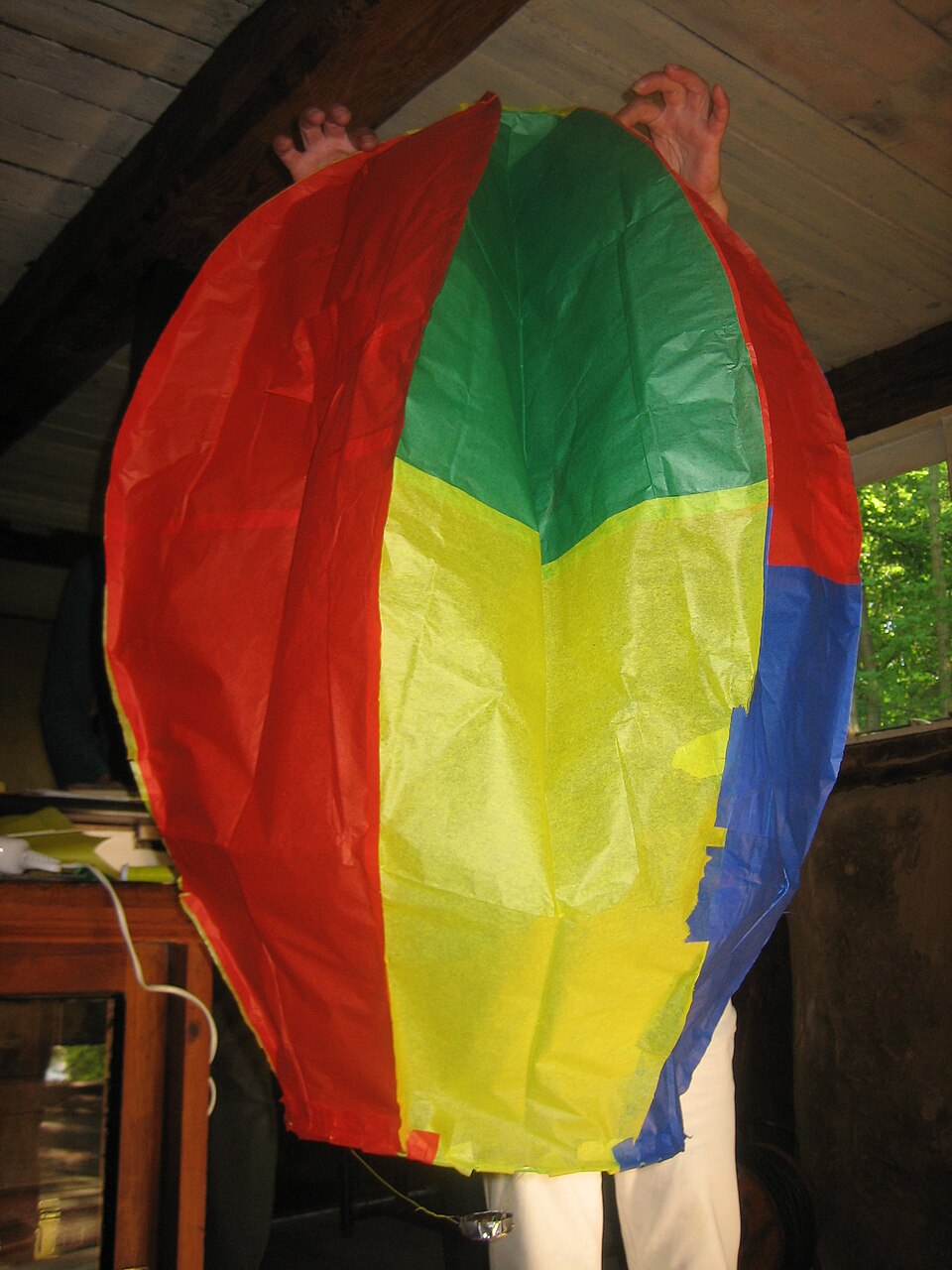
  • Build Tethered model hot-air balloon
  • Sheets 5 reference sheets on the step and its guides
  • Read Balloon observation, and instructions on the subject of work in the basket; Wikipedia, offline (Kiwix ZIM)
4
Level 4 · Engine · 3 of 6 in this track

Gliders and the control problem

t4-gliders GuideBuild ×2Sheet ×6

Gliders and the control problem

Design wings from measured data, make a glider stable and controllable in all three axes, and prove it with models, a wind tunnel and unmanned tests before anyone rides it.

Needs first: Kites: lifting a line, signalling, fishing, One metre, one kilogram, everywhere (Knowledge), Steel and heat treatment (Materials)

  • Guide Flight
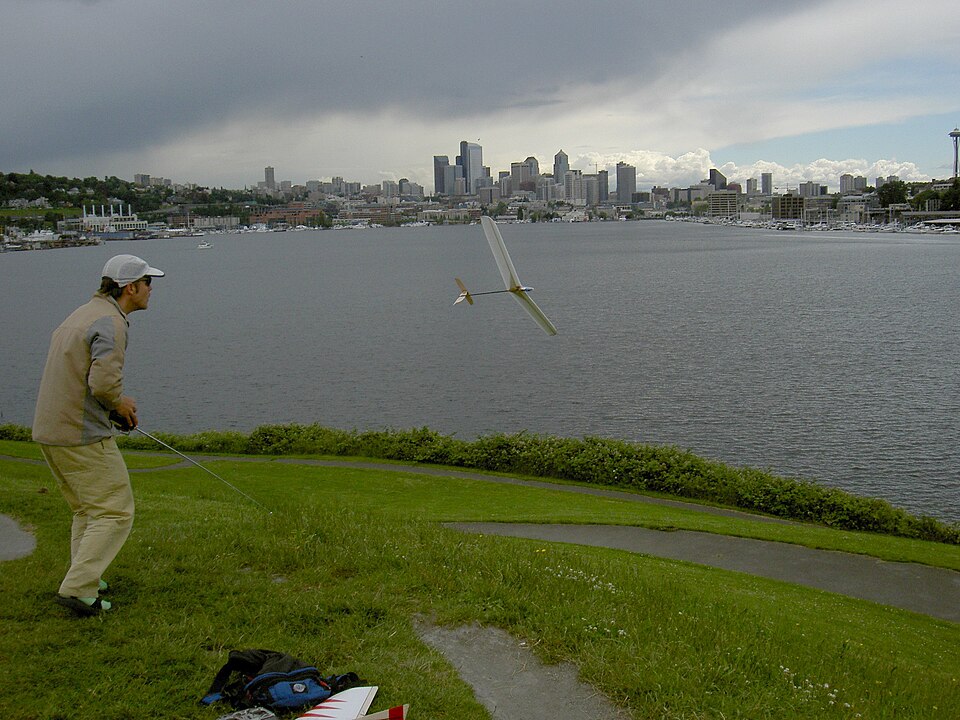
  • Build Model glider, Wind tunnel
  • Sheets 6 reference sheets on the step and its guides
  • Read Wright Brothers National Memorial, North Carolina; Wikipedia, offline (Kiwix ZIM)
5
Level 5 · Current · 4 of 6 in this track

The powered aeroplane

t5-aeroplane GuideSheet ×7

The powered aeroplane

Add an engine and propellers to a controllable airframe, keep weight and balance inside limits, and fly only proven, inspected designs with trained pilots.

Needs first: Gliders and the control problem, Internal combustion and mobility

  • Guide Flight
  • Build none yet
  • Sheets 7 reference sheets on the step and its guides
  • Read Wright Brothers National Memorial, North Carolina; The Wright Brothers' Engines and Their Design; Wikipedia, offline (Kiwix ZIM)
6
Level 6 · Logic · 5 of 6 in this track

Jets, helicopters and air traffic control

7
Level 7 · Frontier · 6 of 6 in this track

Modern aviation and drones

Everything in this track

Every guide, build, reference sheet and book reached from the steps above.

Field guides

Builds

Reference sheets

Drawn overview sheets, each with its corrections printed under it. They orient; they are never the thing you identify from.

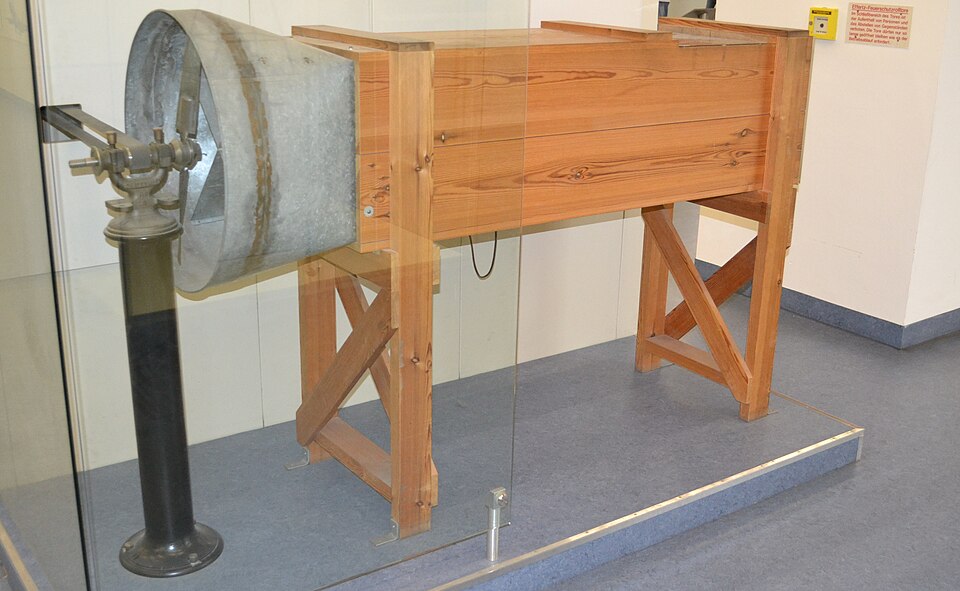
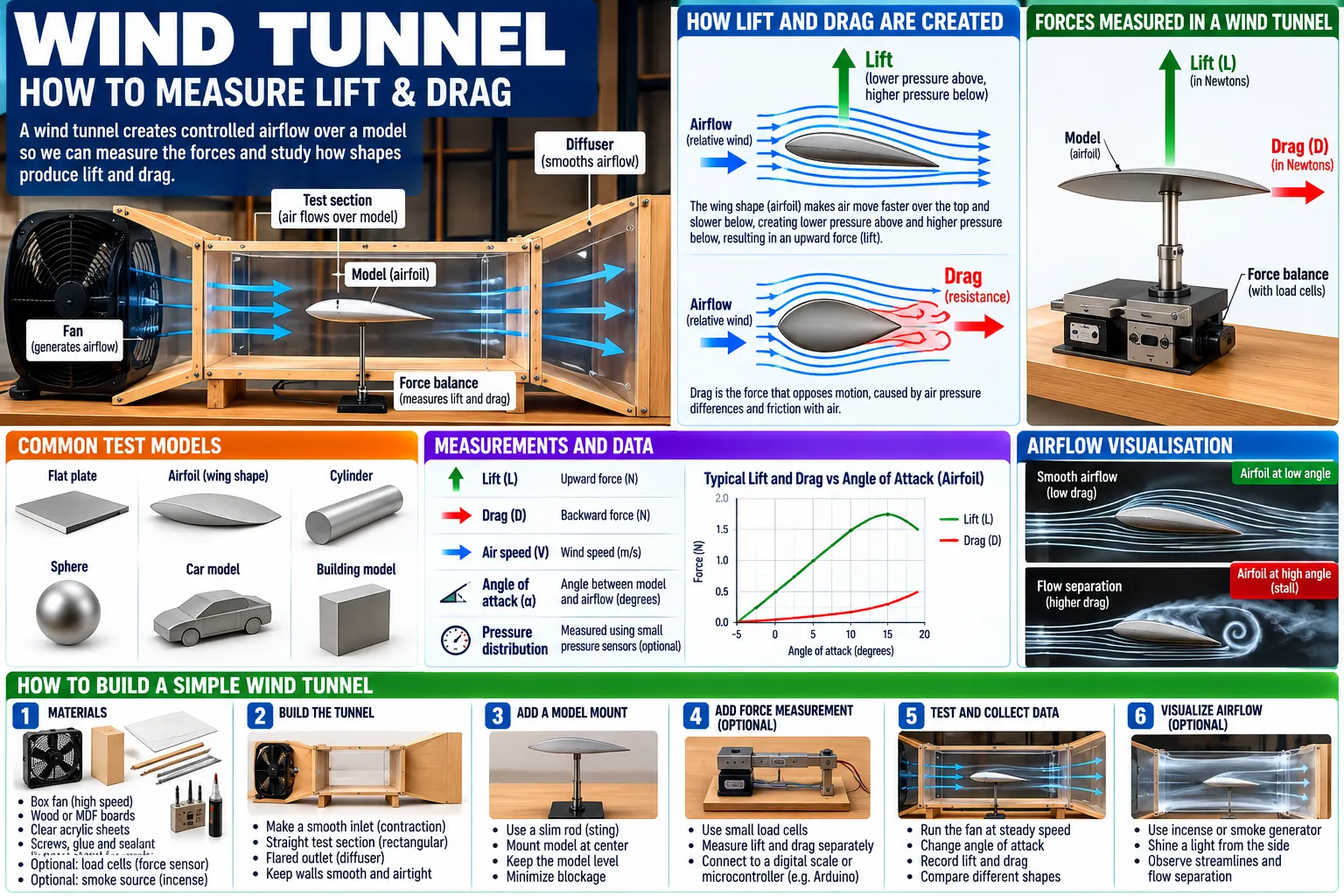
The parts of a small open wind tunnel, how lift and drag arise, a force balance on load cells, common test models, what is measured, lift and drag against angle of attack, smoke to show the flow, and a six-step build.
Wind tunnel: measuring lift and drag On: Gliders and the control problem
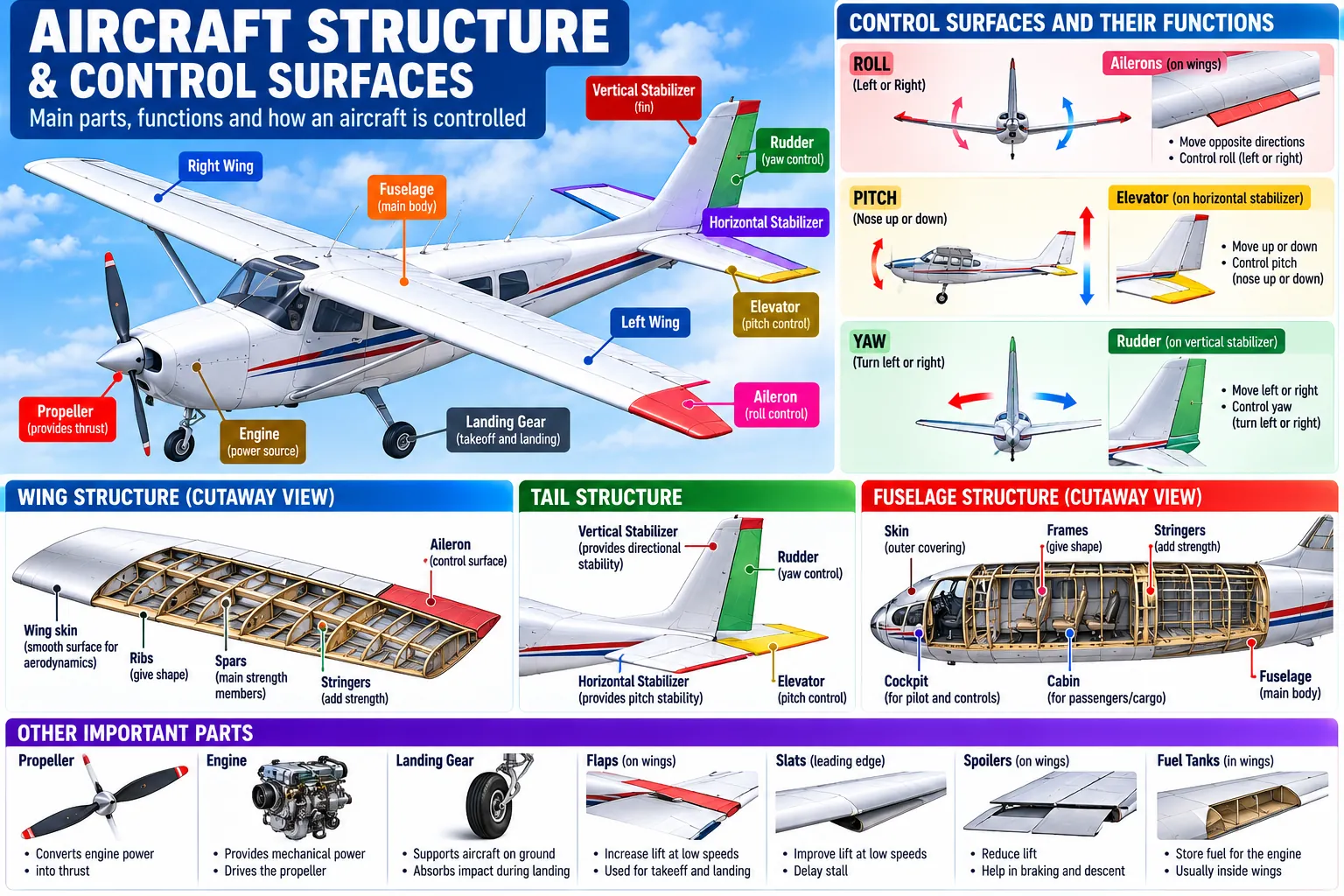
A single-engine light aeroplane with its parts named, the three axes and the surfaces that control them (ailerons, elevator, rudder), the wing's ribs, spars and stringers, the tail, the fuselage frame, and flaps, slats, spoilers and fuel tanks.
Aircraft structure and control surfaces On: The powered aeroplane
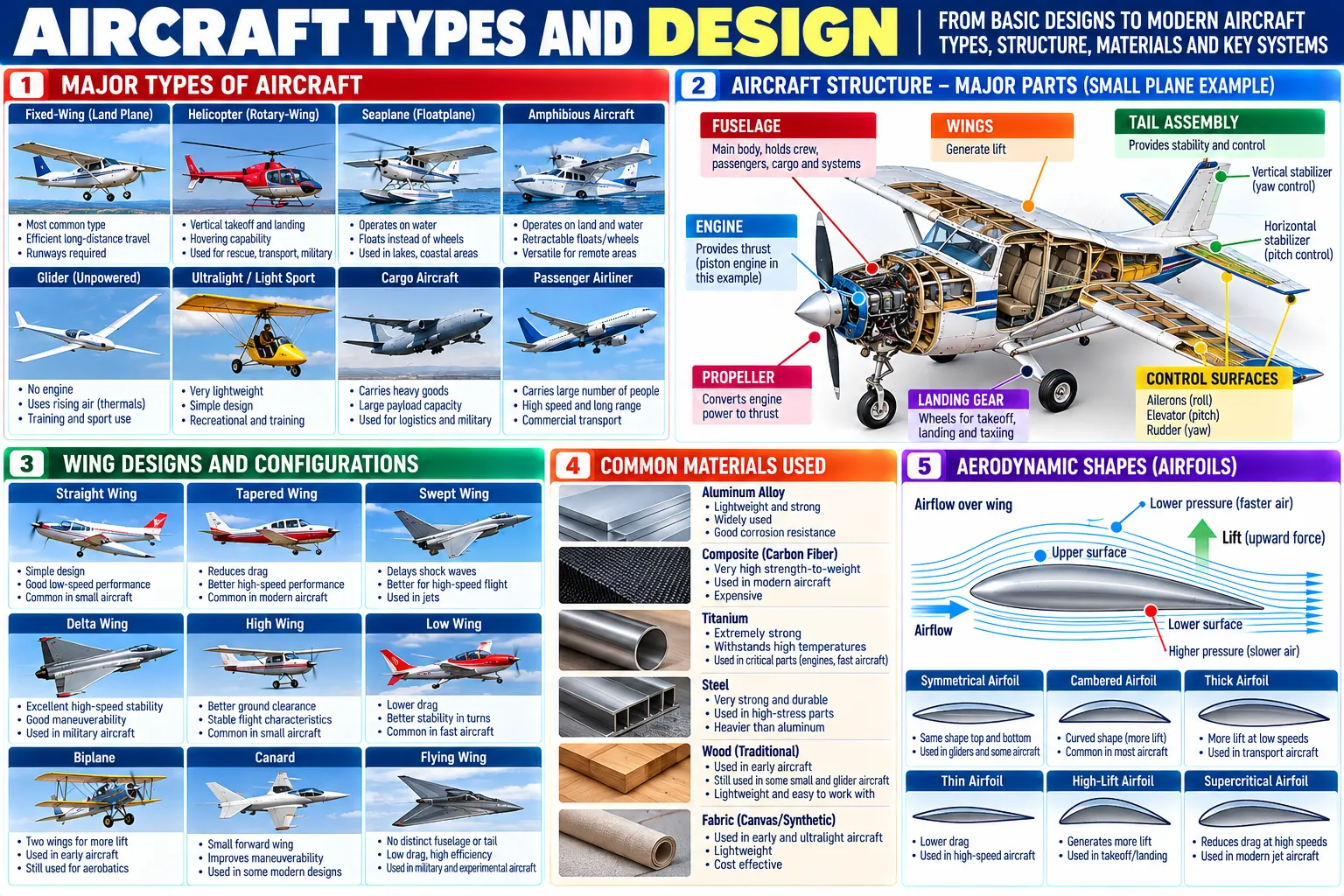
Eight kinds of aircraft (landplane, helicopter, seaplane, amphibian, glider, ultralight, freighter, airliner), the major parts of a light aeroplane, nine wing layouts, the materials aircraft are built from, and six kinds of aerofoil.
Aircraft types and design On: The powered aeroplane
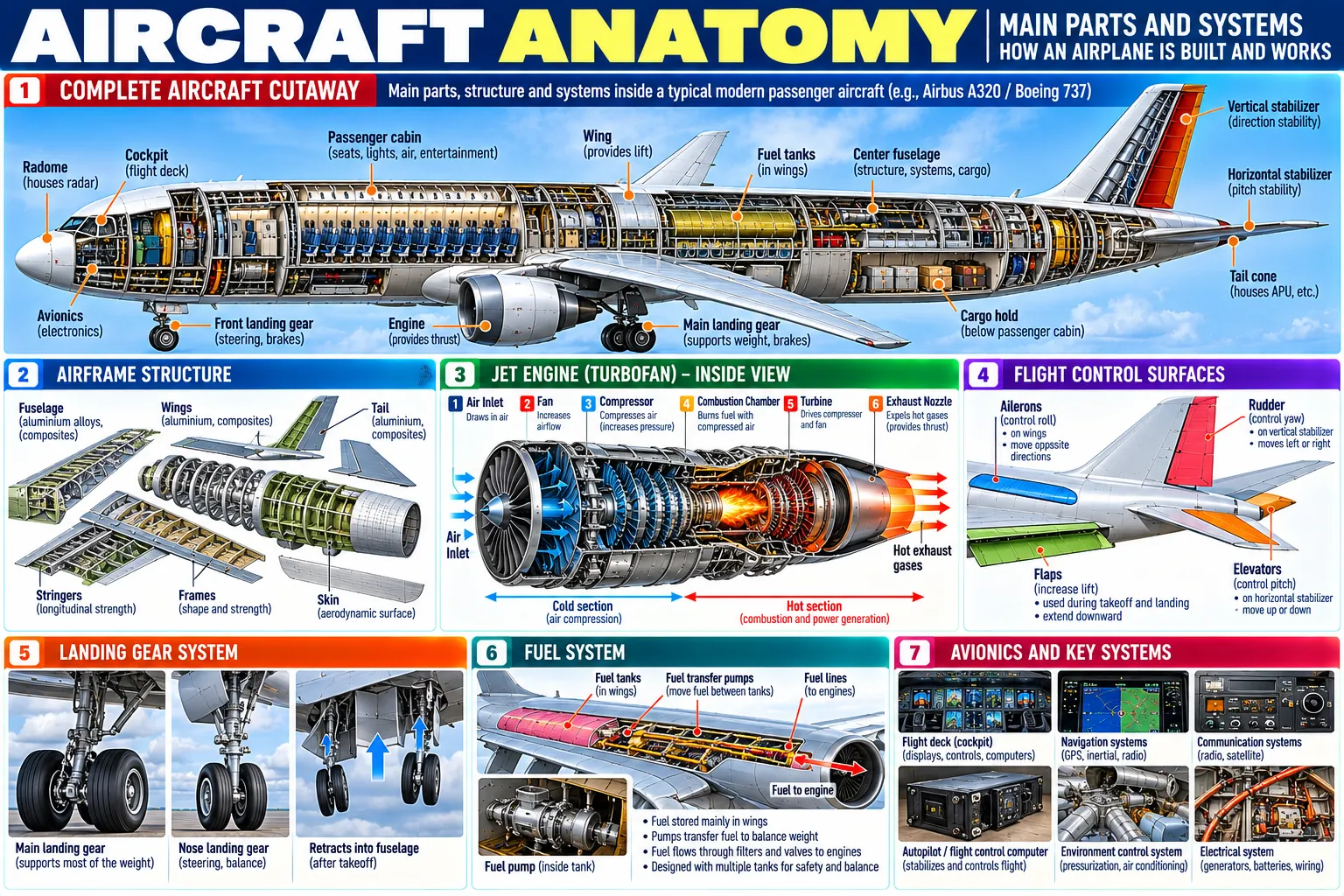
A cutaway airliner of the A320 or 737 class, the airframe's frames, stringers and skin, a turbofan in section, the flight control surfaces, the landing gear, the fuel system, and the avionics and other key systems.
Aircraft anatomy: an airliner's parts and systems On: Jets, helicopters and air traffic control
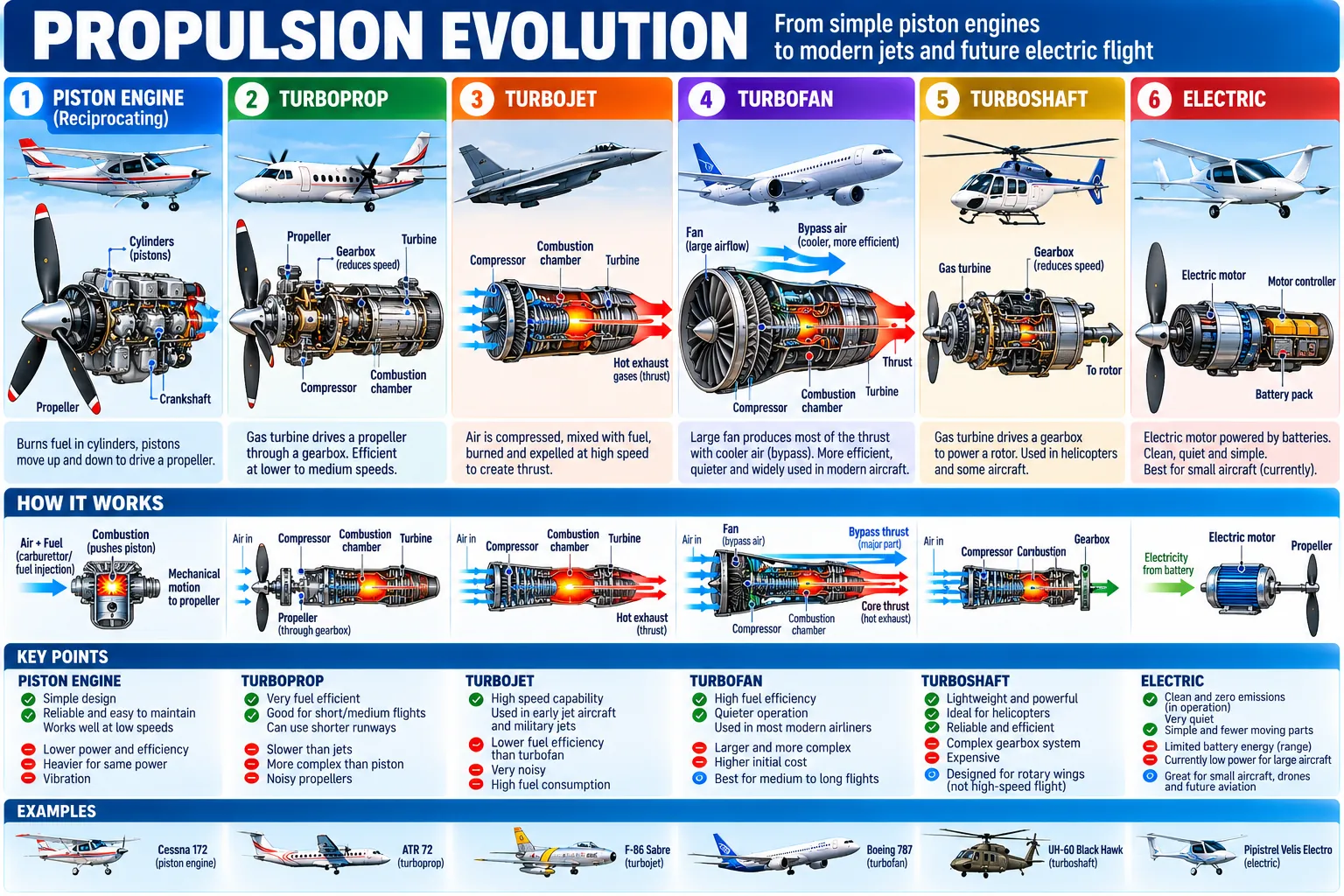
Six ways to drive an aircraft — piston engine, turboprop, turbojet, turbofan, turboshaft and electric motor — each in section, how each works, its strengths and limits, and an example aircraft for each.
Aircraft propulsion: piston to turbofan and electric On: Jets, helicopters and air traffic control
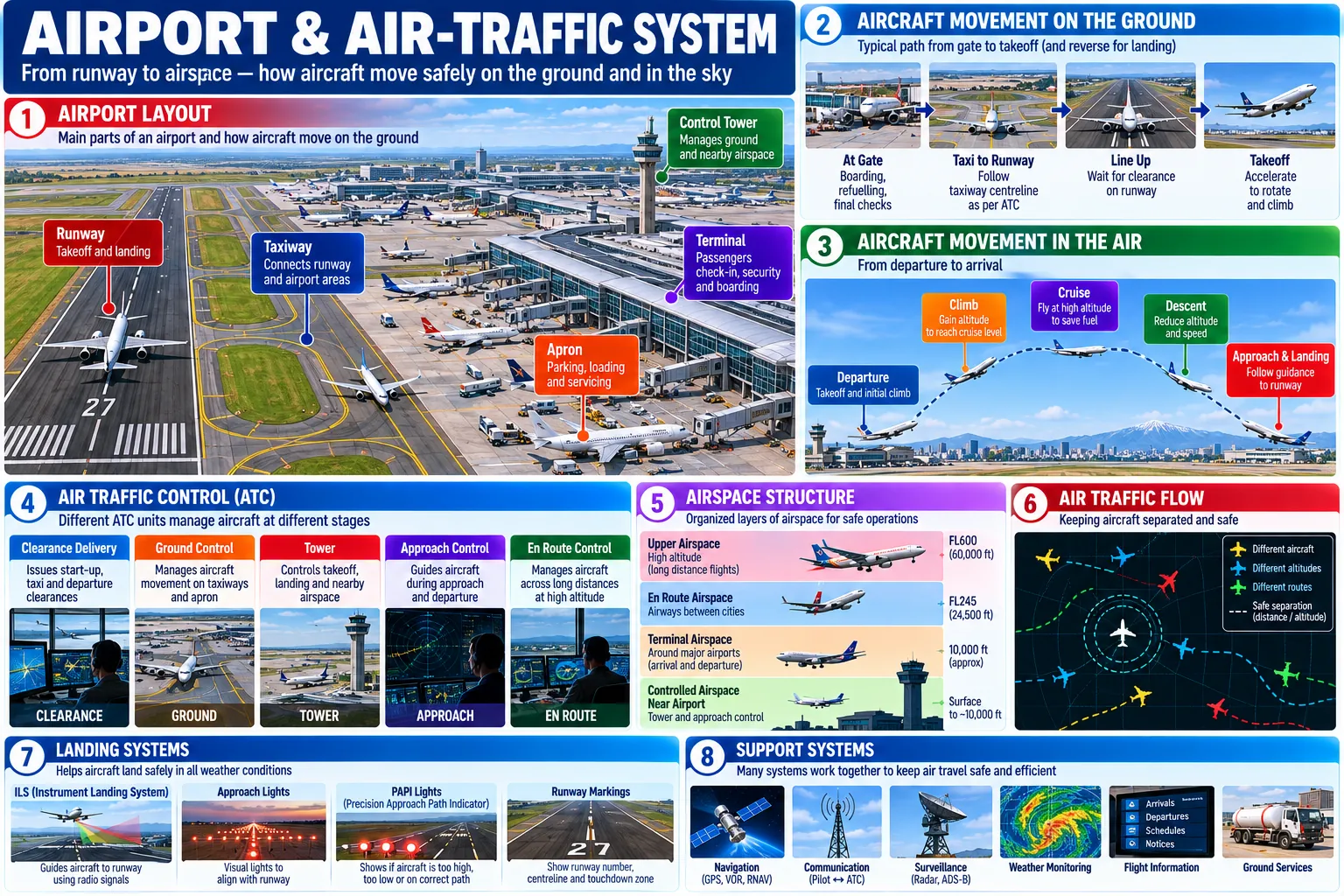
An airport's runway, taxiways, apron, terminal and tower, an aircraft's path from gate to take-off, the phases of flight, the five air traffic control units, the layers of airspace, traffic separation, landing aids (ILS, approach lights, PAPI, runway markings) and the systems behind them.
Airport and air traffic system On: Jets, helicopters and air traffic control
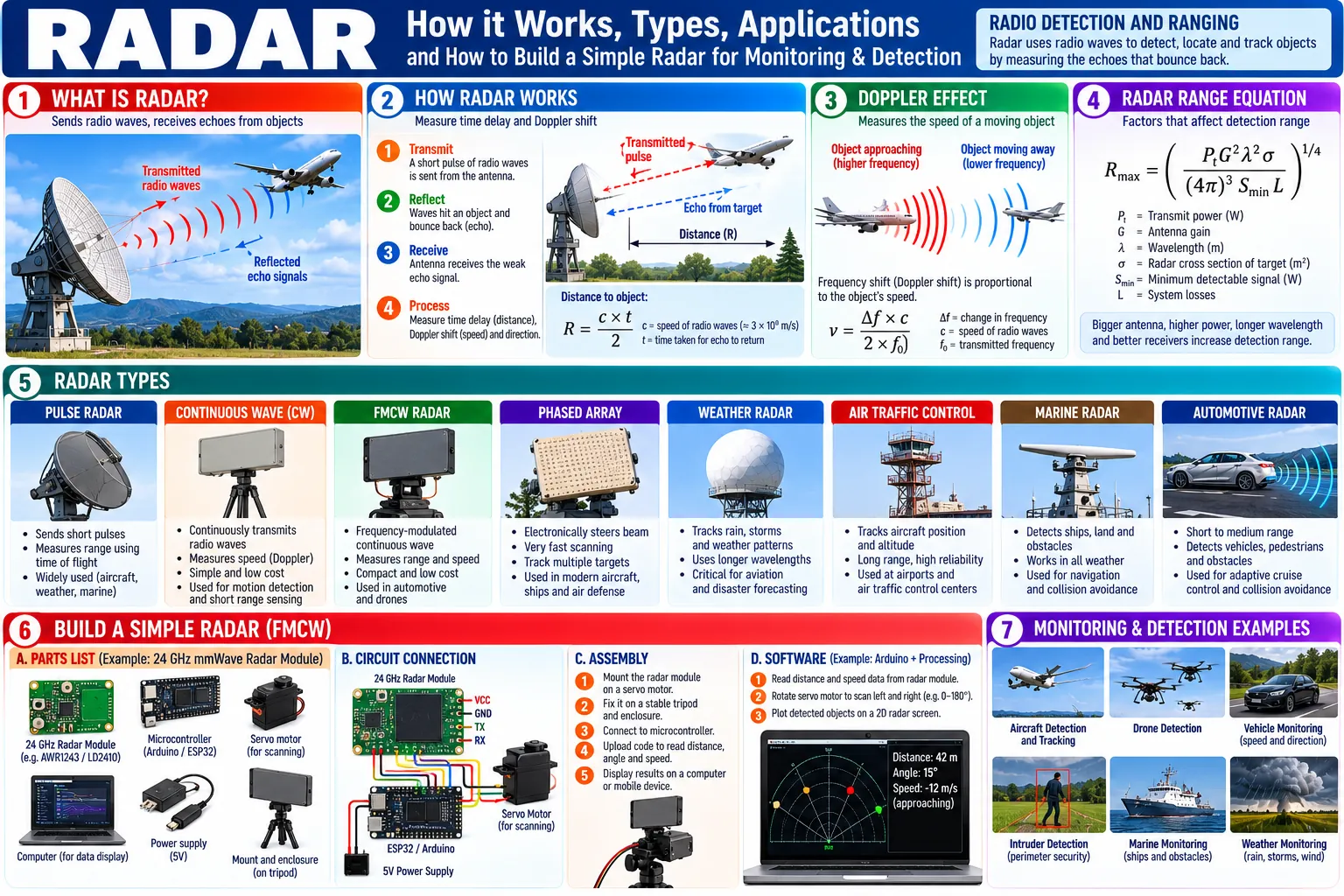
Radio detection and ranging: transmit, reflect, receive; distance R = c × t ÷ 2; speed from the Doppler shift; the radar range equation; eight kinds of radar from pulse and FMCW to weather, air traffic, marine and automotive; a 24 GHz module scanned on a servo; and what radar can watch.
Radar: how it works, types and a simple build On: Jets, helicopters and air traffic control
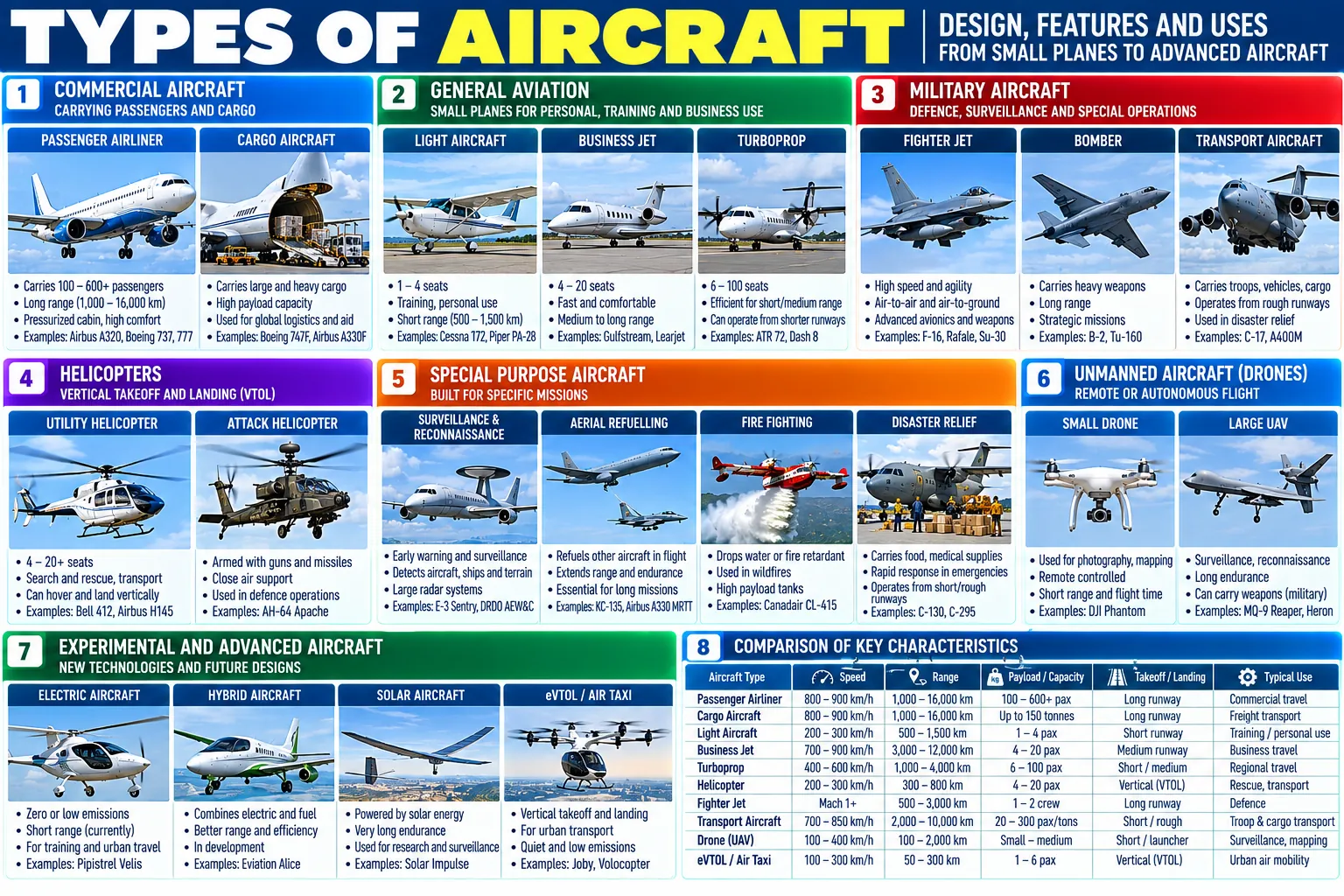
Aircraft by role — airliners and freighters, light aircraft, business jets and turboprops, fighters, bombers and military transports, helicopters, surveillance, tanker, firefighting and relief aircraft, drones, and electric, hybrid, solar and eVTOL designs — with real examples and a table of speed, range, payload and runway.
Types of aircraft: design, features and uses On: Modern aviation and drones
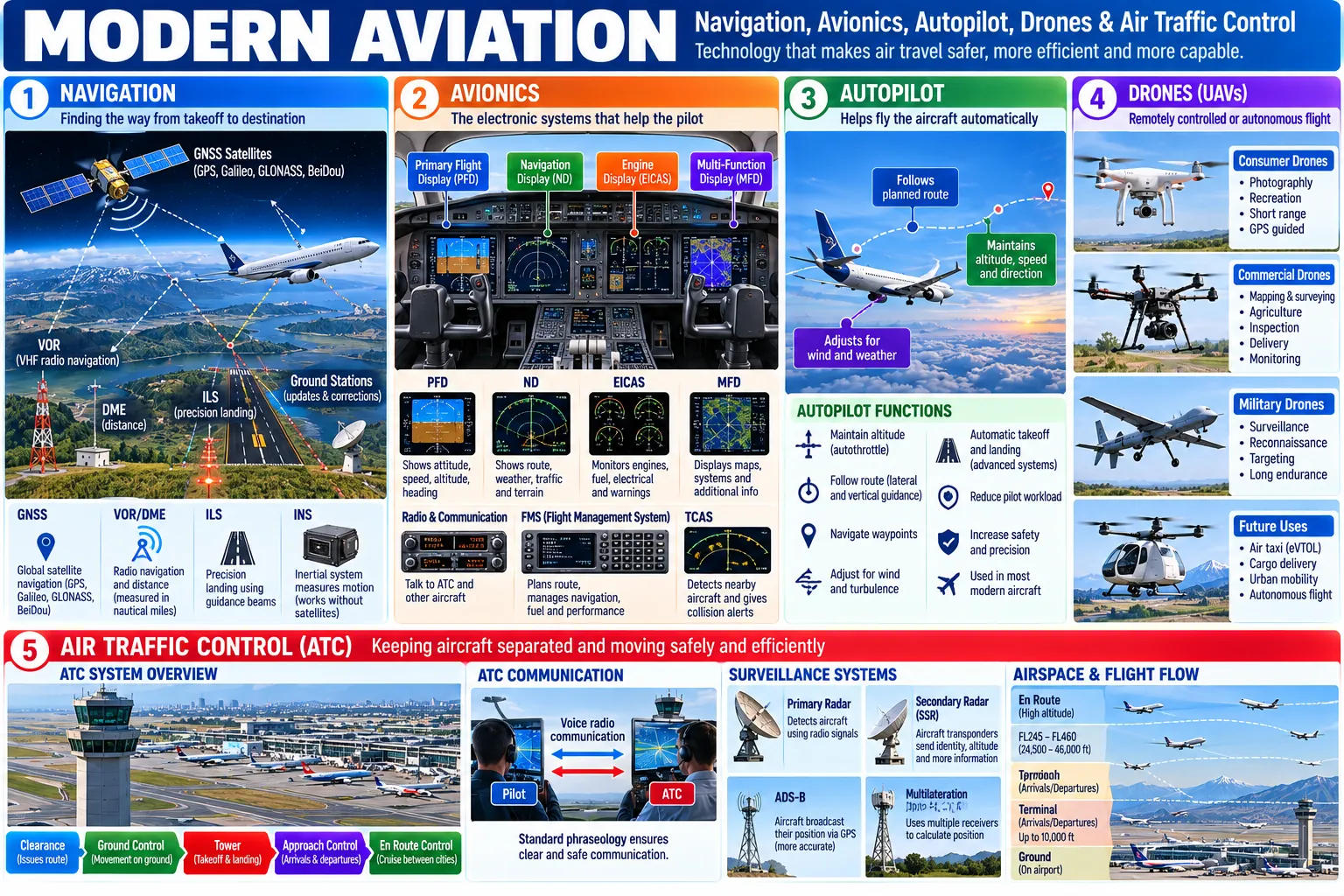
Satellite, radio and inertial navigation, the glass cockpit's displays, flight management and collision avoidance, what an autopilot does, four kinds of drone, air traffic control units and radio phraseology, the four surveillance systems (primary and secondary radar, ADS-B, multilateration) and the layers of airspace.
Modern aviation: navigation, avionics, autopilot, drones and ATC On: Modern aviation and drones
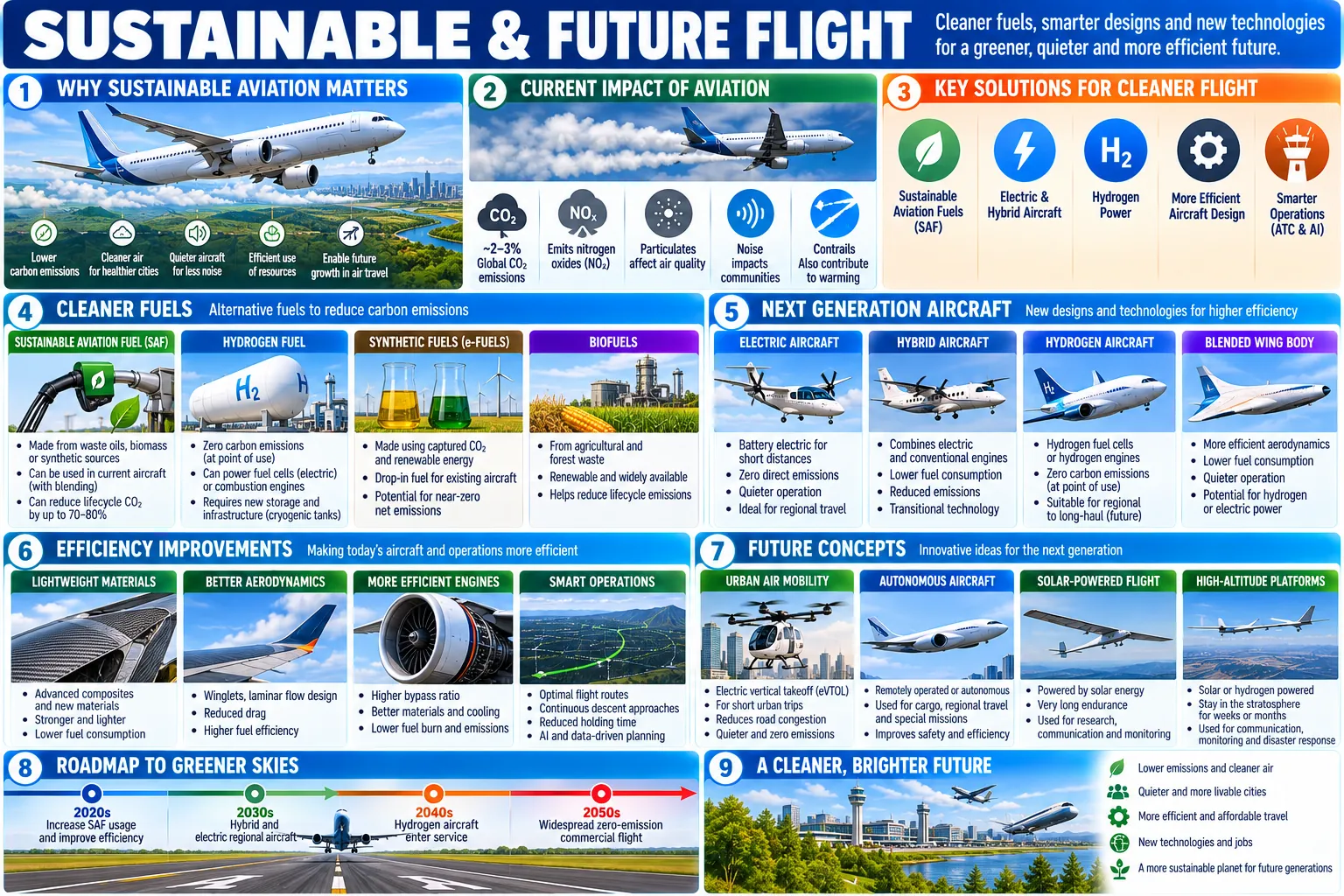
Why aviation's emissions matter, its impact (about 2–3 % of global CO₂, nitrogen oxides, particles, noise and contrails), the options — sustainable, hydrogen, synthetic and bio fuels, electric, hybrid, hydrogen and blended-wing aircraft, lighter materials, better engines and operations — future concepts, and a roadmap to 2050.
Sustainable and future flight On: Modern aviation and drones
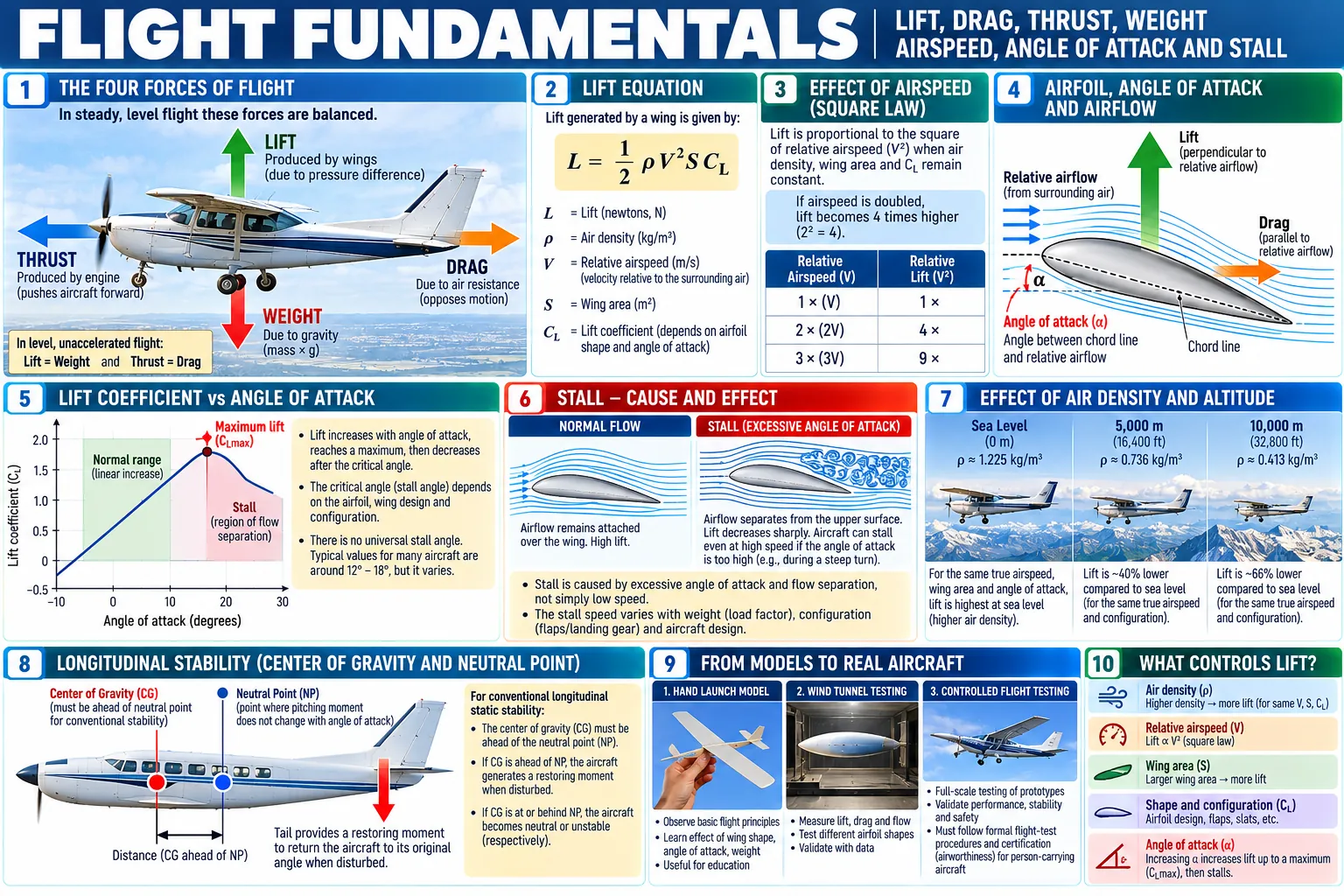
The four forces, the lift equation L = ½ρV²SC_L, the square law of airspeed, angle of attack on an aerofoil, lift coefficient against angle of attack, the stall, air density at 0, 5,000 and 10,000 m, the centre of gravity ahead of the neutral point, and the path from models to full-size aircraft.
Flight fundamentals: lift, drag, thrust, weight and stall On: Flight: How a surface makes lift
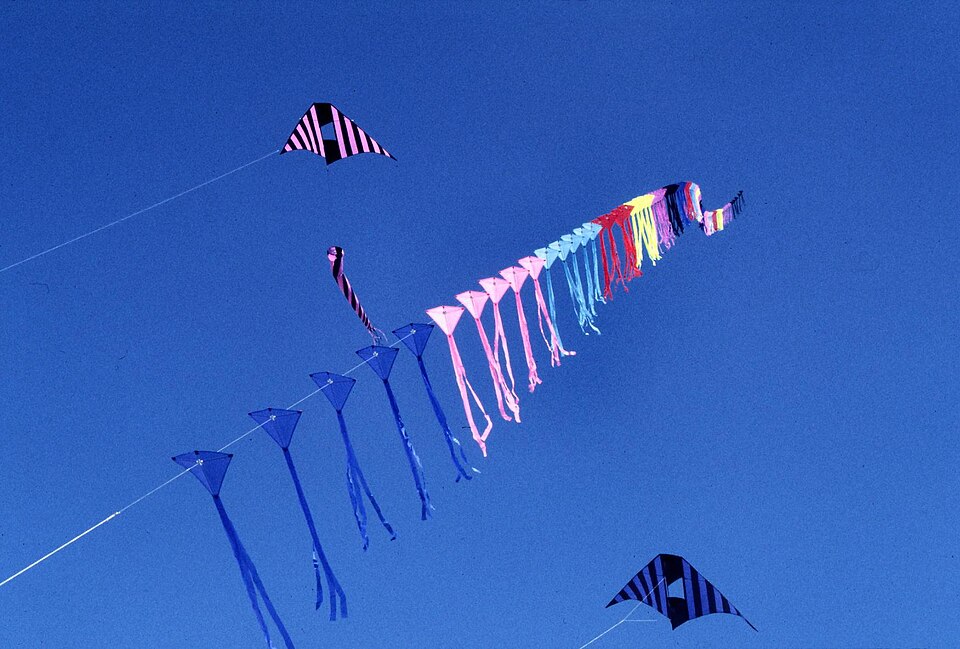
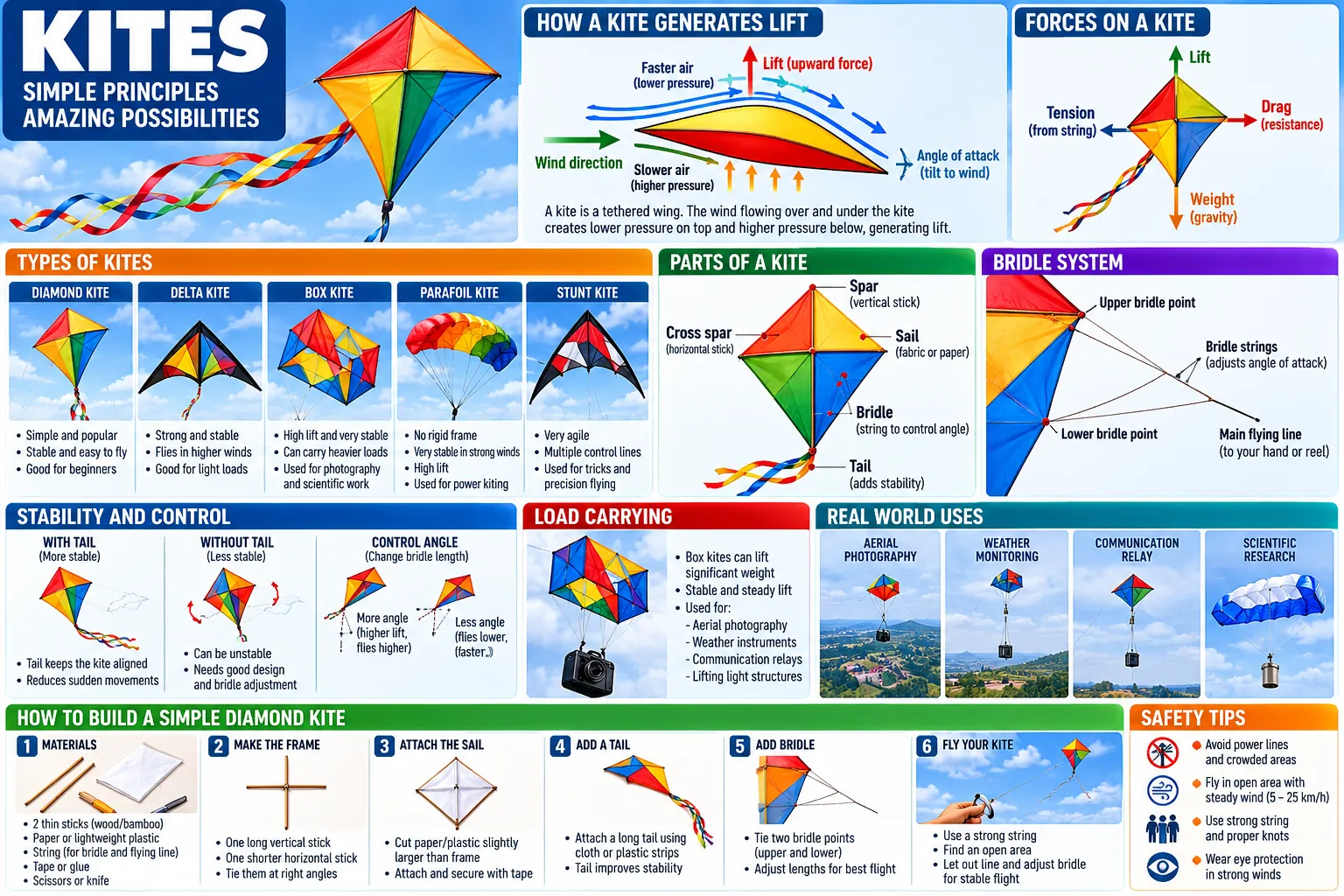
How a kite makes lift and the forces on it, five kinds (diamond, delta, box, parafoil, stunt), the parts, the bridle, tails and bridle adjustment, box kites lifting cameras and instruments, real uses, and a six-step diamond kite build.
Kites: lift, bridle, stability and load carrying On: Flight: Kites
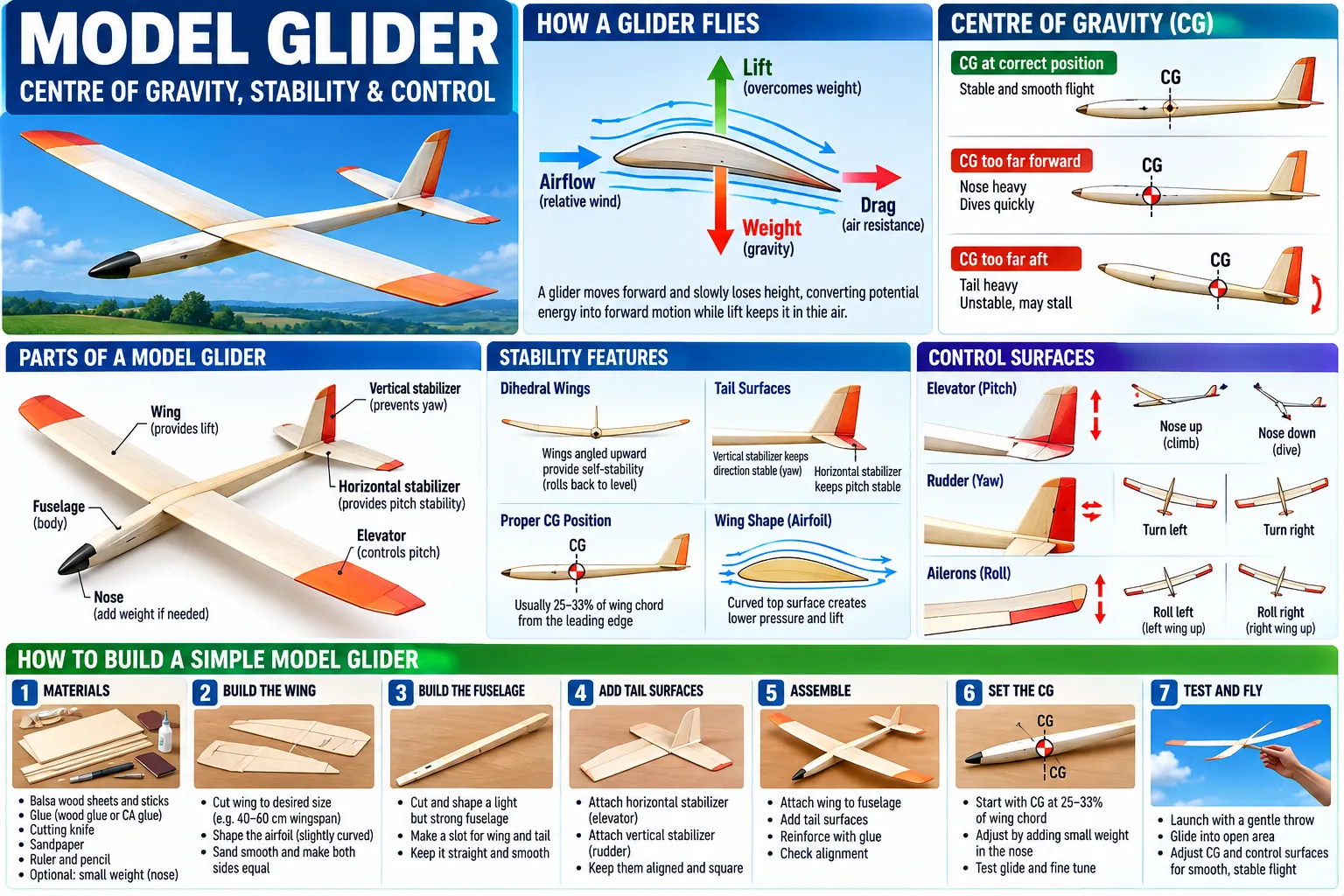
How a glider flies, the centre of gravity in the right place, too far forward and too far aft, the parts of a model glider, dihedral, tail surfaces, the aerofoil, elevator, rudder and ailerons, and a seven-step balsa build balanced at 25–33 % of the chord.
Model glider: centre of gravity, stability and control On: Flight: Balance: bridle, tail and centre of gravity
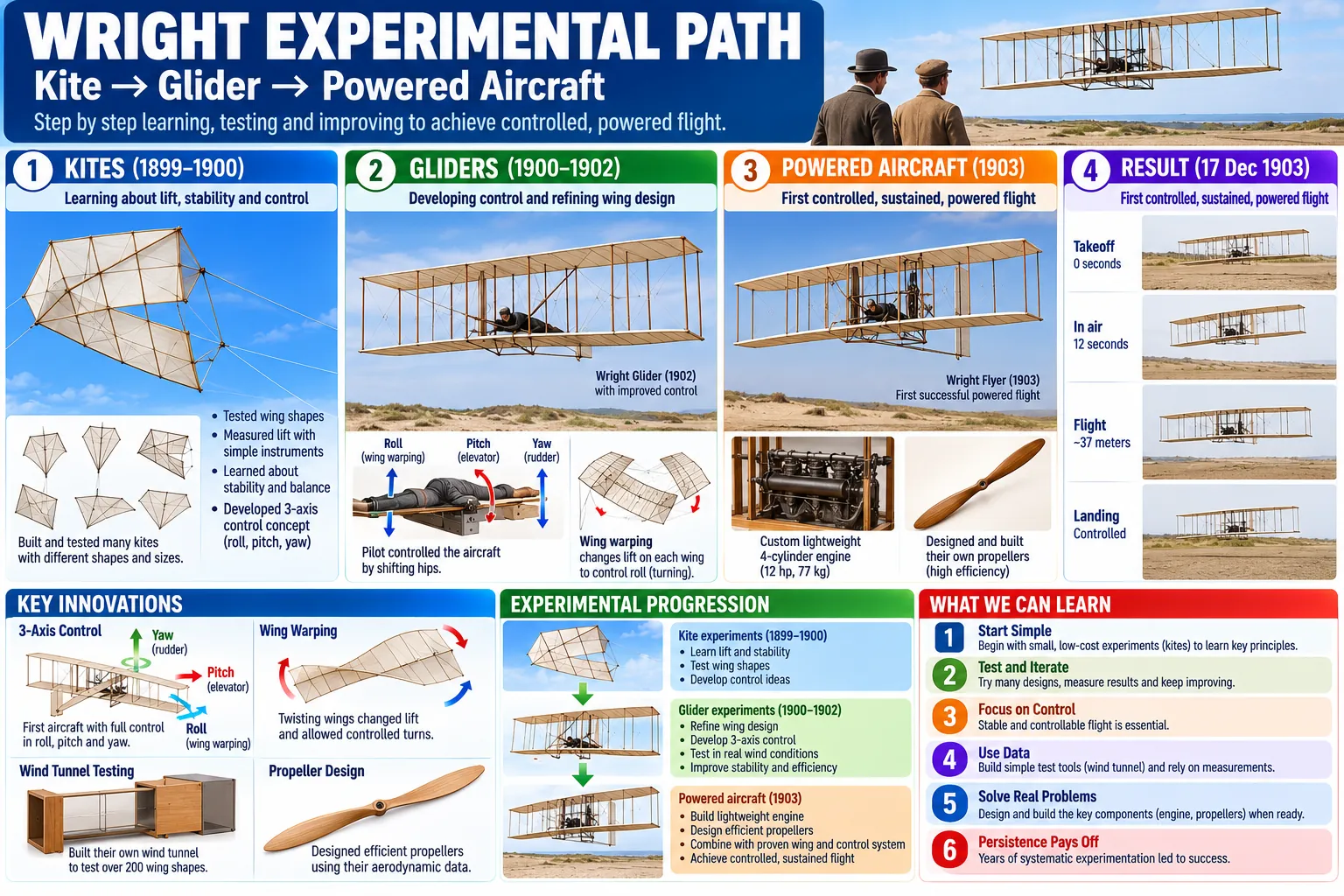
The Wrights' order of work: a kite in 1899, gliders in 1900–1902 with control in three axes, the 1903 machine with their own engine and propellers, the first flight of 17 December 1903 (12 seconds, about 37 m), wing warping, their wind tunnel, and what the method teaches.
The Wright brothers' path: kite, glider, powered aircraft On: Flight: The Wright machines, in numbers
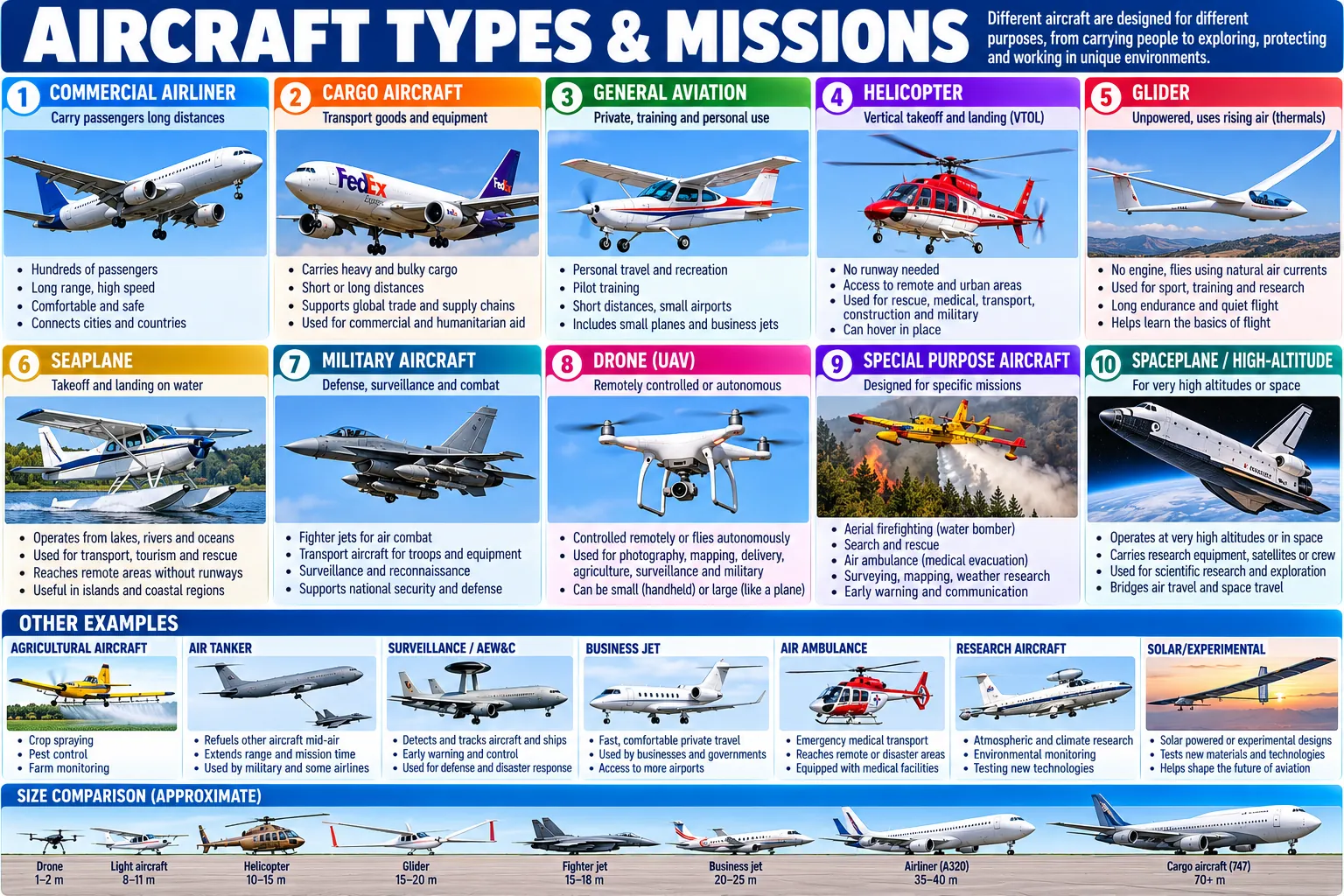
Ten kinds of aircraft and what each is for — airliner, freighter, general aviation, helicopter, glider, seaplane, military, drone, special-purpose and spaceplane — seven further examples, and a size comparison from a 1 m drone to a 70 m freighter.
Aircraft types and missions On: Flight: Aviation today

Books and archives

Other tracks in Transport