Civilization101Blueprint

Transport

Water carries loads long before roads do: boats come at level 1 and canals at level 3. Cold water kills by the 1-10-1 rule: about 1 minute of cold shock, about 10 minutes of useful movement, and about an hour before unconsciousness. So floating and swimming come before any boat. On land, the wheel needs a smith and a road, and a cart needs about 3 m of street to pass. In the air, kites and balloons come before gliders, and every flying machine is tested unmanned before anyone flies in it.
16 steps 6 field guides 10 builds 30 reference sheets 46 books and archives

Tracks

Each track is one line of development climbing the eight levels. A cell holds the step written at that level; cross-listed steps have their home in another sector and are shown here because this subject depends on them. Dashed cells are planned and not yet written; blank ones have nothing planned.

On water

Floating, boats and finding your way, then canals and locks, ships, submarines and modern shipping.

Open the track, level by level →

On land

Wheel, cart and road, then rail and the internal combustion engine.

L0 Triage
L1 Foothold
L2 Forge
L3 Mill
L4 Engine
L5 Current
L6 Logic
L7 Frontier
Level 0: nothing planned
Level 1: nothing planned
Level 3: nothing planned
Level 6: nothing planned
Level 7: nothing planned
Open the track, level by level →

In the air

Kites and balloons, then gliders, the aeroplane and the jet. Every flying machine is tested unmanned before anyone flies in it.

Open the track, level by level →

Everything in Transport

Gathered from the steps above: the guides and builds that serve them, the reference sheets those carry, and every book the steps, guides and builds cite.

Field guides

Builds

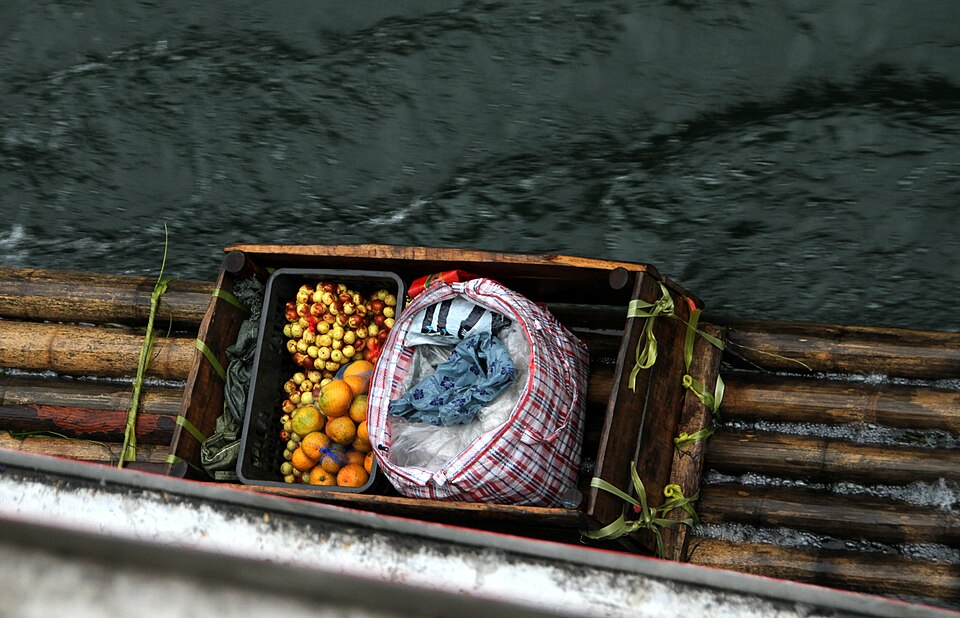
A bamboo raft on the Li River, China, 2012, from above: whole culms lashed side by side, the load in the middle.
Level 1
Log raft

Eight dry logs, six cross-poles and cord: a raft that carries 400 kg across or down calm water, rated by sum and proved by a load test.
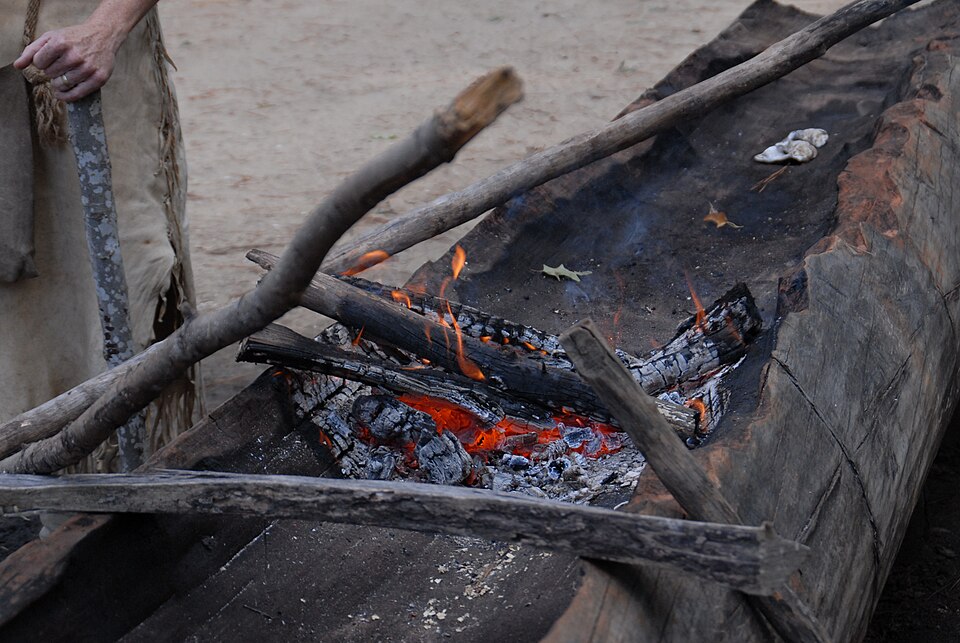
Hollowing a dugout with fire (US National Park Service): a small fire burns along the log, and the charcoal is scraped out between burns.
Level 1
Dugout canoe with outrigger

One sound log, fire and an adze: a two-person canoe with walls 2.5 cm thick, and an outrigger float that keeps it upright on open water.
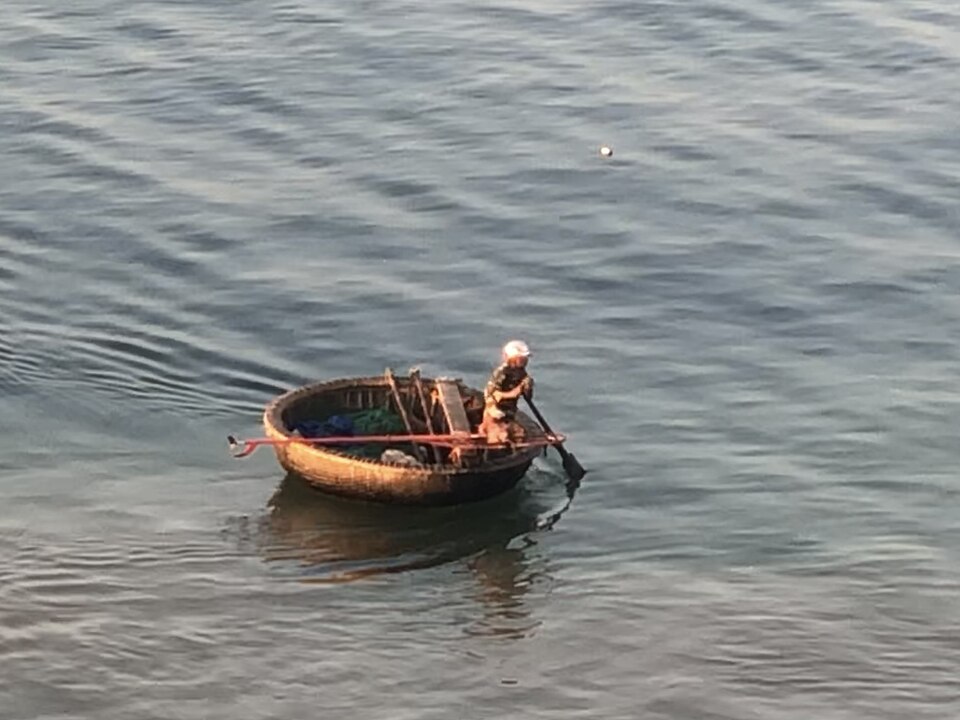
A round basket boat off the coast of Vietnam, 2019, worked by one person with a single paddle.
Level 1
Coracle

A one-person boat you carry on your back: a woven frame of split laths, a hide or cloth skin, and pitch, built in about two days.
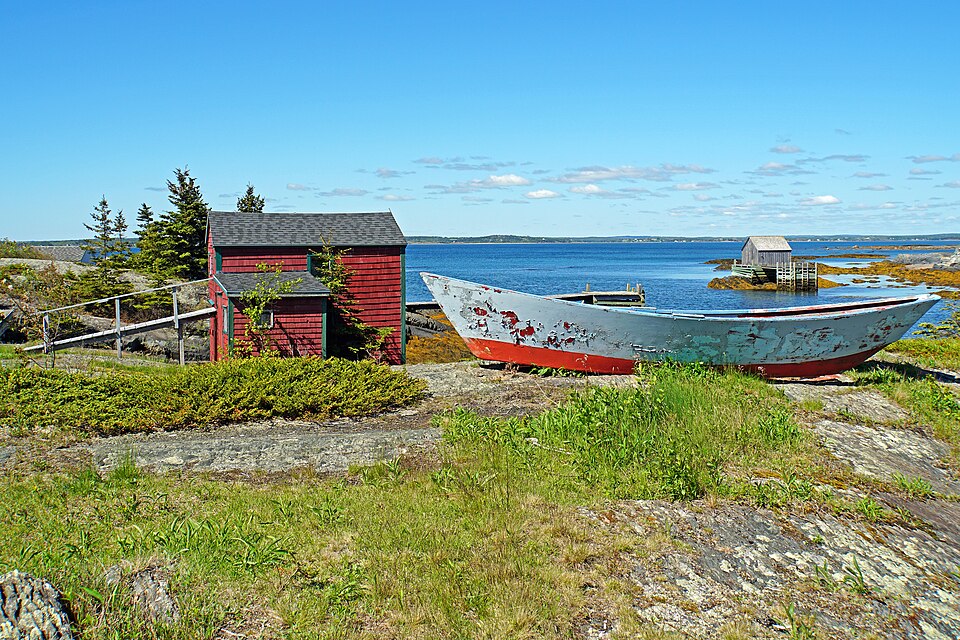
A flat-bottomed dory hauled out above the water in Nova Scotia, 2016: flared plank sides on a narrow flat bottom.
Level 2
Flat-bottomed plank boat

FAO's 4.9 m flat-bottomed boat: straight planks, three frames, a bottom planked across and nailed to a thick lowest plank. The simplest planked boat there is, for four people on sheltered water.
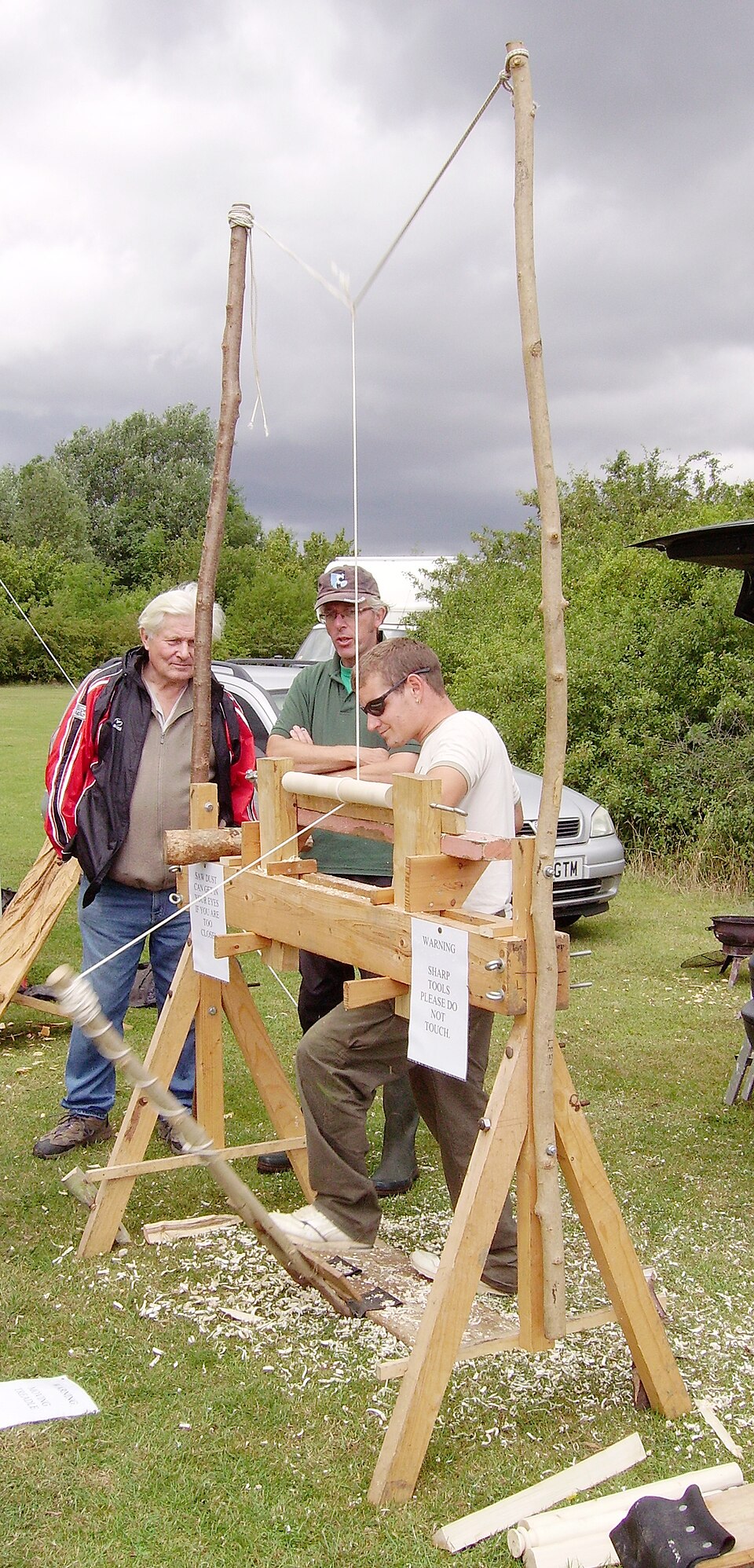
A pole lathe: springy pole, cord, treadle. The first machine that shapes a part rather than a tool.
Level 1
Spring-pole lathe

The first machine tool — a sapling, a cord and a treadle, and the direct ancestor of everything in tier 3.
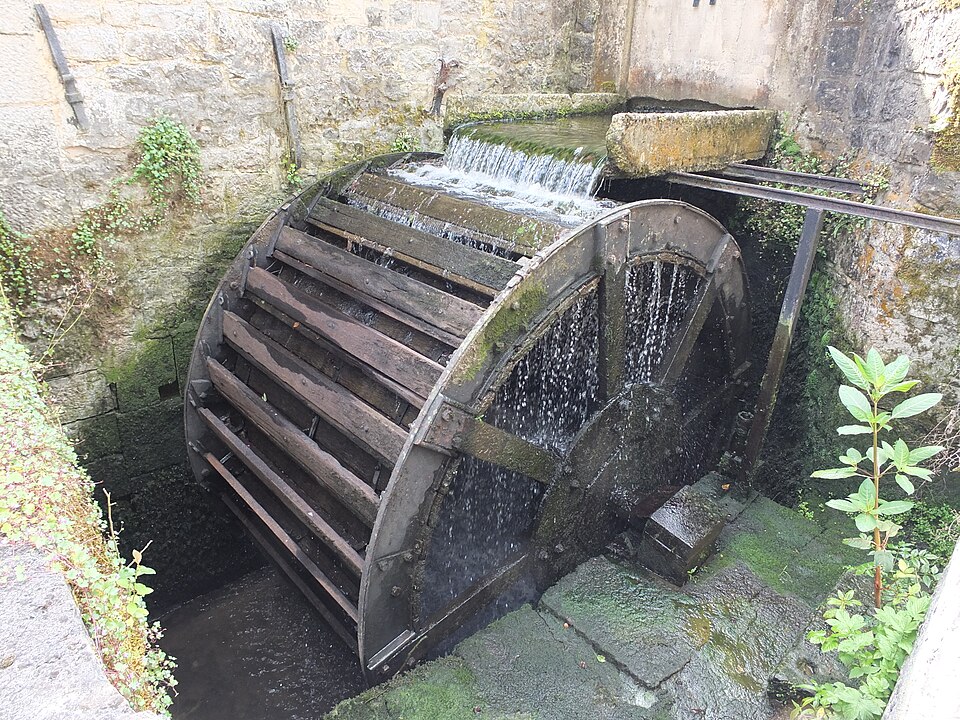
An overshot wheel at work, water entering over the top of the wheel rather than under it.
Level 3
Overshot water wheel

A few kilowatts, day and night, without eating — the first energy surplus large enough to support full-time specialists.
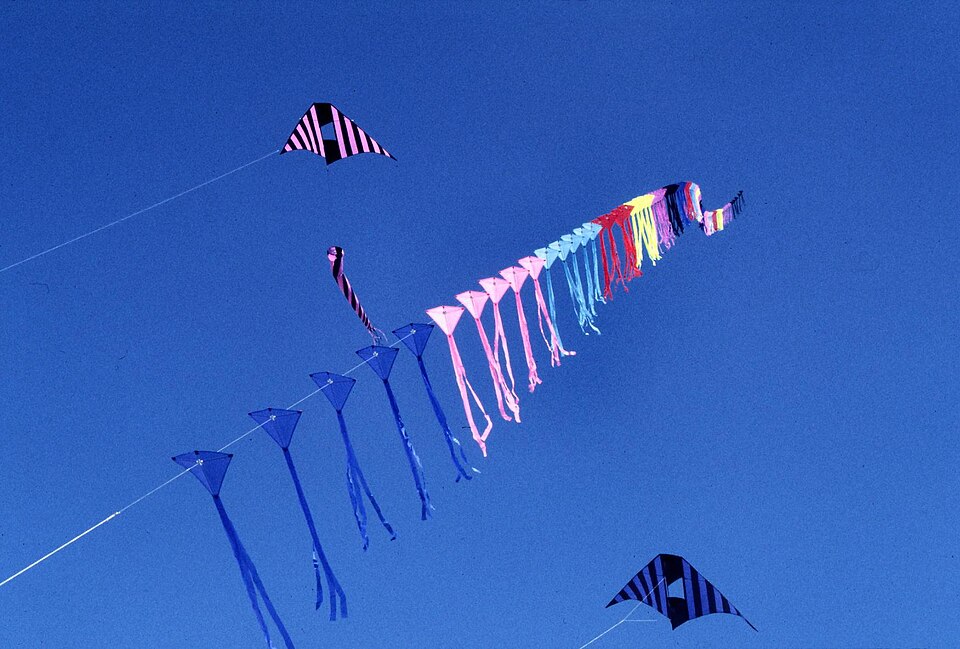
A train of Eddy kites on one line at Fanø, Denmark, 1994: several kites share the line and add their pull.
Level 2
Line-carrying kite

A 1.5 m Eddy kite of spruce and cloth, with a bridle set by rule: steady in light wind, strong enough to carry a line across a river or a gorge.
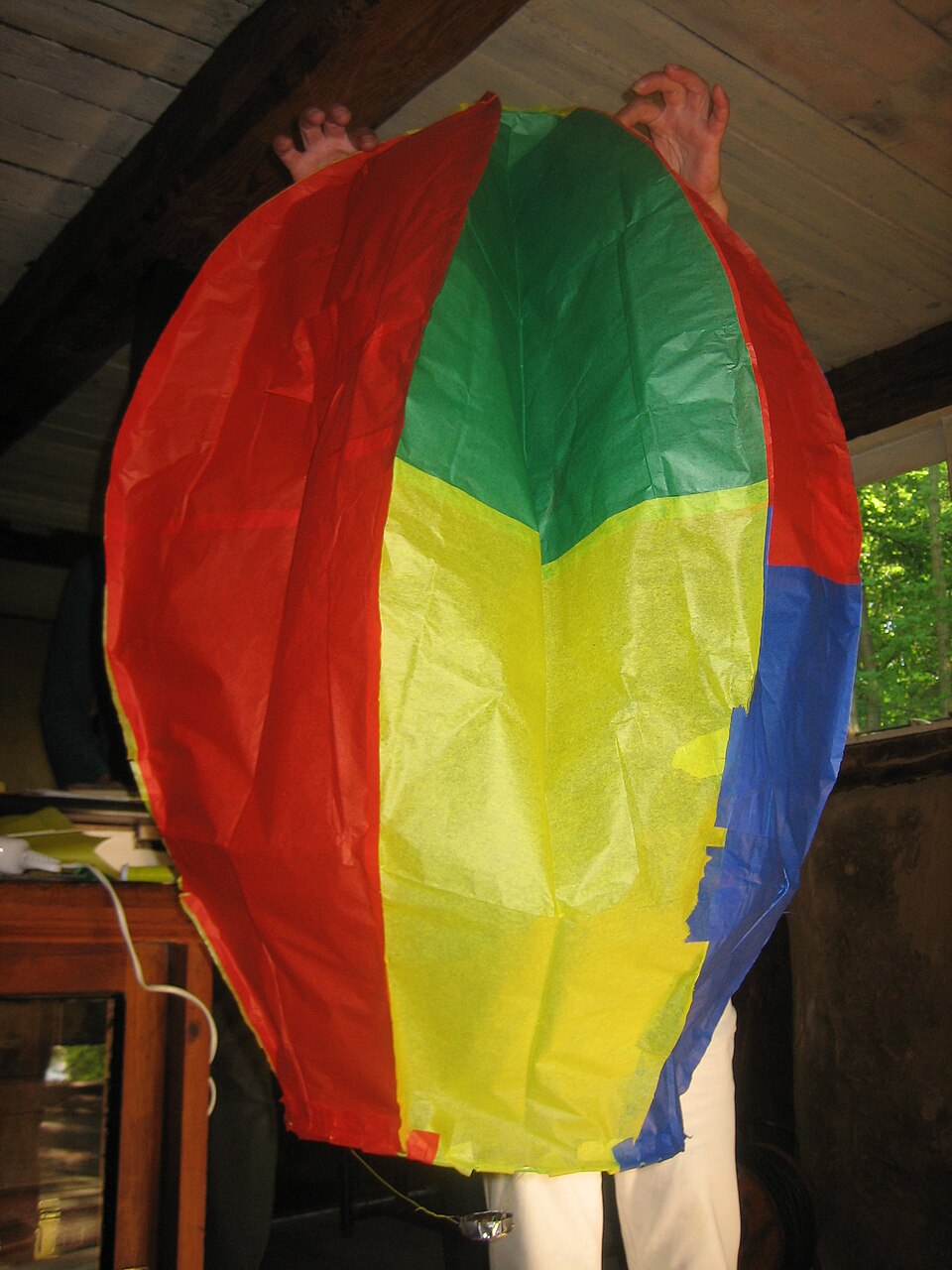
A tissue-paper model balloon held up to show its gores, 2008.
Level 3
Tethered model hot-air balloon

Twelve tissue-paper gores make a 1.5 m balloon that lifts about 250 g over a ground fire and flies on a tether: the Montgolfiers' principle, measured, with no flame in the air.
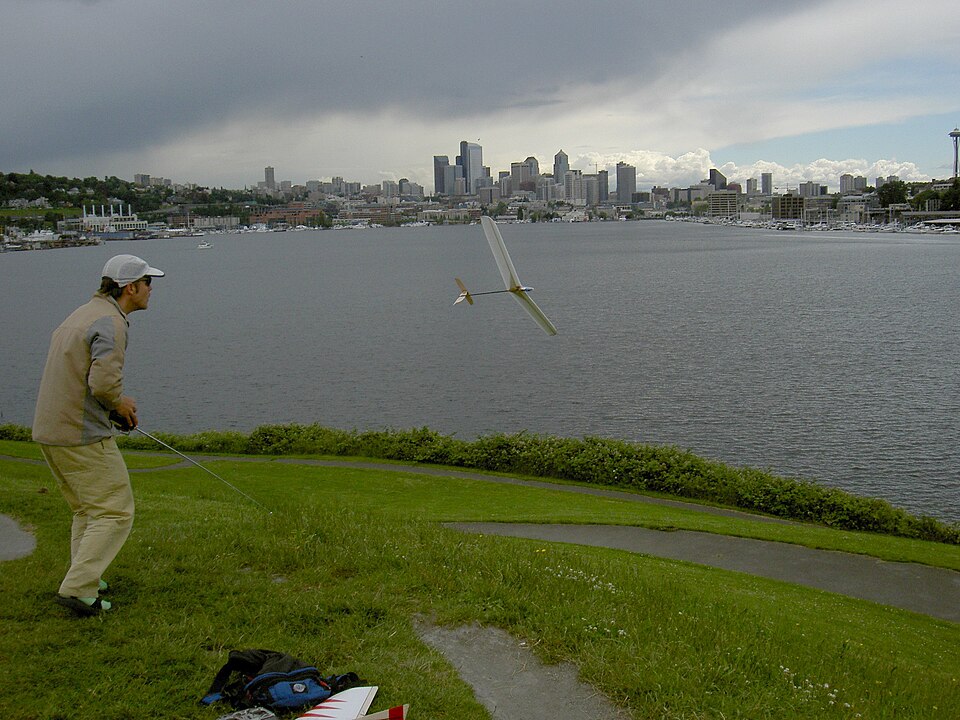
A hand-launched model glider a moment after the throw, climbing out over water.
Level 4
Model glider

A 60 cm hand-launched glider of thin wood, balanced and trimmed by test: the Wrights' order of work in an afternoon, and the stability every aircraft depends on.
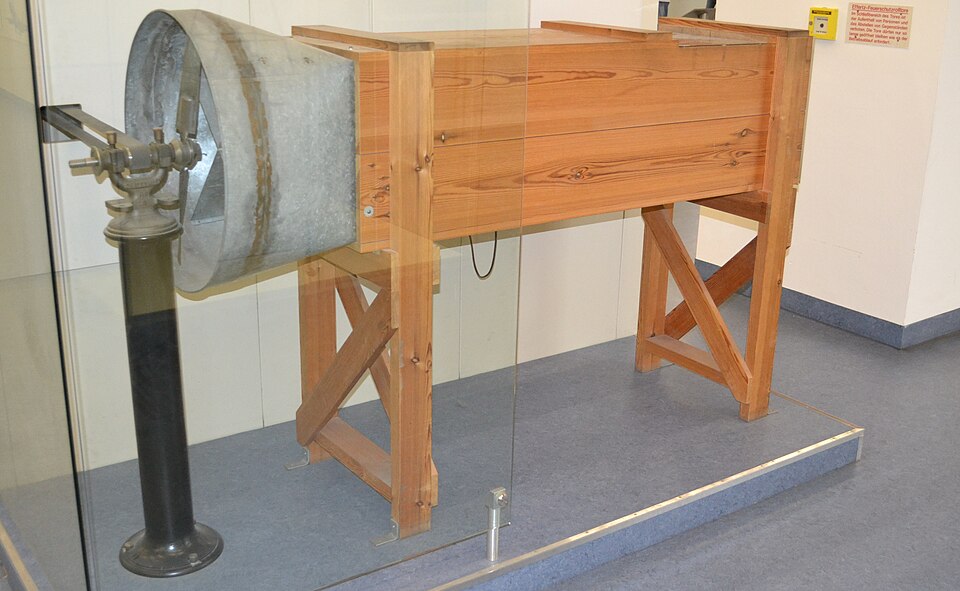
A replica of the Wrights' 1901 wind tunnel: a long wooden box on trestles with a metal funnel at one end.
Level 4
Wind tunnel

A 41 cm square test section as long as the Wrights' box, a fan that draws air through a honeycomb, and two balances you calibrate yourself: measure a wing before you build it.

Reference sheets

Drawn overview sheets, each with its corrections printed under it. They orient; they are never the thing you identify from.
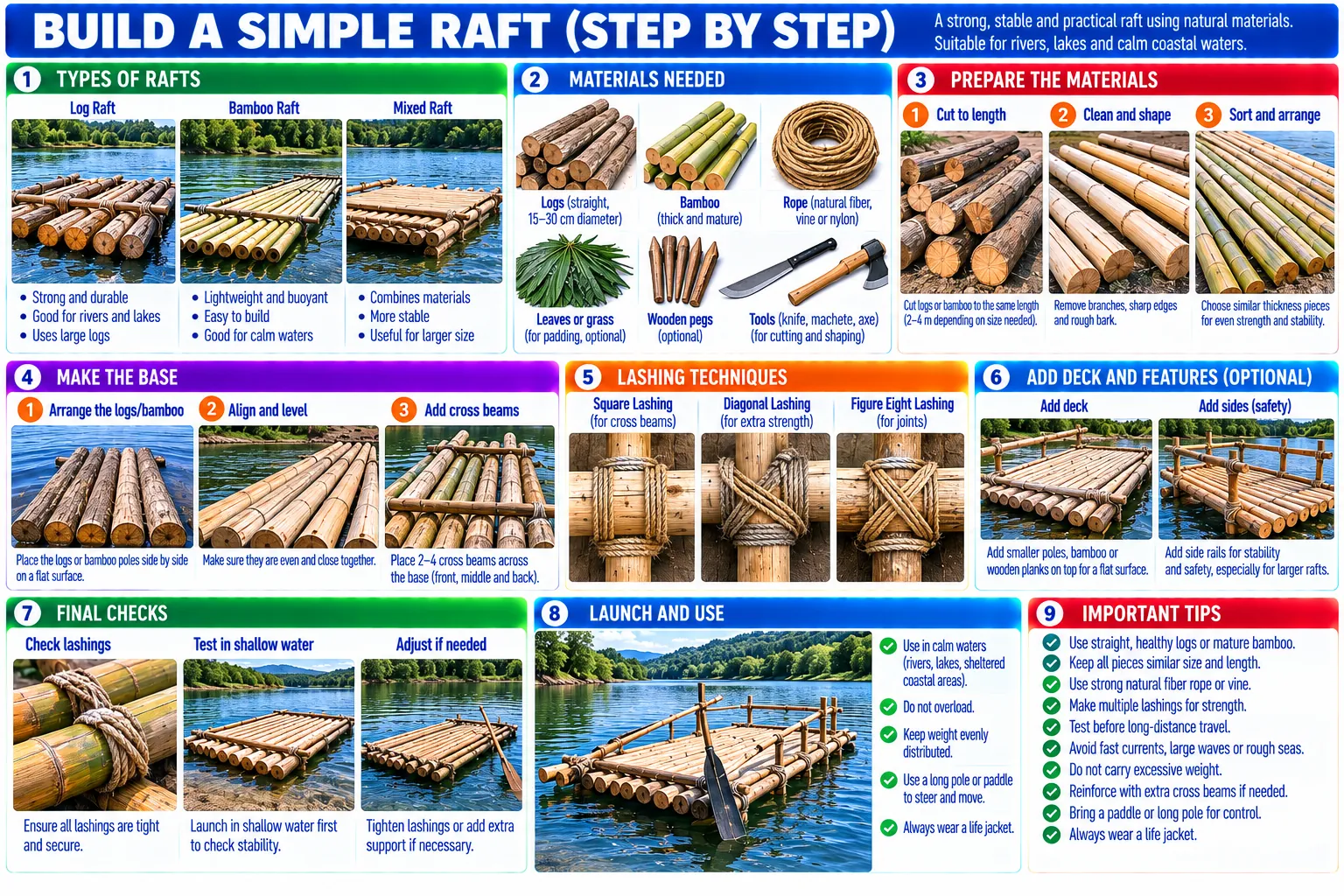
Log, bamboo and mixed rafts: materials, cutting and sorting, laying the base with cross beams, square, diagonal and figure-eight lashings, deck and rails, checks, launching and use.
Build a simple raft On: Boats and safe water travel
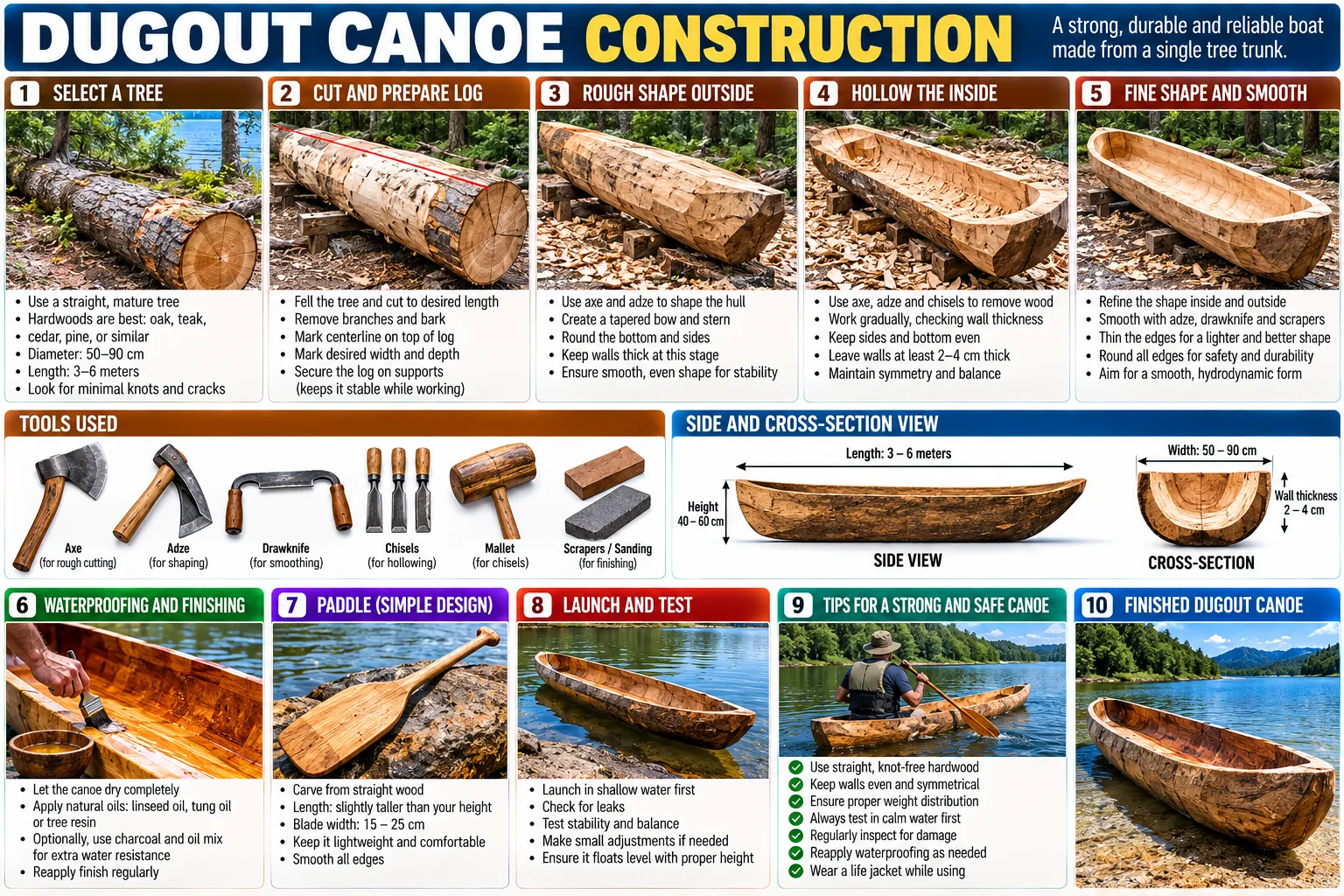
Choosing and preparing the log, shaping the outside, hollowing, smoothing, the tools, side and section views, finishing, a paddle, launching and testing, and tips.
Dugout canoe construction On: Boats and safe water travel
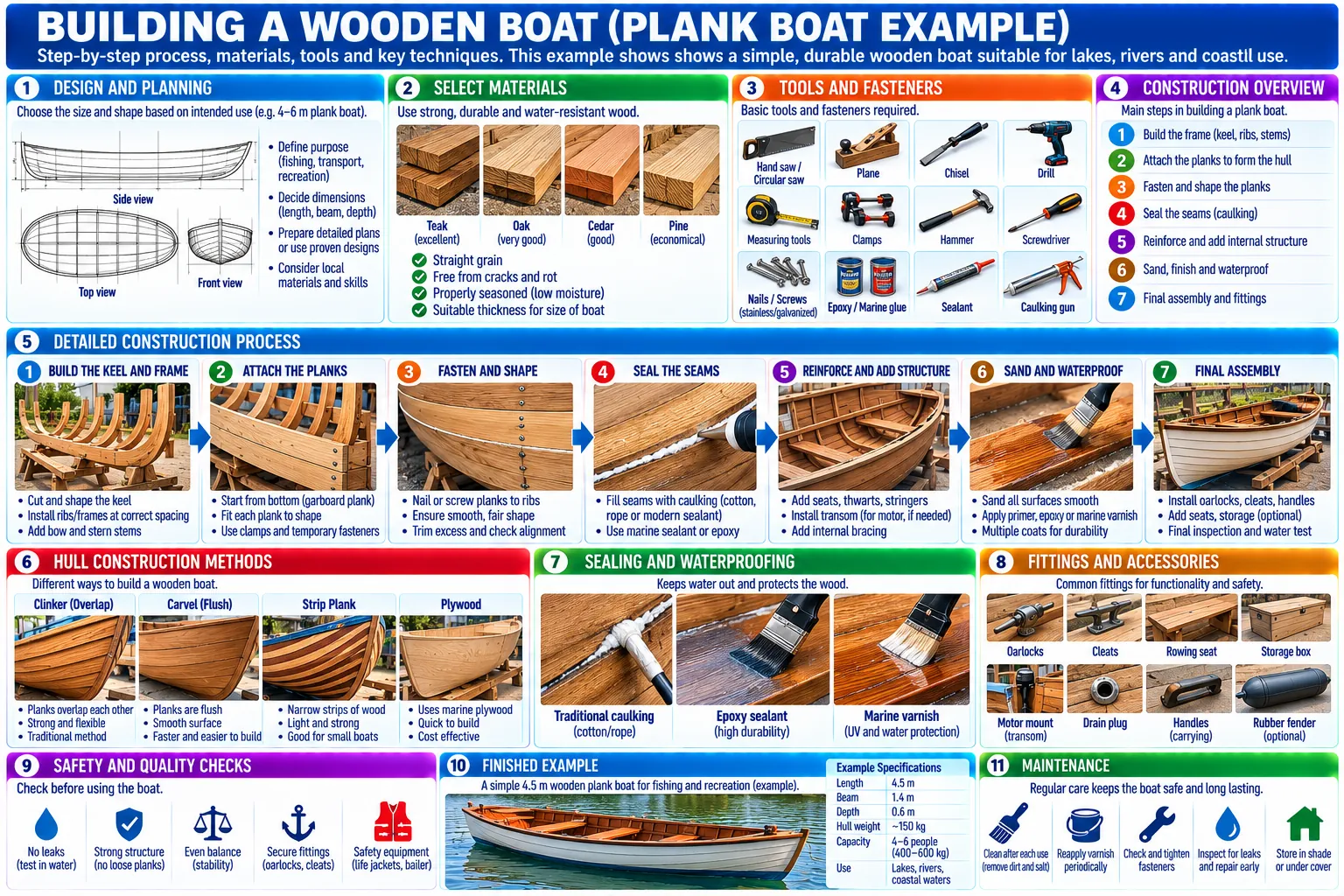
Design, timber, tools and fasteners, seven stages from keel and frames to fittings, clinker, carvel, strip-plank and plywood hulls, sealing, fittings, safety checks, a finished 4.5 m example, and upkeep.
Building a wooden plank boat On: Plank boats, oars and sail
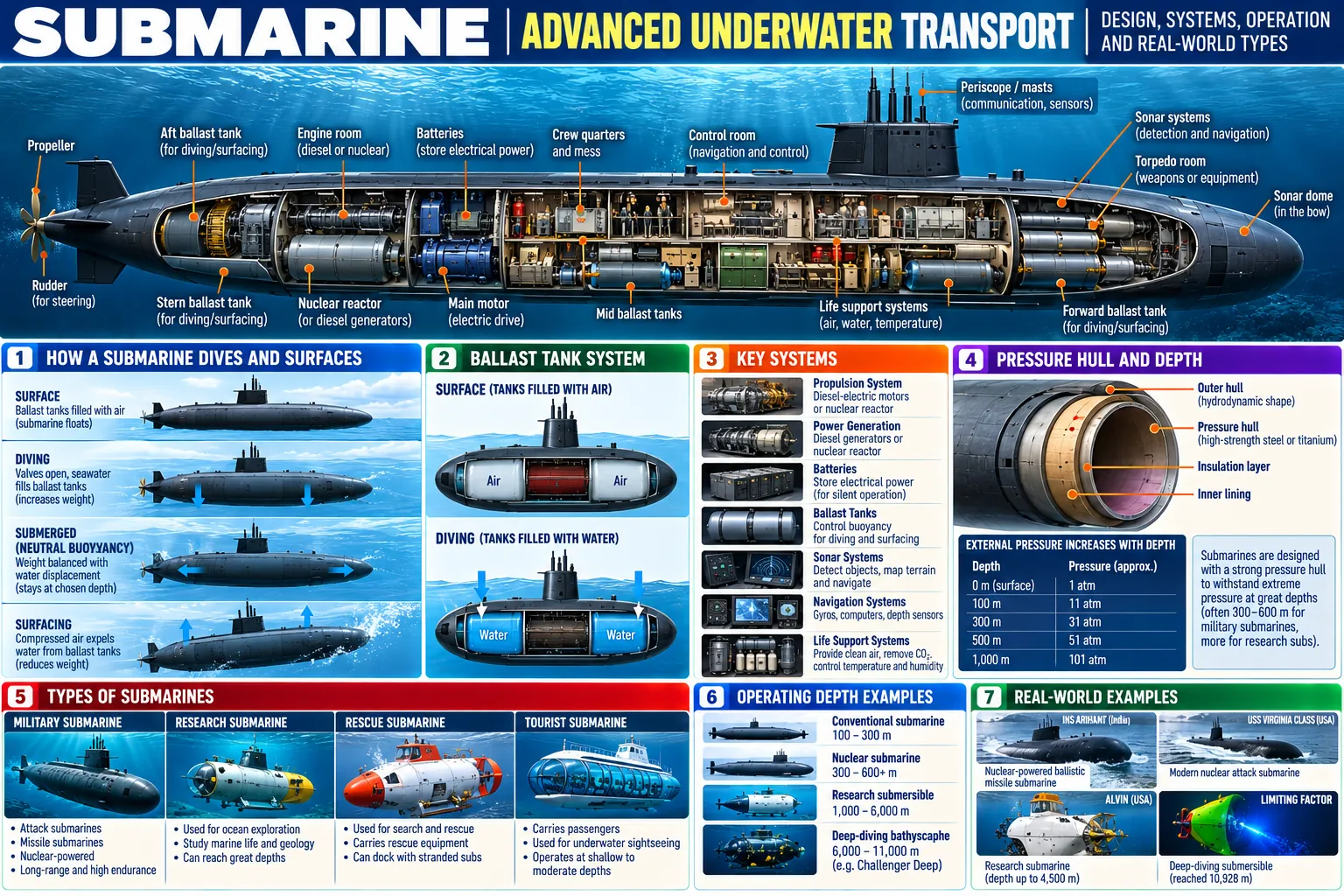
A cutaway of a submarine and its compartments, how it dives and surfaces, the ballast tanks, its key systems, the pressure hull and the pressure at each depth, military, research, rescue and tourist types, operating depths, and real examples.
Submarine: advanced underwater transport On: Submarines and submersibles
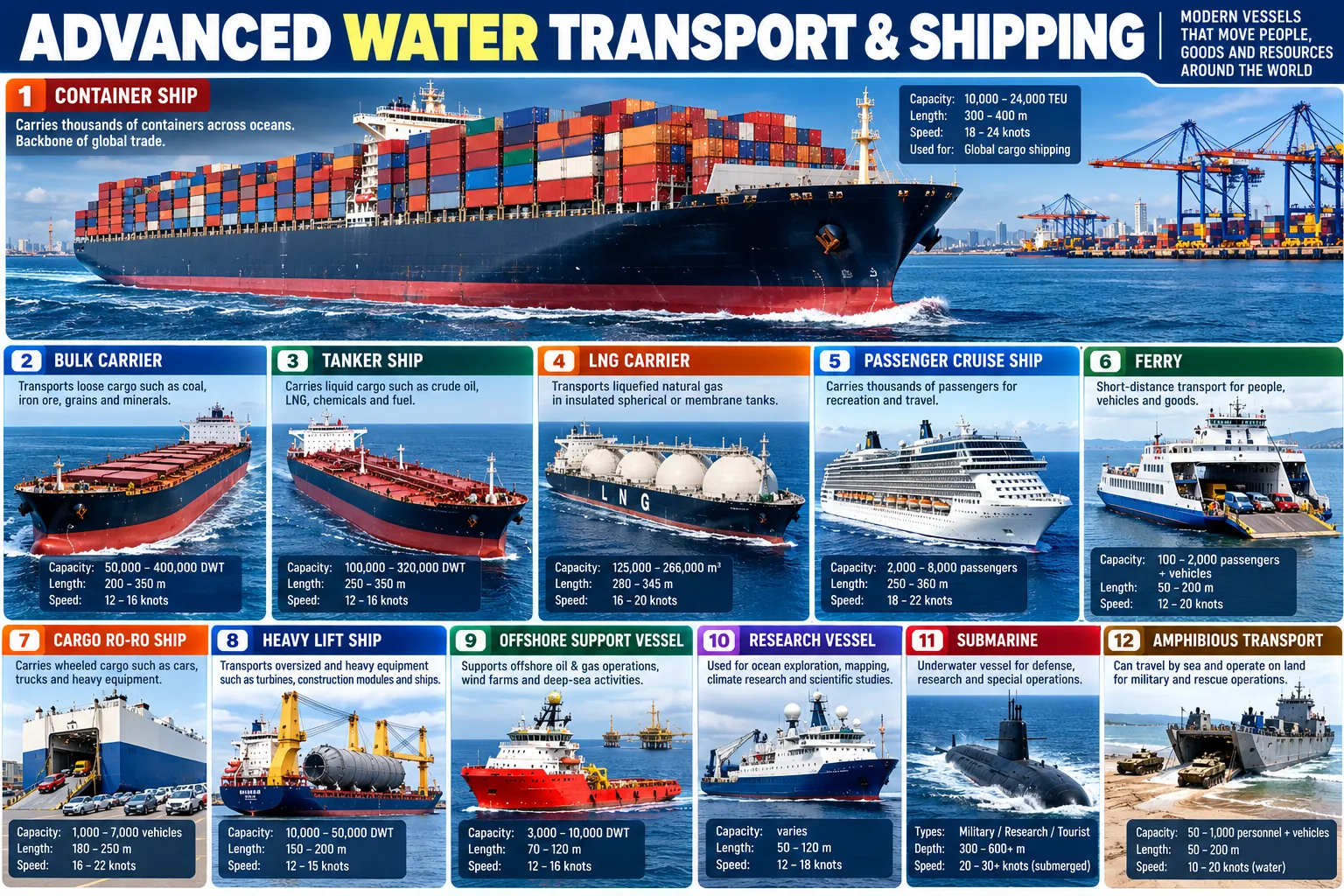
Twelve kinds of large vessel with typical capacity, length and speed: container ship, bulk carrier, tanker, LNG carrier, cruise ship, ferry, ro-ro, heavy-lift ship, offshore support vessel, research vessel, submarine and amphibious transport.
Advanced water transport and shipping On: Modern ships and small craft
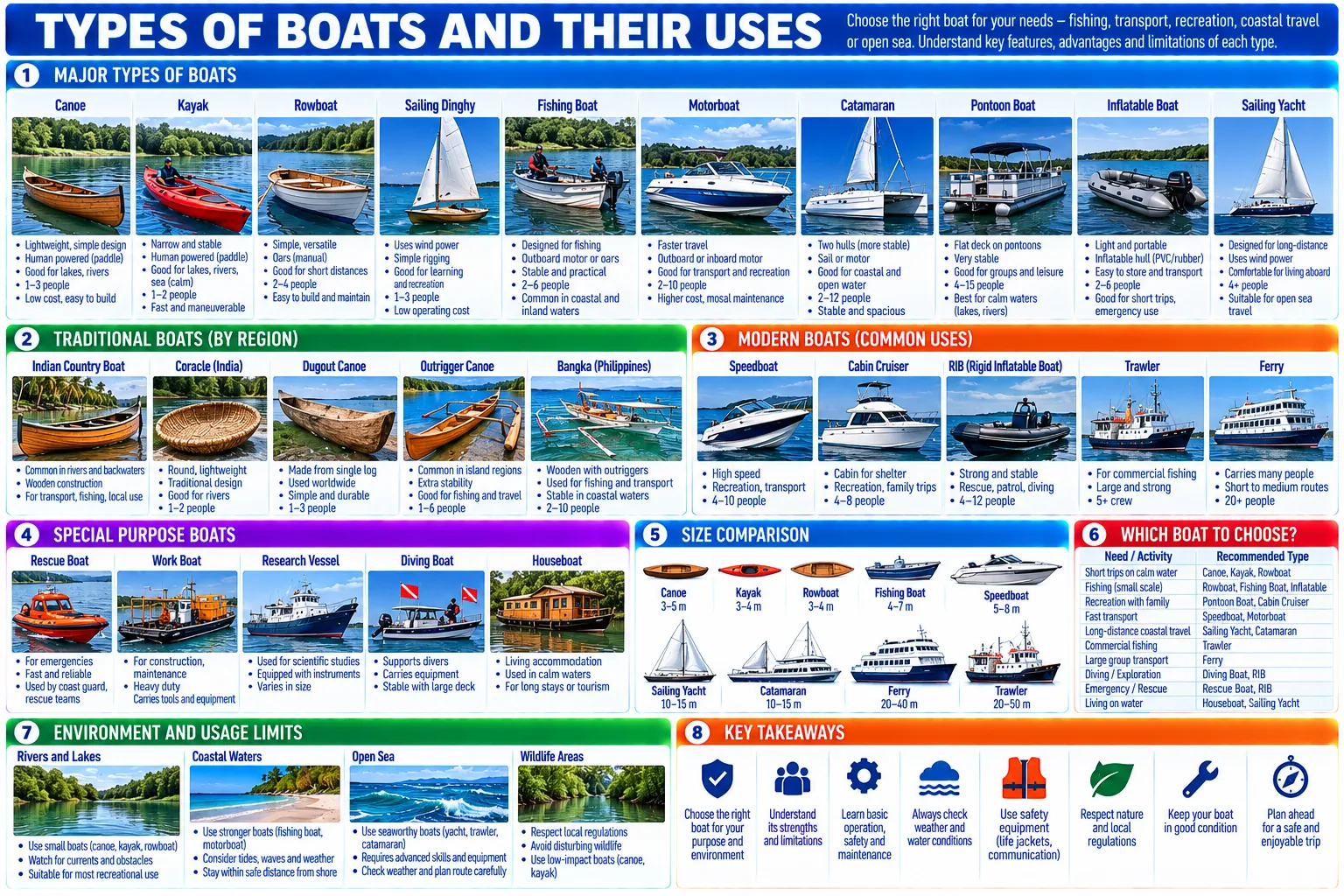
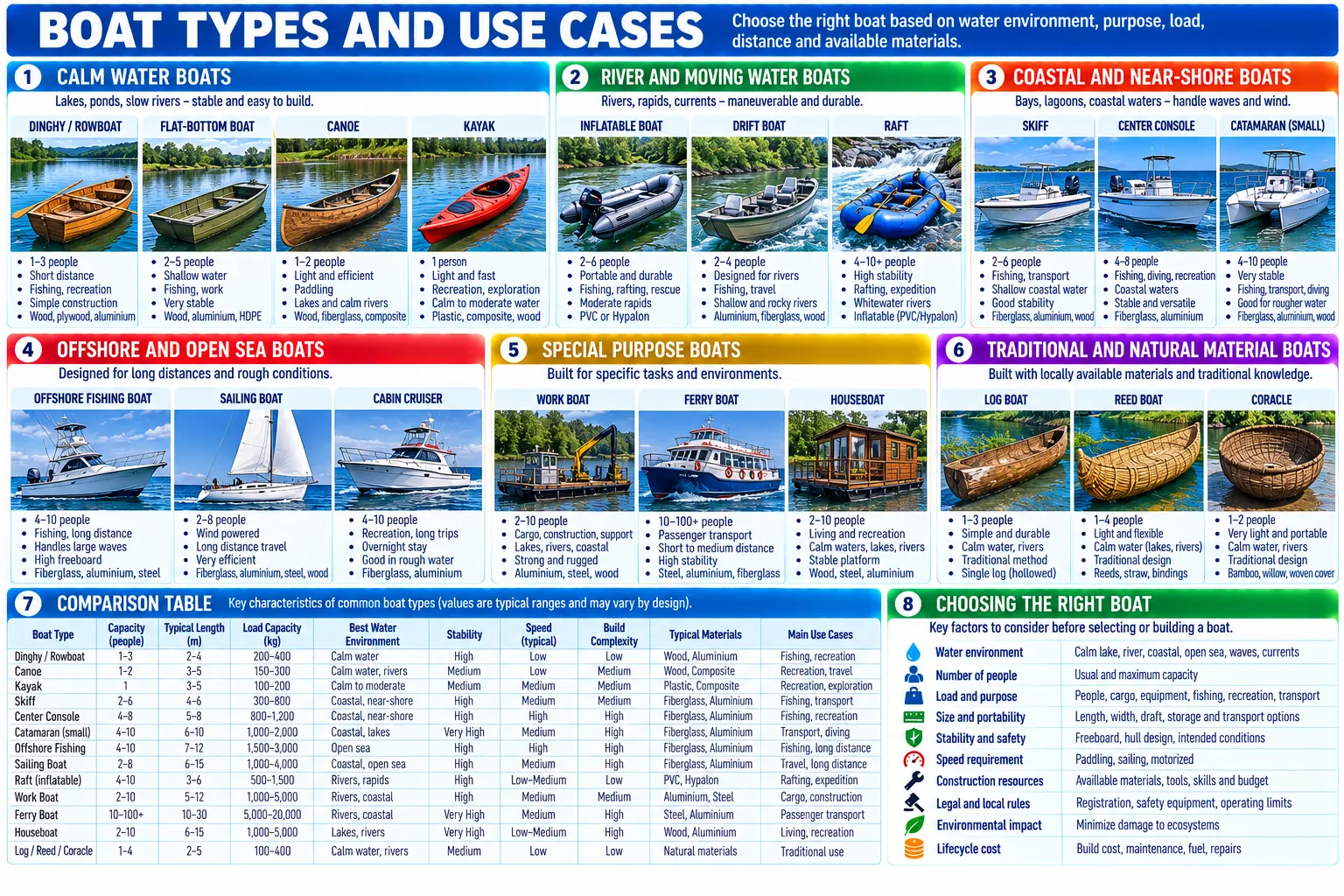
Ten common boats, five traditional boats by region, five modern working boats, five special-purpose boats, a size comparison, which boat suits which need, and where each can go.
Types of boats and their uses On: Modern ships and small craft
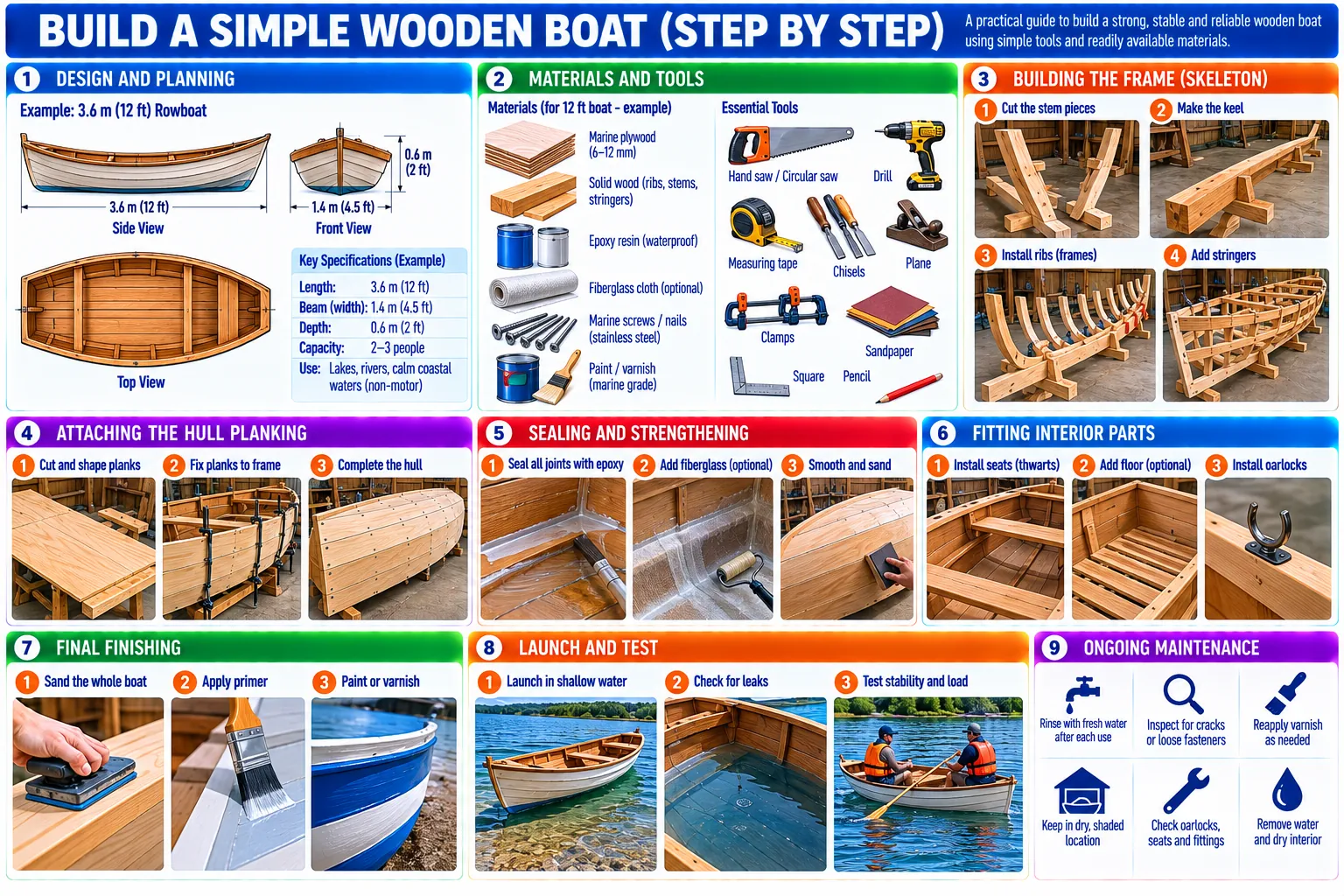
A 3.6 × 1.4 m plywood rowboat for 2–3 people: design, materials and tools, stem, keel, ribs and stringers, planking, epoxy sealing and optional glass cloth, seats and oarlocks, finishing, launching and testing, and upkeep.
Build a simple wooden boat: a 3.6 m rowboat On: Modern ships and small craft
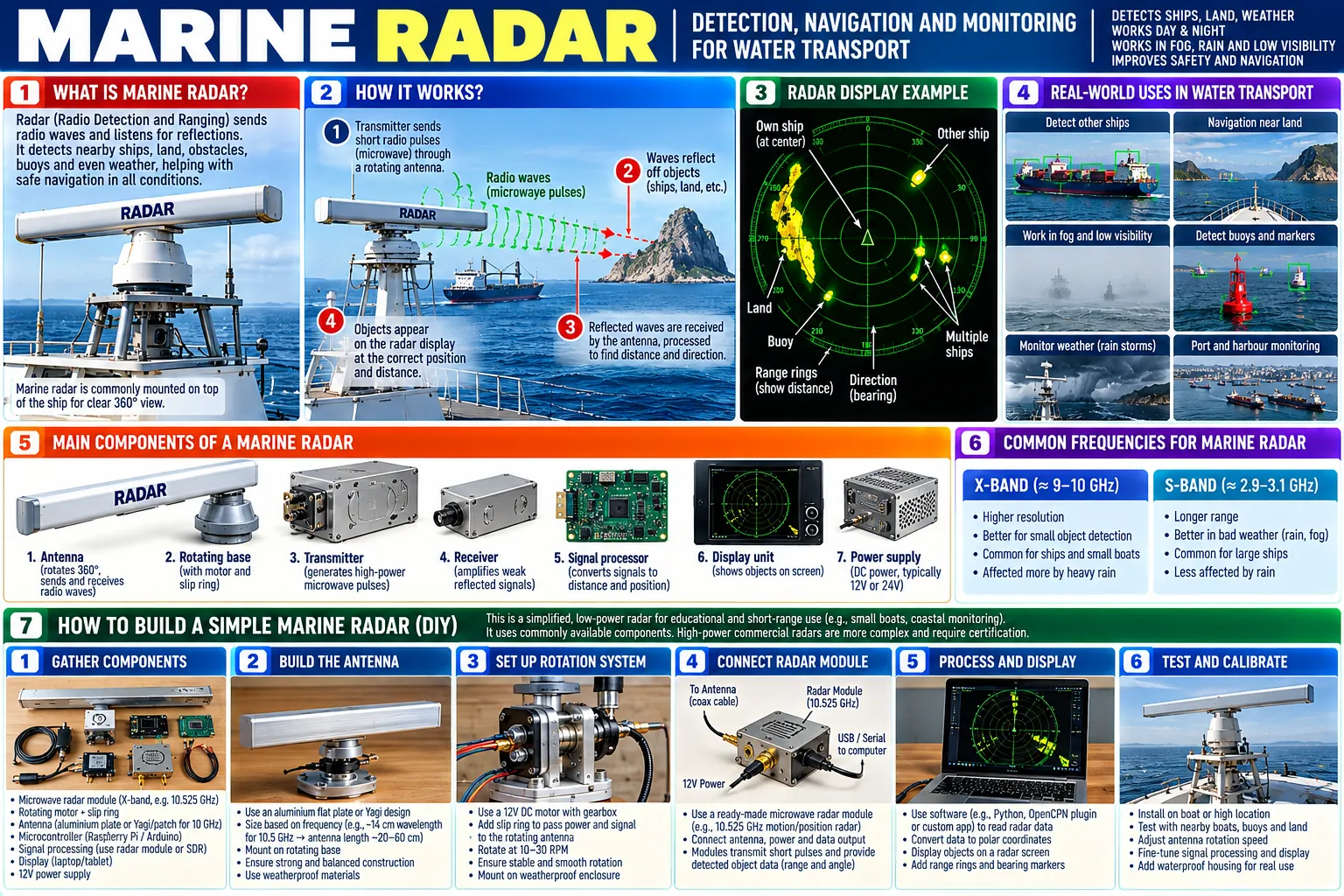
What a marine radar is and how it works, a display showing own ship, land, buoys and other ships, its uses at sea, the seven parts from scanner to power supply, X-band (9–10 GHz) against S-band (2.9–3.1 GHz), and a six-step home build.
Marine radar: detection, navigation and monitoring On: Modern ships and small craft
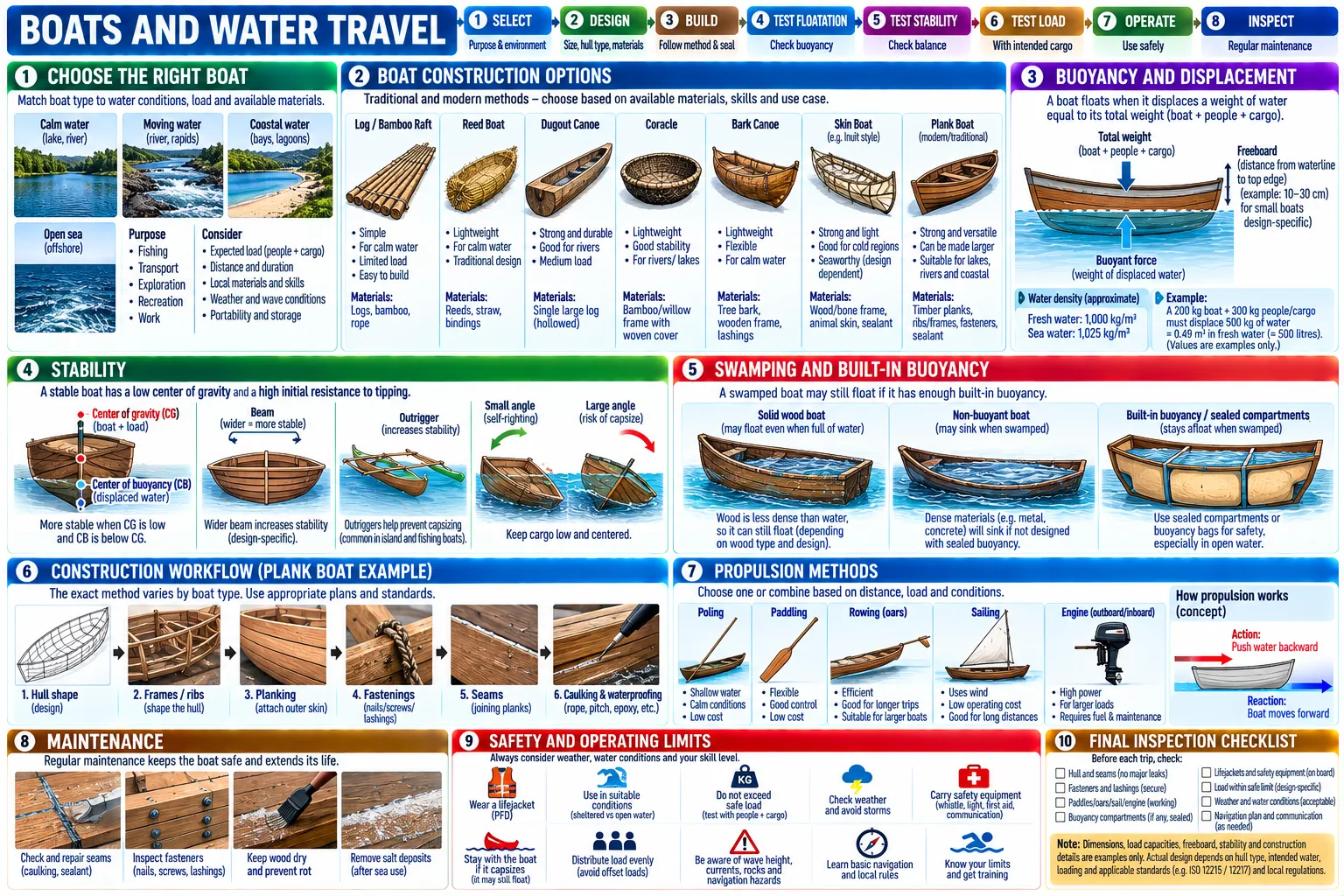
Select, design, build, test for floating, stability and load, operate and inspect: the kinds of boat and what each is made from, buoyancy and freeboard, stability, swamping, a plank-boat build, ways to move a boat, upkeep, safety limits and a checklist for before each trip.
Boats and water travel: the order of work On: Boats and water travel: At a glance: the order of work
Seventeen boats grouped by the water they suit (calm water, rivers, coast, open sea, special purpose and traditional), a comparison table of capacity, length, load, stability, speed and build difficulty, and the factors that decide a choice.
Boat types and use cases On: Boats and water travel: Choose the kind of boat
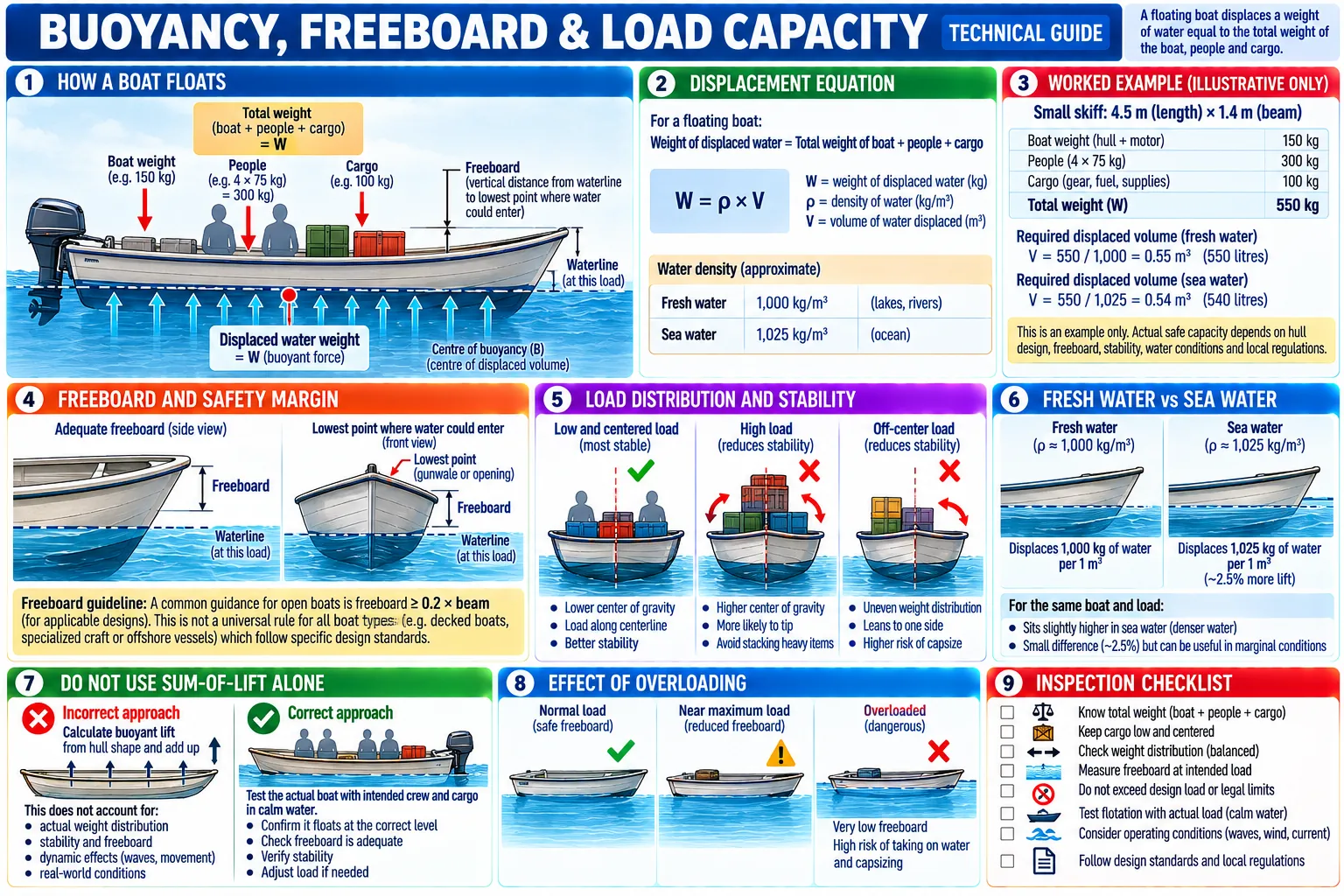
How a boat floats, the displacement equation W = ρ × V, a worked example for a 4.5 × 1.4 m skiff, freeboard, where to put the load, fresh against sea water, why adding up the lift is not enough, overloading, and a checklist.
Buoyancy, freeboard and load capacity On: Boats and water travel: How much it carries
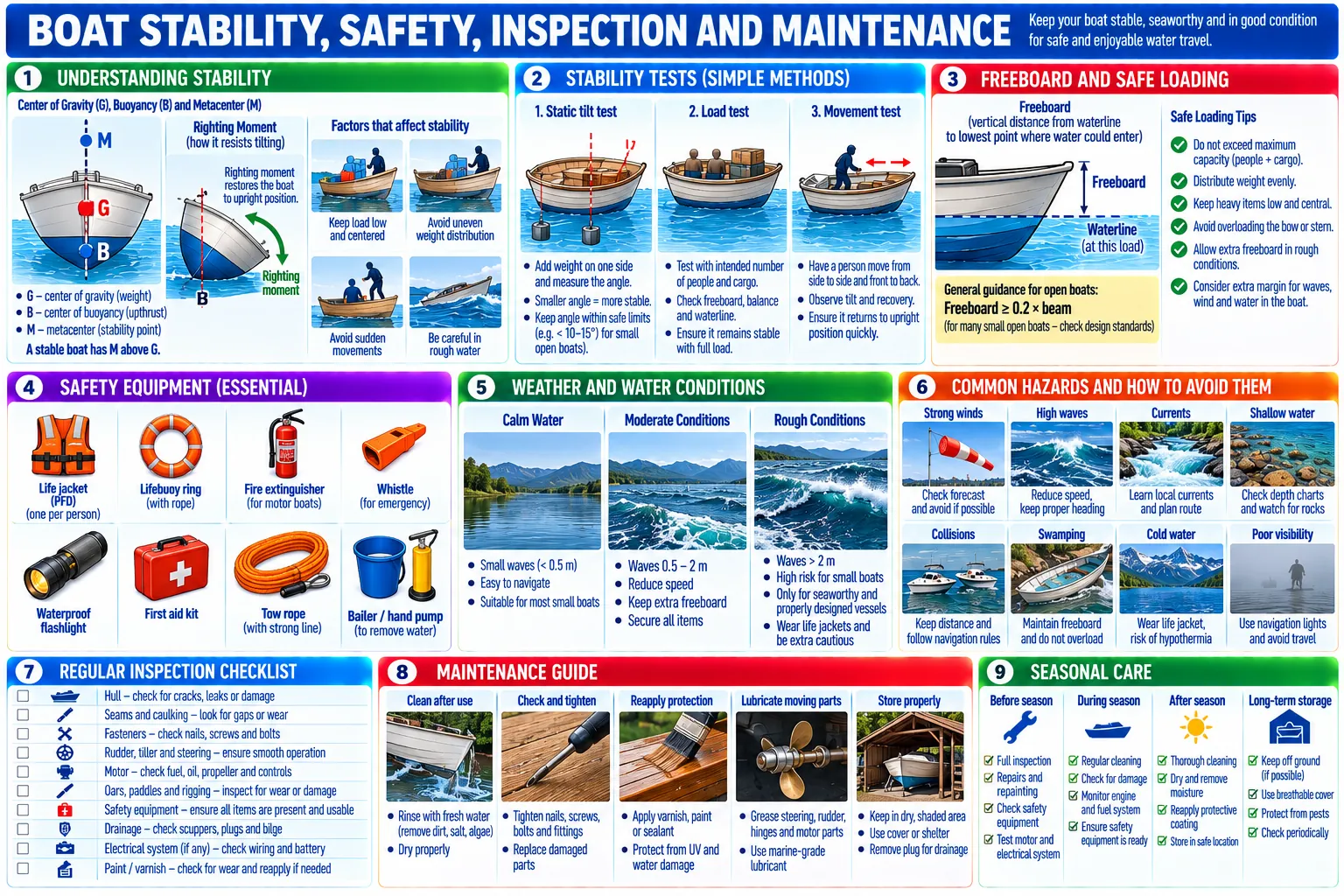
Centre of gravity G, buoyancy B and metacentre M, three simple stability tests, freeboard and loading, safety equipment, weather and water, common hazards, an inspection checklist, maintenance and seasonal care.
Stability, safety, inspection and maintenance On: Boats and water travel: What keeps it upright
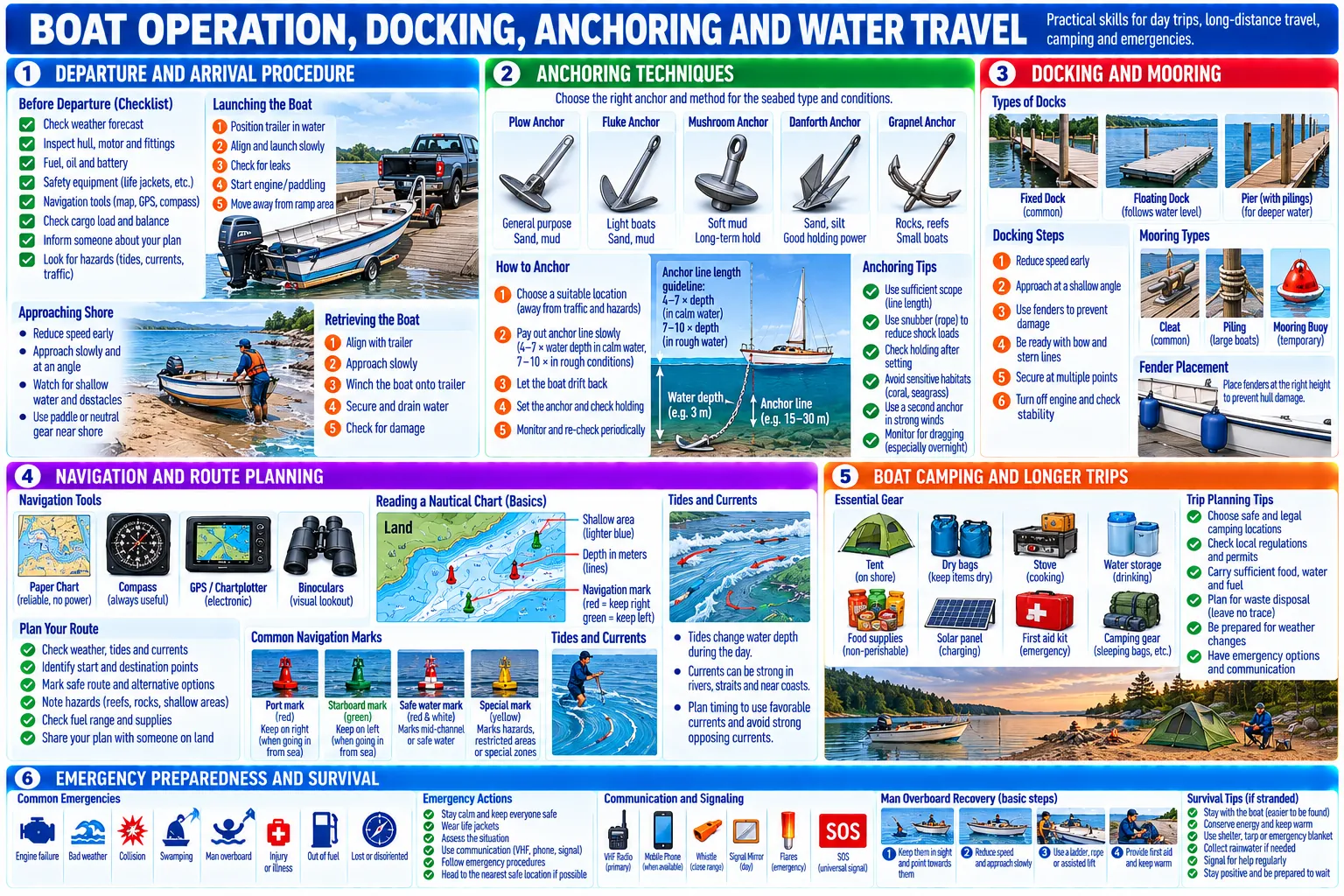
Departure and arrival checklists, launching and retrieving from a trailer, five anchor types and how to anchor, docking and mooring, route planning, charts and marks, camping from a boat, and emergency actions including man-overboard recovery.
Boat operation, docking, anchoring and water travel On: Boats and water travel: Wear a float, and if you go in
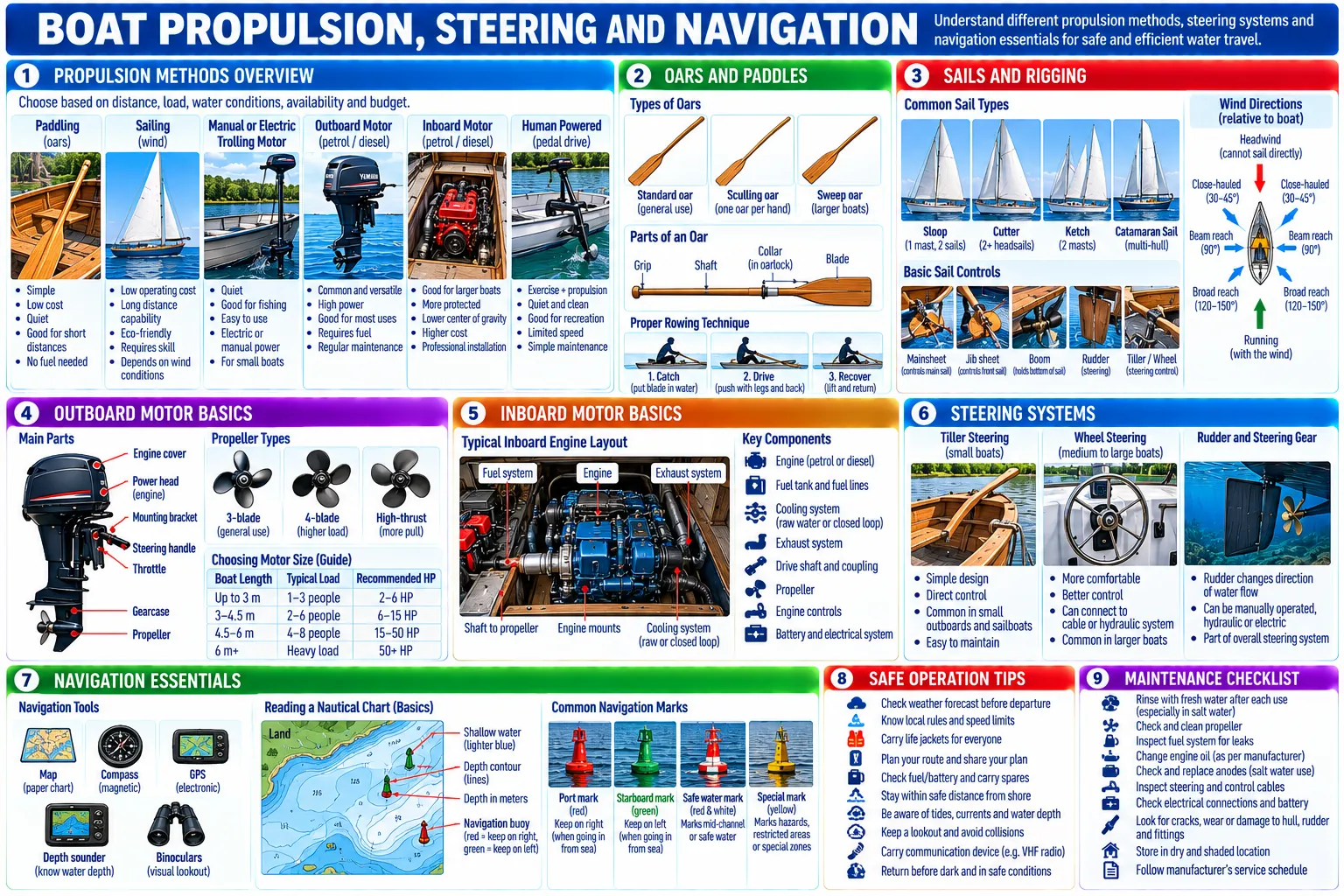
Paddle, sail, trolling motor, outboard, inboard and pedal drive; oars and rowing; sail types and points of sail; outboard and inboard parts; tiller, wheel and rudder; navigation tools, charts and marks; safe operation and a maintenance checklist.
Propulsion, steering and navigation On: Boats and water travel: Moving it
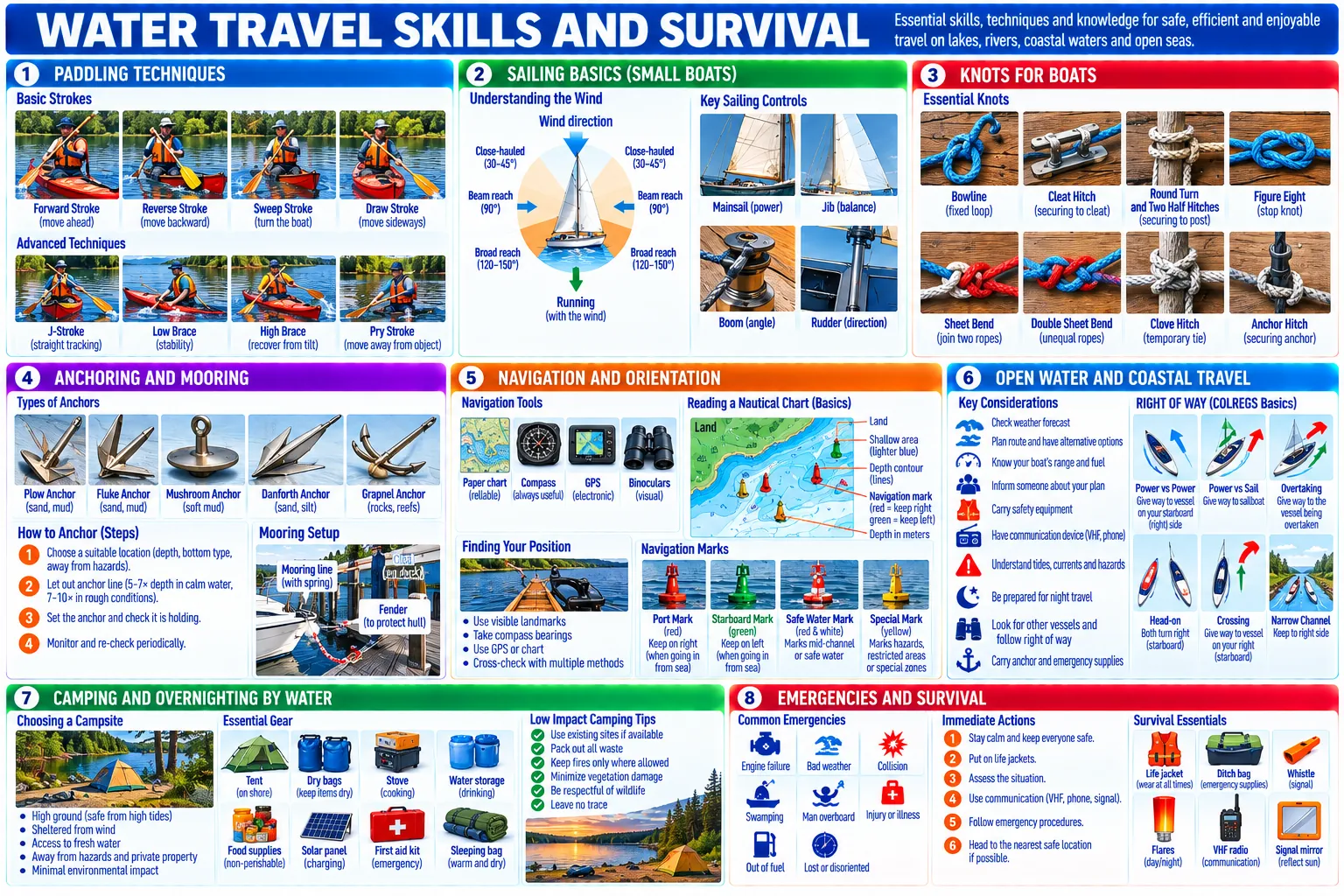
Paddle strokes, small-boat sailing and points of sail, eight knots for boats, anchoring and mooring, navigation and fixing your position, right of way under the collision rules, camping by water, and emergencies.
Water travel skills and survival On: Boats and water travel: Rules of the water
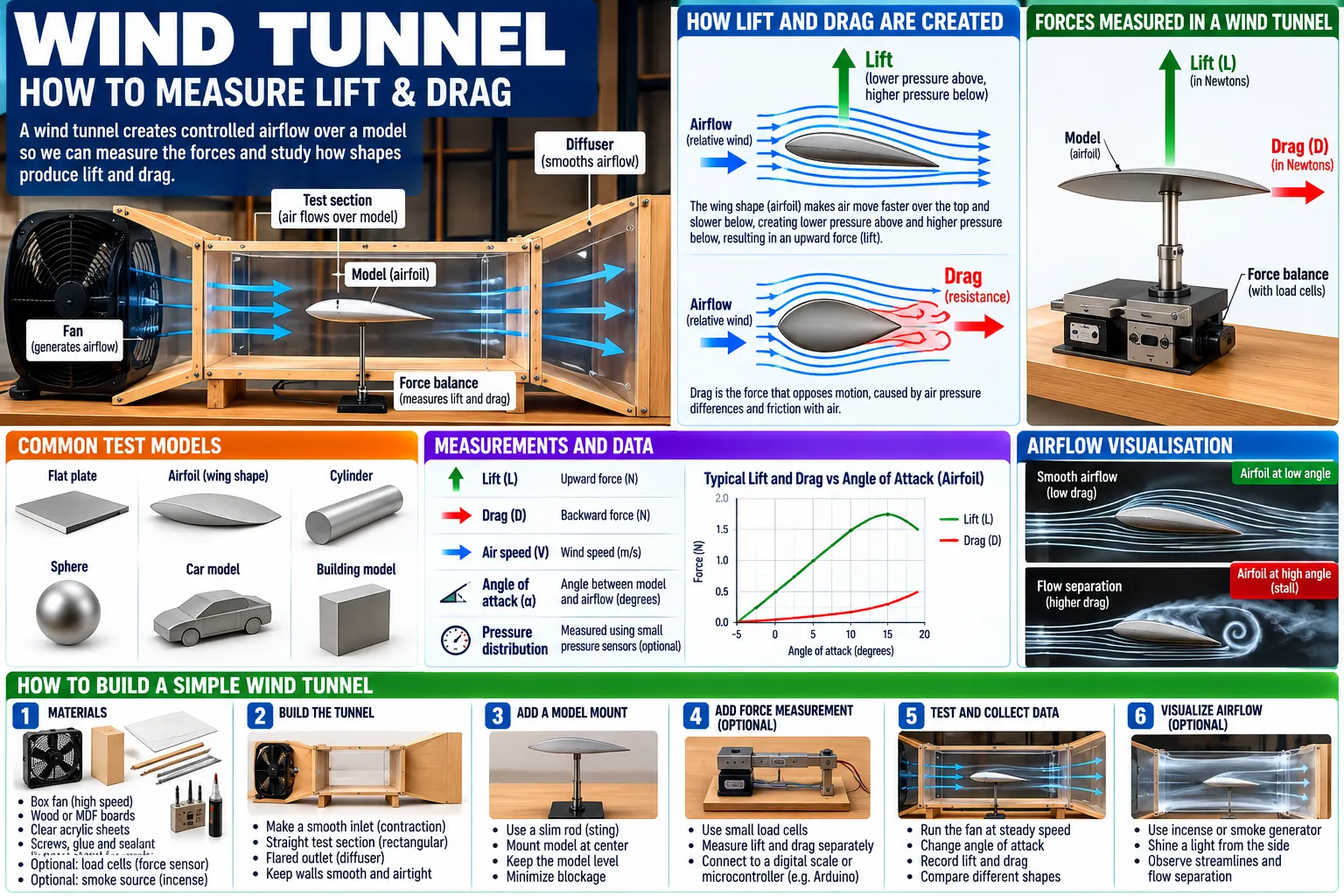
The parts of a small open wind tunnel, how lift and drag arise, a force balance on load cells, common test models, what is measured, lift and drag against angle of attack, smoke to show the flow, and a six-step build.
Wind tunnel: measuring lift and drag On: Gliders and the control problem
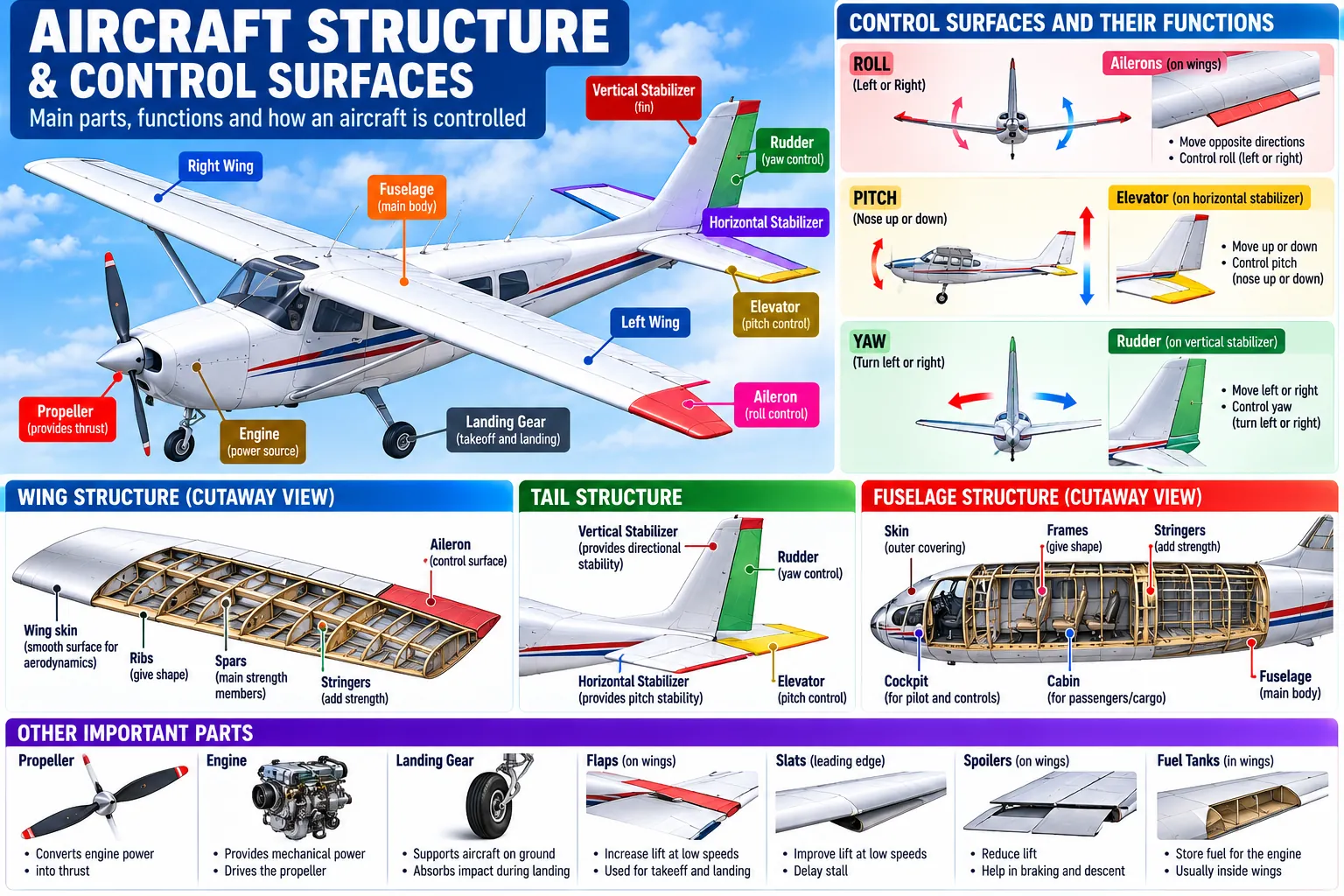
A single-engine light aeroplane with its parts named, the three axes and the surfaces that control them (ailerons, elevator, rudder), the wing's ribs, spars and stringers, the tail, the fuselage frame, and flaps, slats, spoilers and fuel tanks.
Aircraft structure and control surfaces On: The powered aeroplane
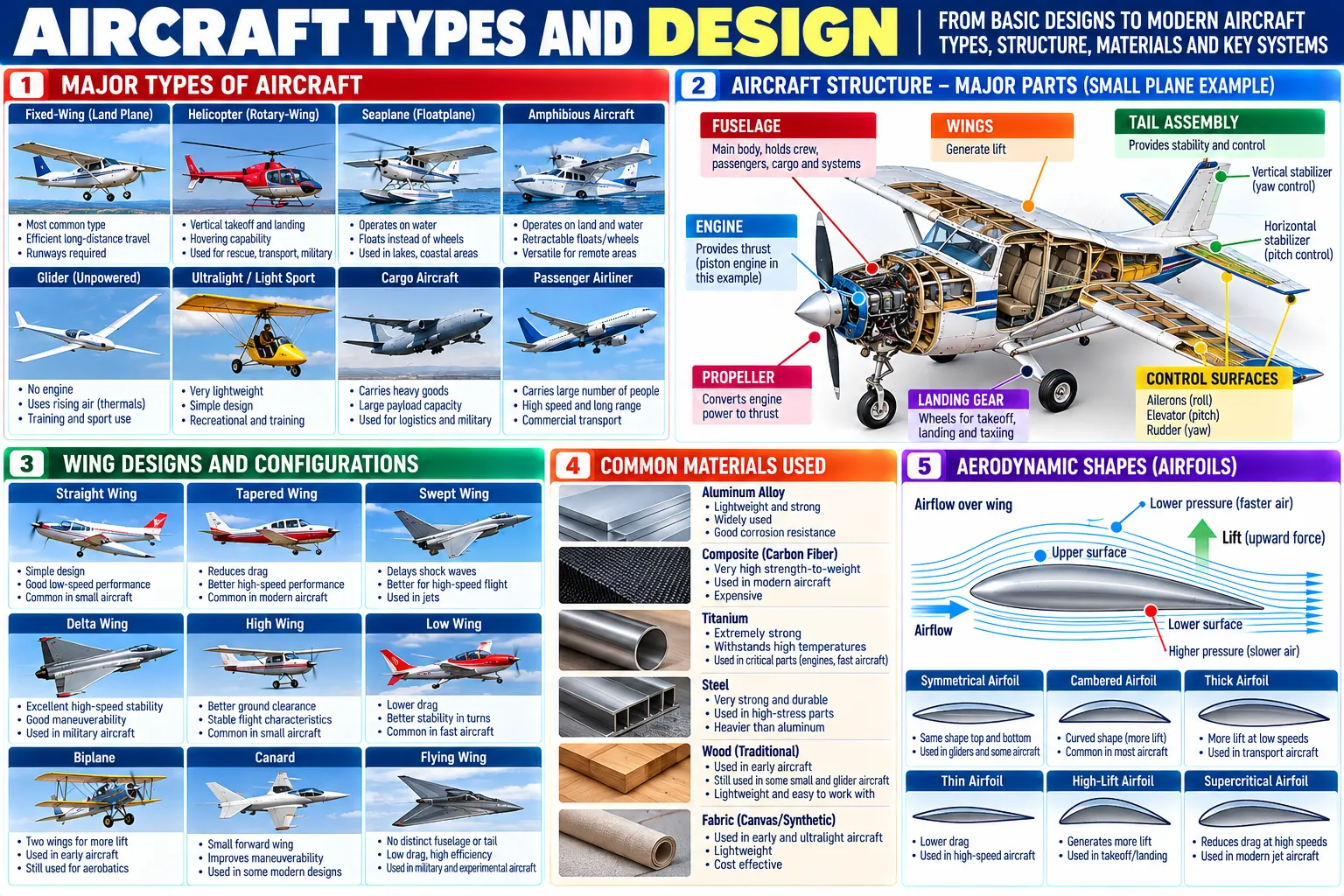
Eight kinds of aircraft (landplane, helicopter, seaplane, amphibian, glider, ultralight, freighter, airliner), the major parts of a light aeroplane, nine wing layouts, the materials aircraft are built from, and six kinds of aerofoil.
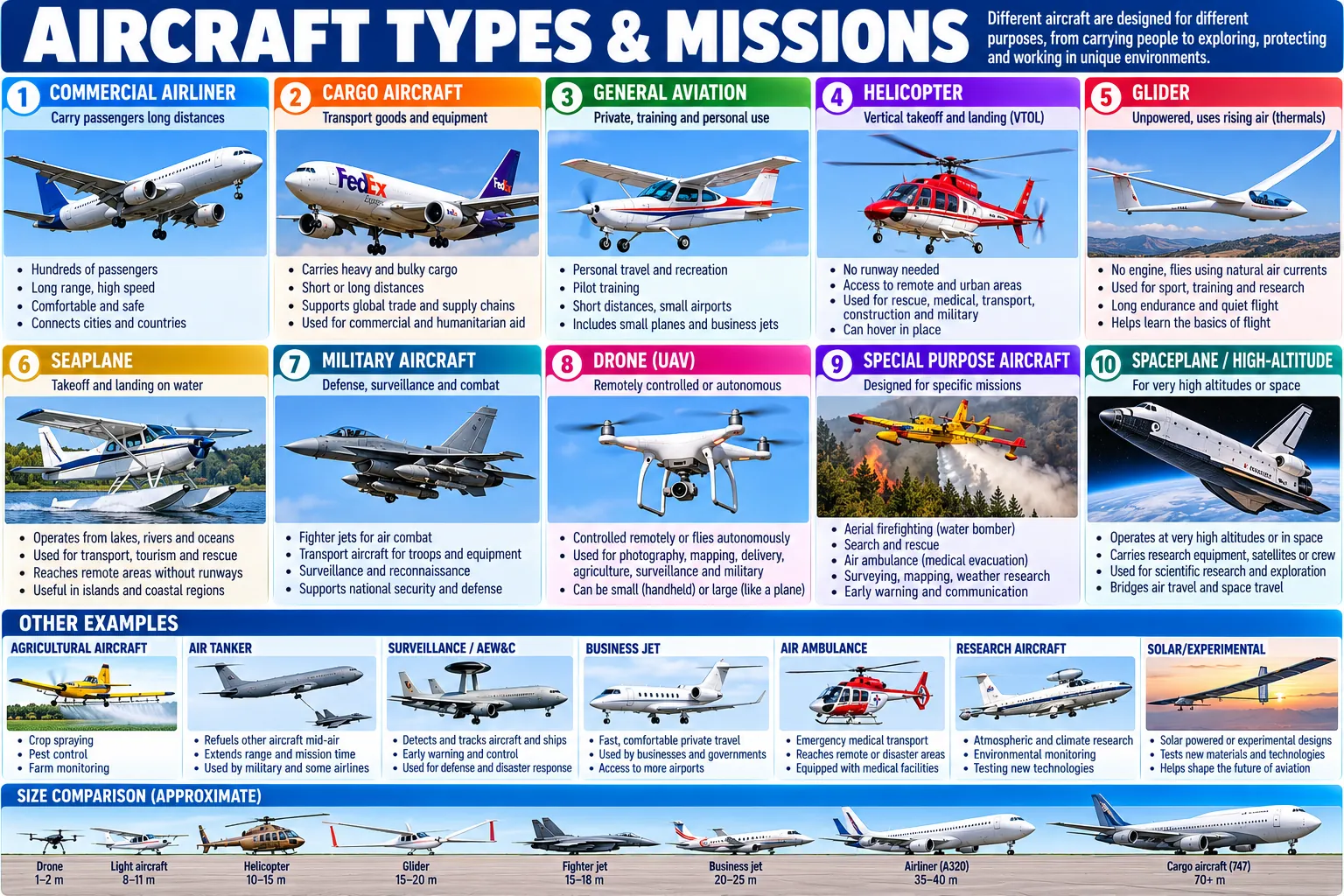
Aircraft types and design On: The powered aeroplane
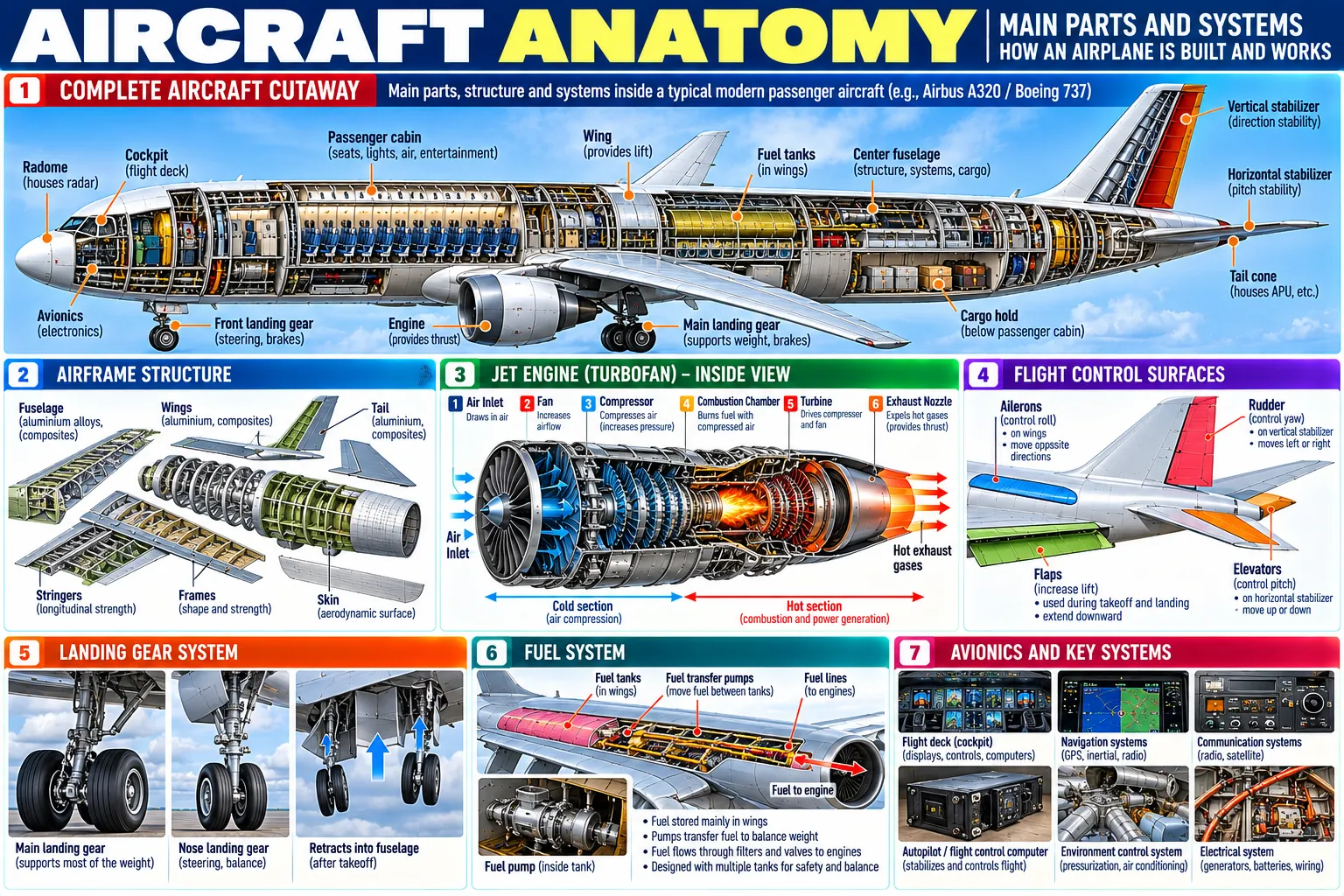
A cutaway airliner of the A320 or 737 class, the airframe's frames, stringers and skin, a turbofan in section, the flight control surfaces, the landing gear, the fuel system, and the avionics and other key systems.
Aircraft anatomy: an airliner's parts and systems On: Jets, helicopters and air traffic control
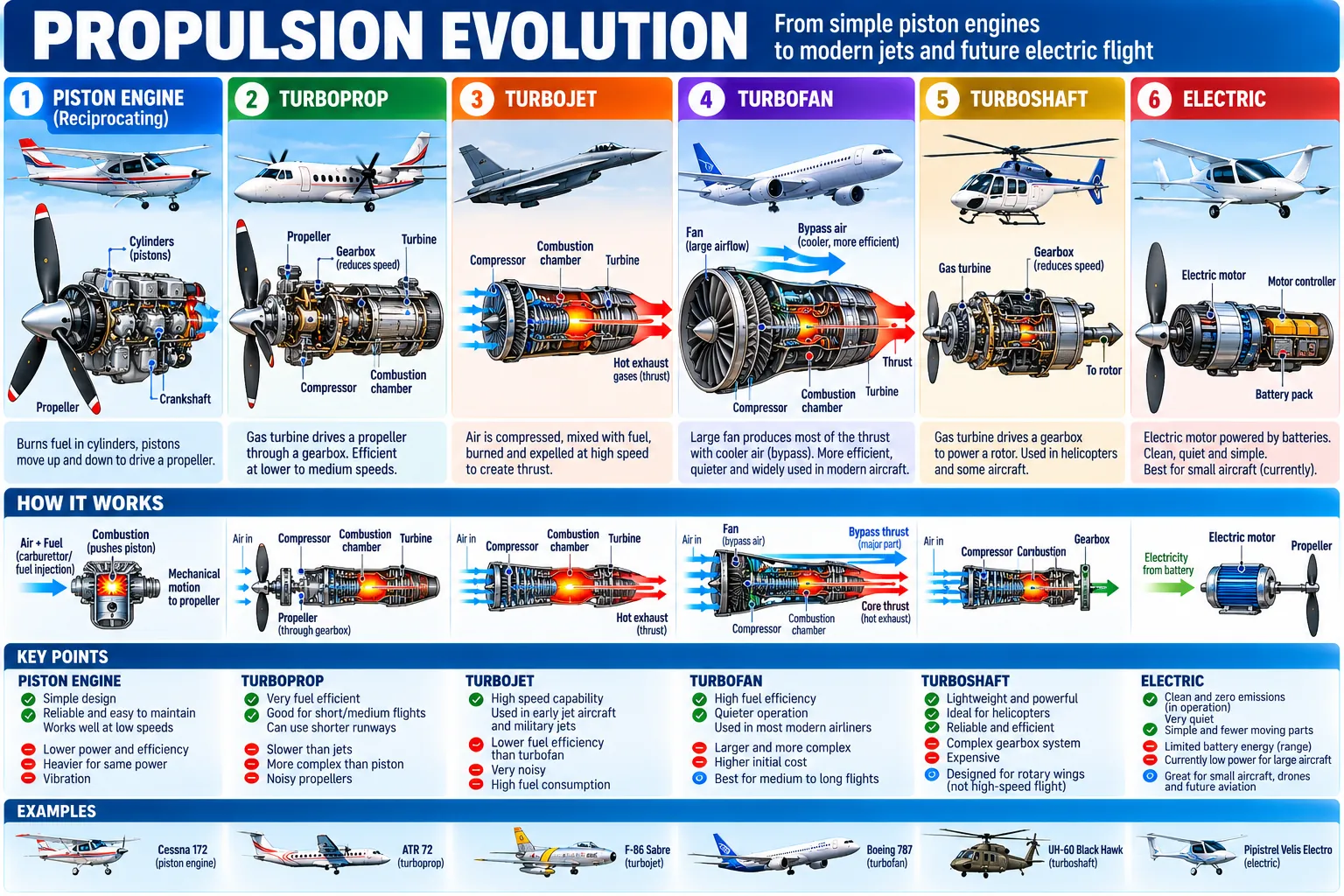
Six ways to drive an aircraft — piston engine, turboprop, turbojet, turbofan, turboshaft and electric motor — each in section, how each works, its strengths and limits, and an example aircraft for each.
Aircraft propulsion: piston to turbofan and electric On: Jets, helicopters and air traffic control
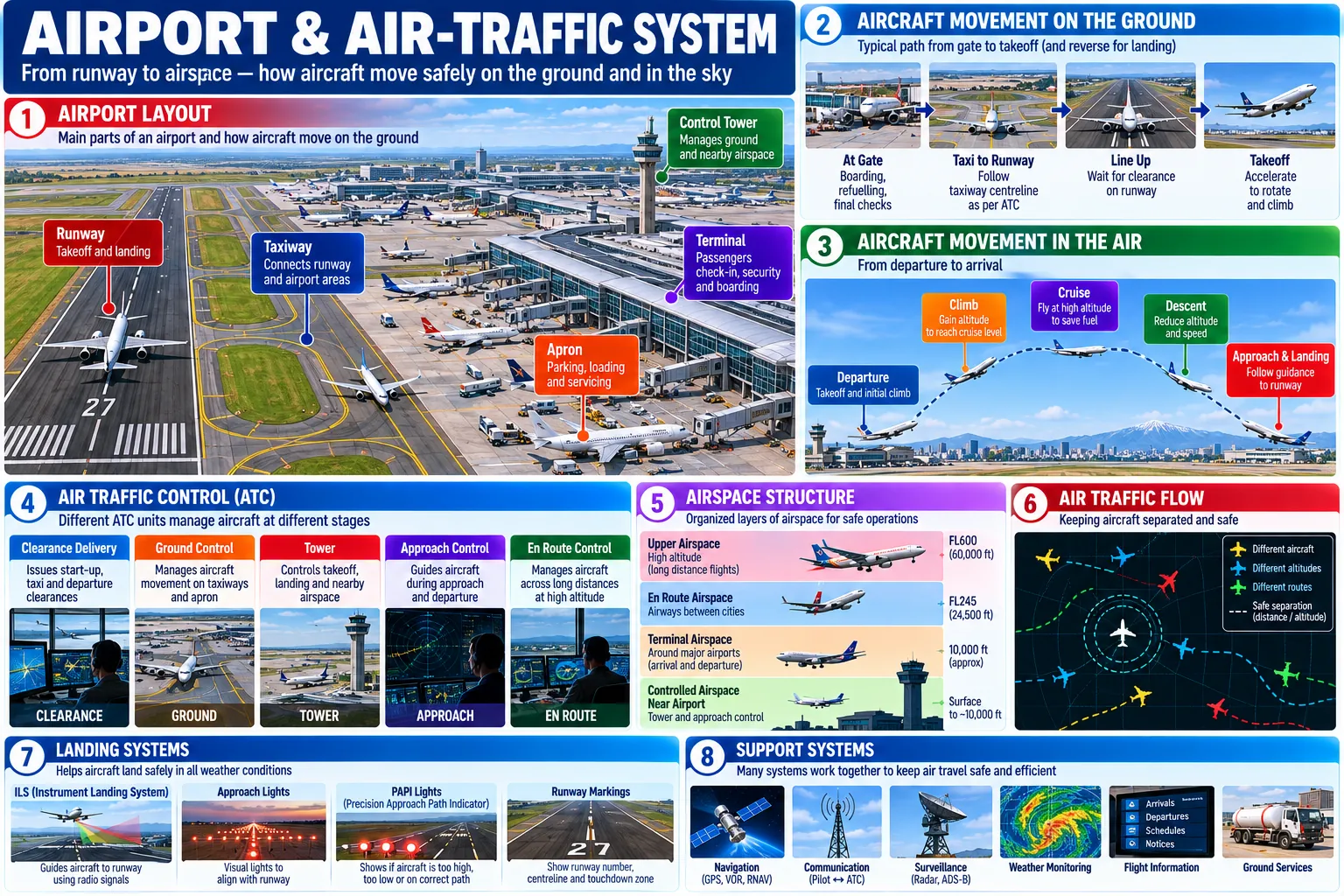
An airport's runway, taxiways, apron, terminal and tower, an aircraft's path from gate to take-off, the phases of flight, the five air traffic control units, the layers of airspace, traffic separation, landing aids (ILS, approach lights, PAPI, runway markings) and the systems behind them.
Airport and air traffic system On: Jets, helicopters and air traffic control
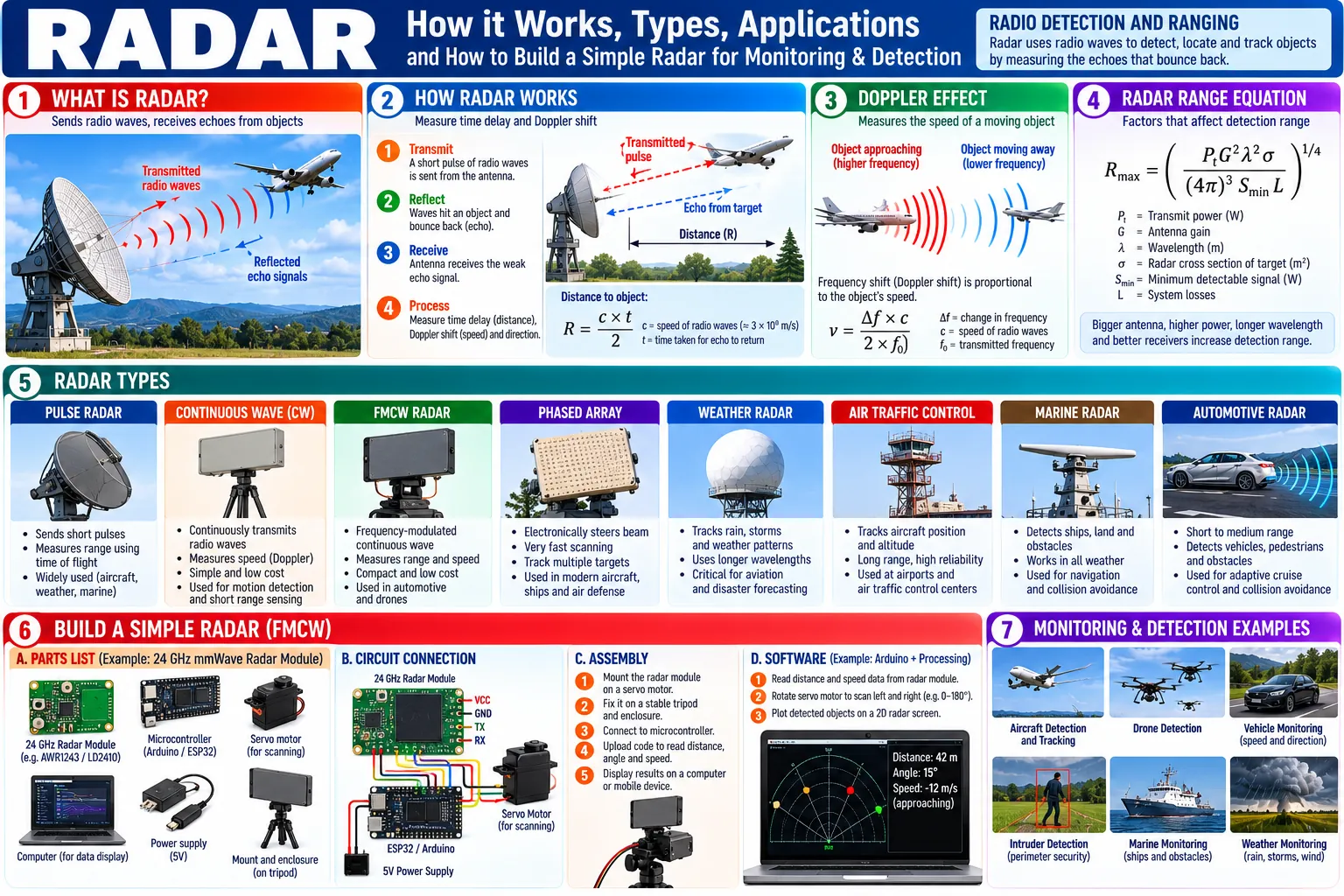
Radio detection and ranging: transmit, reflect, receive; distance R = c × t ÷ 2; speed from the Doppler shift; the radar range equation; eight kinds of radar from pulse and FMCW to weather, air traffic, marine and automotive; a 24 GHz module scanned on a servo; and what radar can watch.
Radar: how it works, types and a simple build On: Jets, helicopters and air traffic control
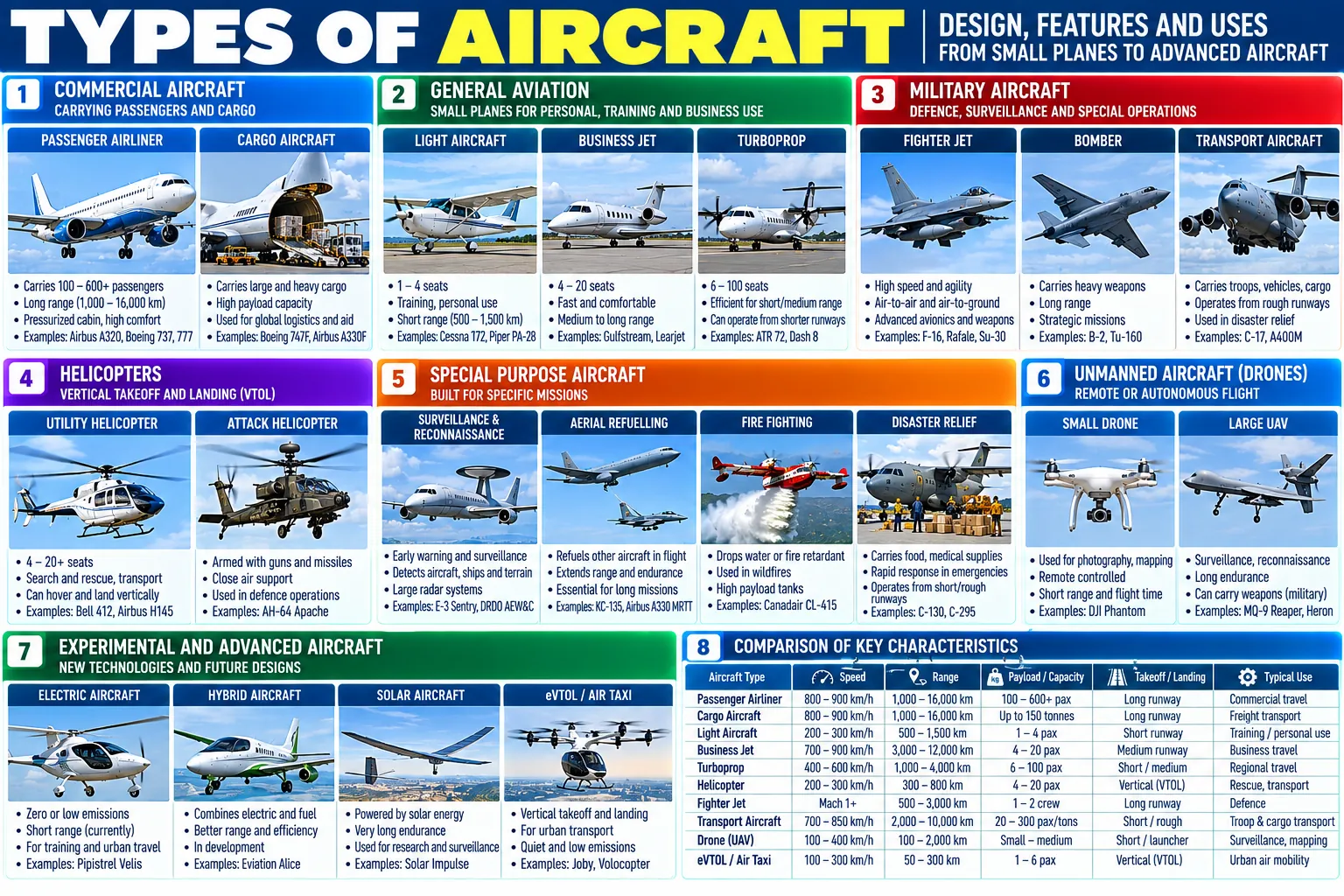
Aircraft by role — airliners and freighters, light aircraft, business jets and turboprops, fighters, bombers and military transports, helicopters, surveillance, tanker, firefighting and relief aircraft, drones, and electric, hybrid, solar and eVTOL designs — with real examples and a table of speed, range, payload and runway.
Types of aircraft: design, features and uses On: Modern aviation and drones
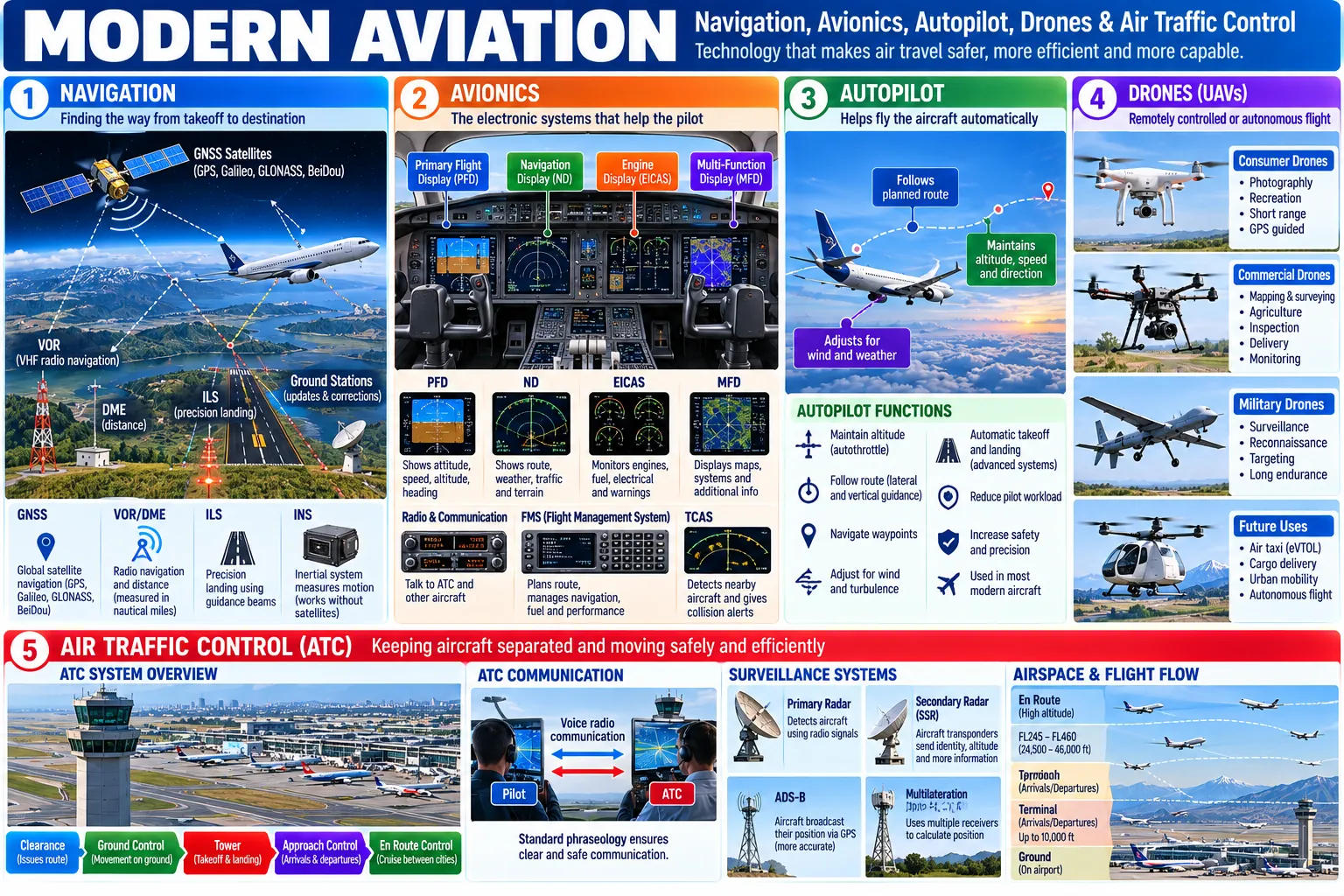
Satellite, radio and inertial navigation, the glass cockpit's displays, flight management and collision avoidance, what an autopilot does, four kinds of drone, air traffic control units and radio phraseology, the four surveillance systems (primary and secondary radar, ADS-B, multilateration) and the layers of airspace.
Modern aviation: navigation, avionics, autopilot, drones and ATC On: Modern aviation and drones
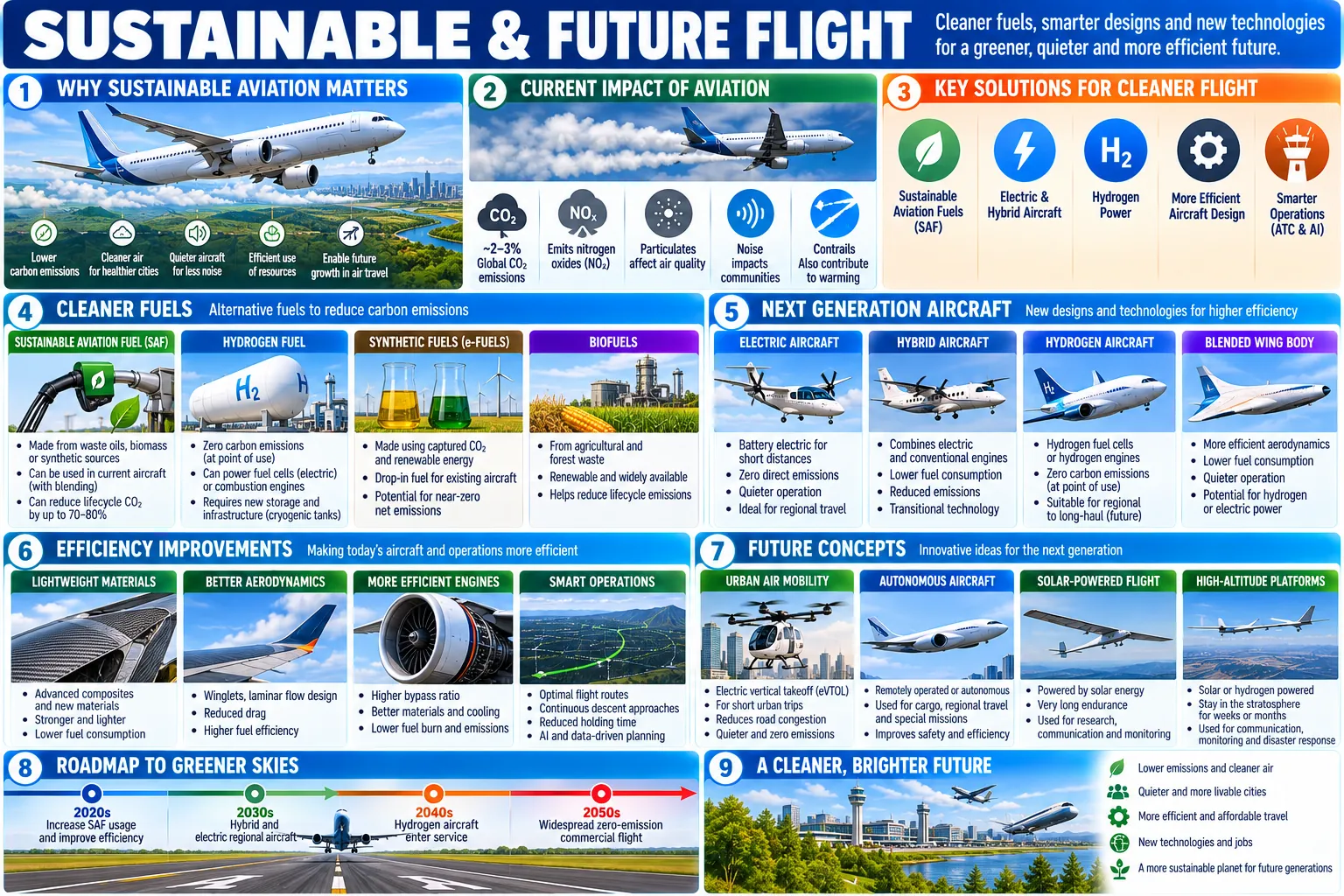
Why aviation's emissions matter, its impact (about 2–3 % of global CO₂, nitrogen oxides, particles, noise and contrails), the options — sustainable, hydrogen, synthetic and bio fuels, electric, hybrid, hydrogen and blended-wing aircraft, lighter materials, better engines and operations — future concepts, and a roadmap to 2050.
Sustainable and future flight On: Modern aviation and drones
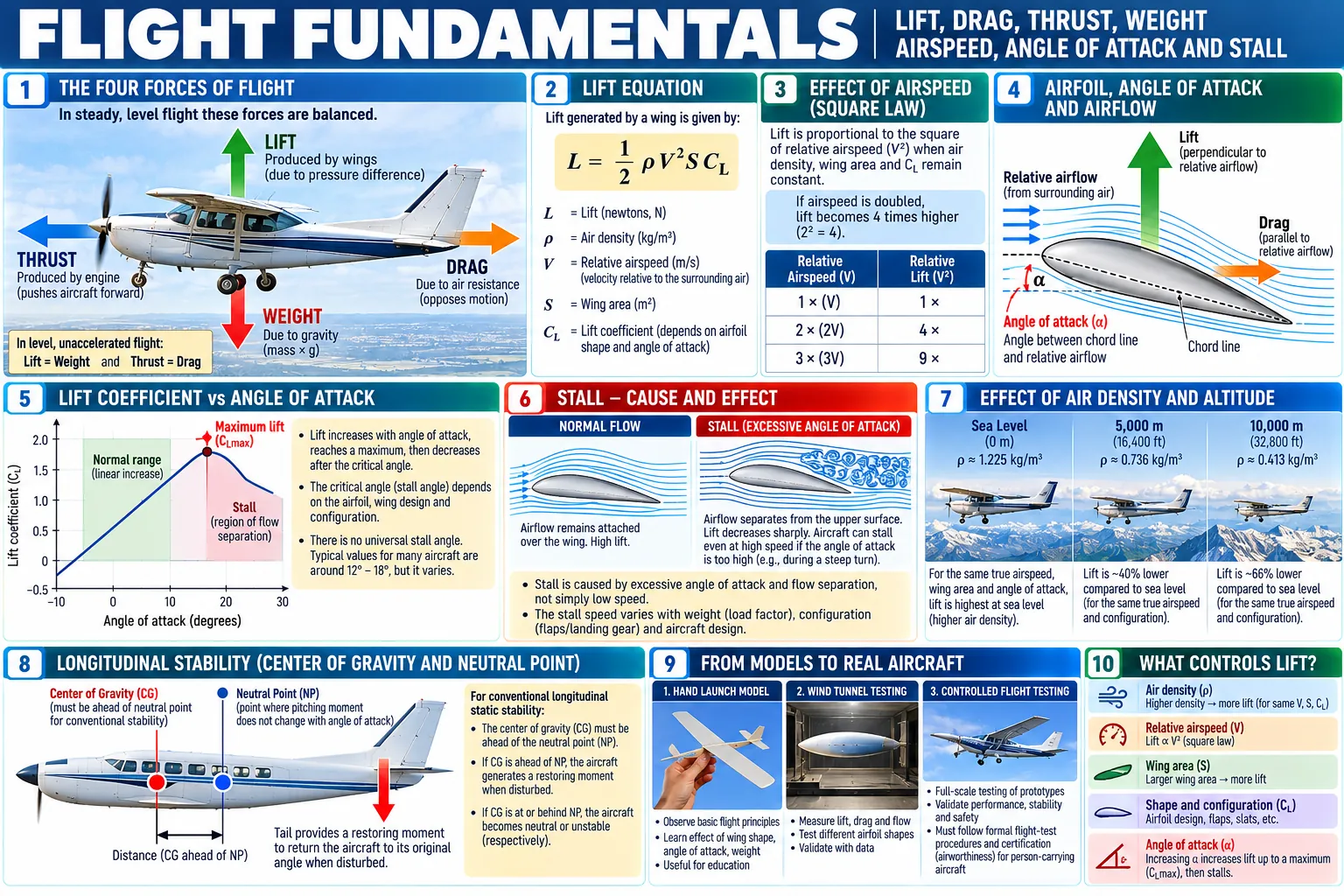
The four forces, the lift equation L = ½ρV²SC_L, the square law of airspeed, angle of attack on an aerofoil, lift coefficient against angle of attack, the stall, air density at 0, 5,000 and 10,000 m, the centre of gravity ahead of the neutral point, and the path from models to full-size aircraft.
Flight fundamentals: lift, drag, thrust, weight and stall On: Flight: How a surface makes lift
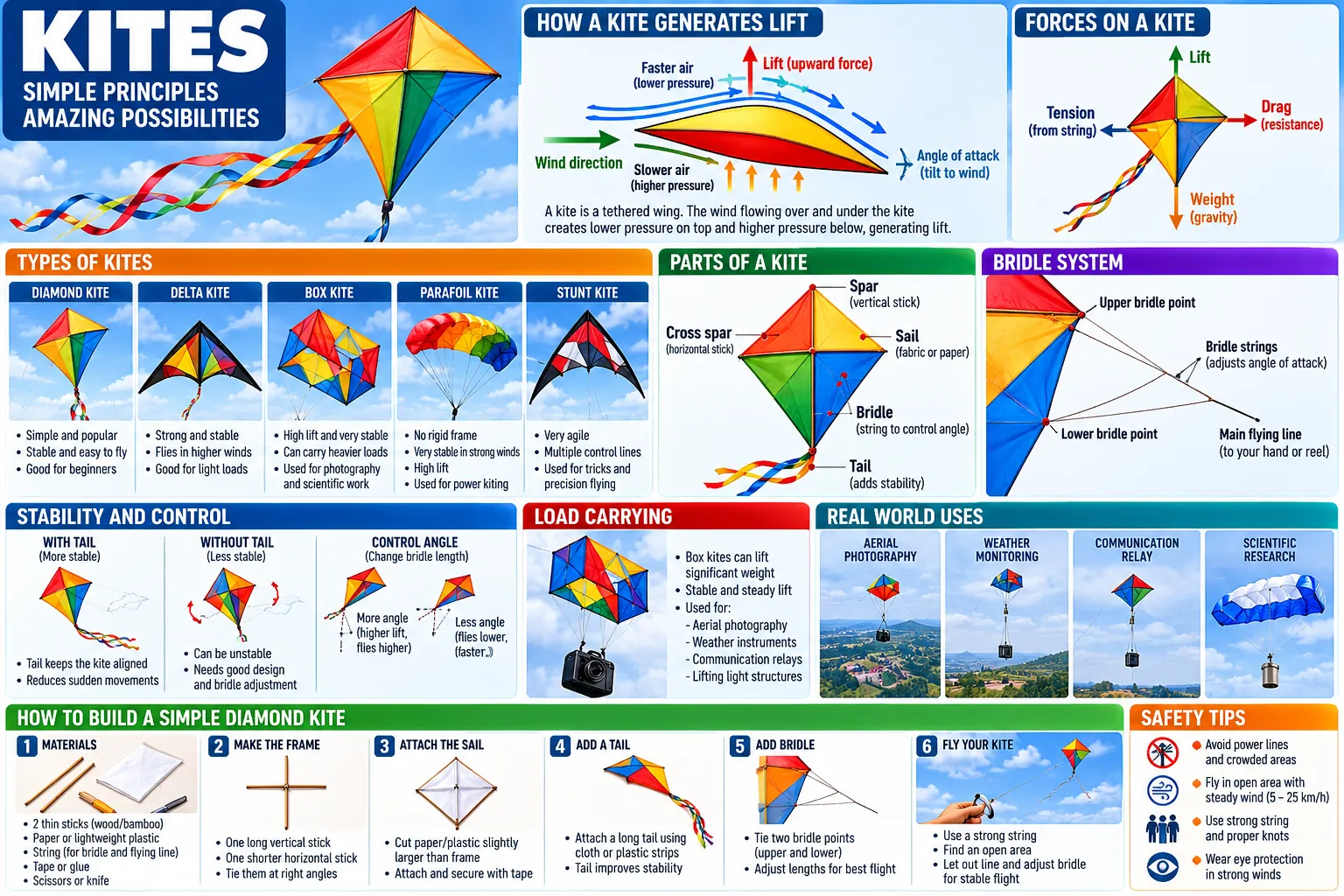
How a kite makes lift and the forces on it, five kinds (diamond, delta, box, parafoil, stunt), the parts, the bridle, tails and bridle adjustment, box kites lifting cameras and instruments, real uses, and a six-step diamond kite build.
Kites: lift, bridle, stability and load carrying On: Flight: Kites
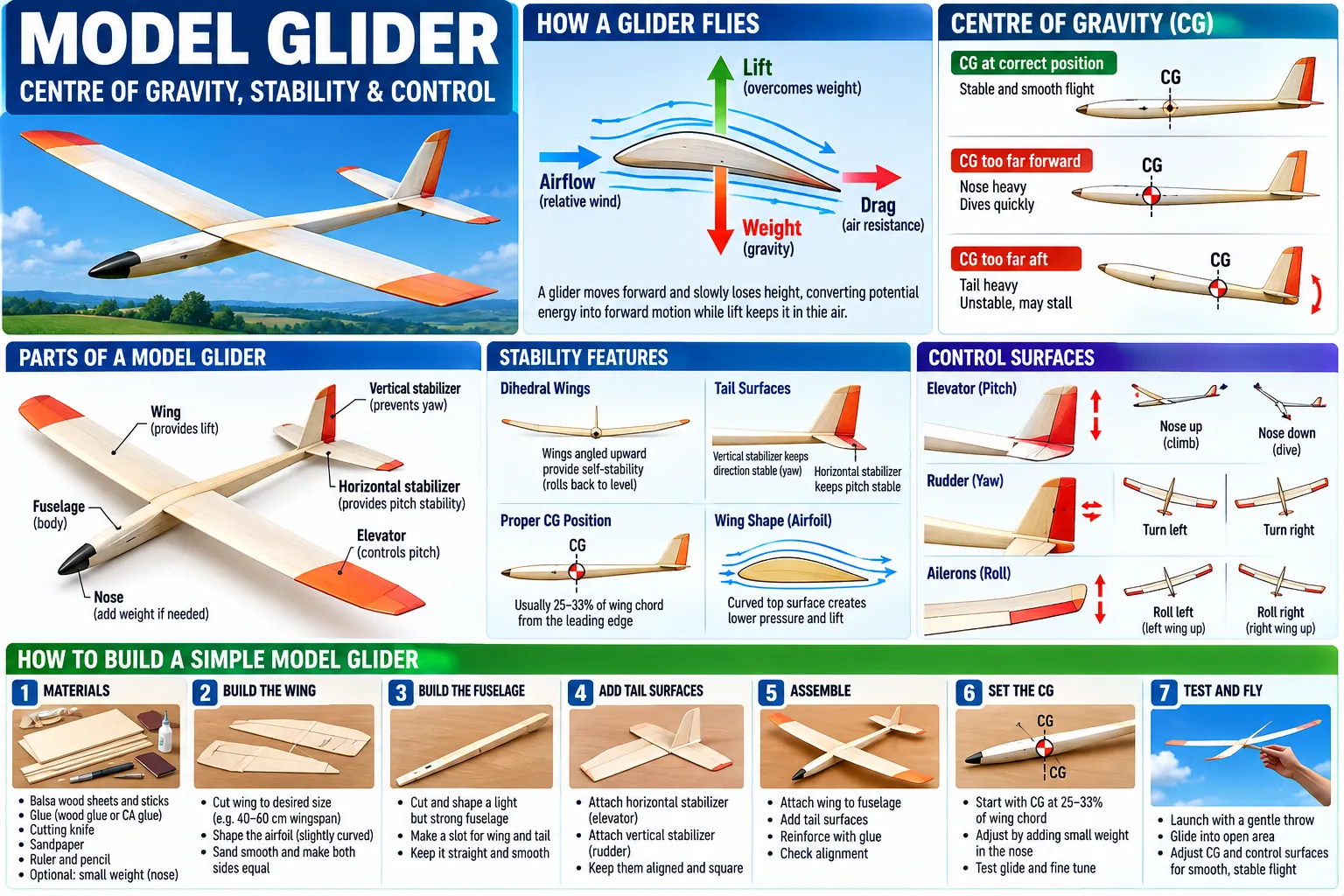
How a glider flies, the centre of gravity in the right place, too far forward and too far aft, the parts of a model glider, dihedral, tail surfaces, the aerofoil, elevator, rudder and ailerons, and a seven-step balsa build balanced at 25–33 % of the chord.
Model glider: centre of gravity, stability and control On: Flight: Balance: bridle, tail and centre of gravity
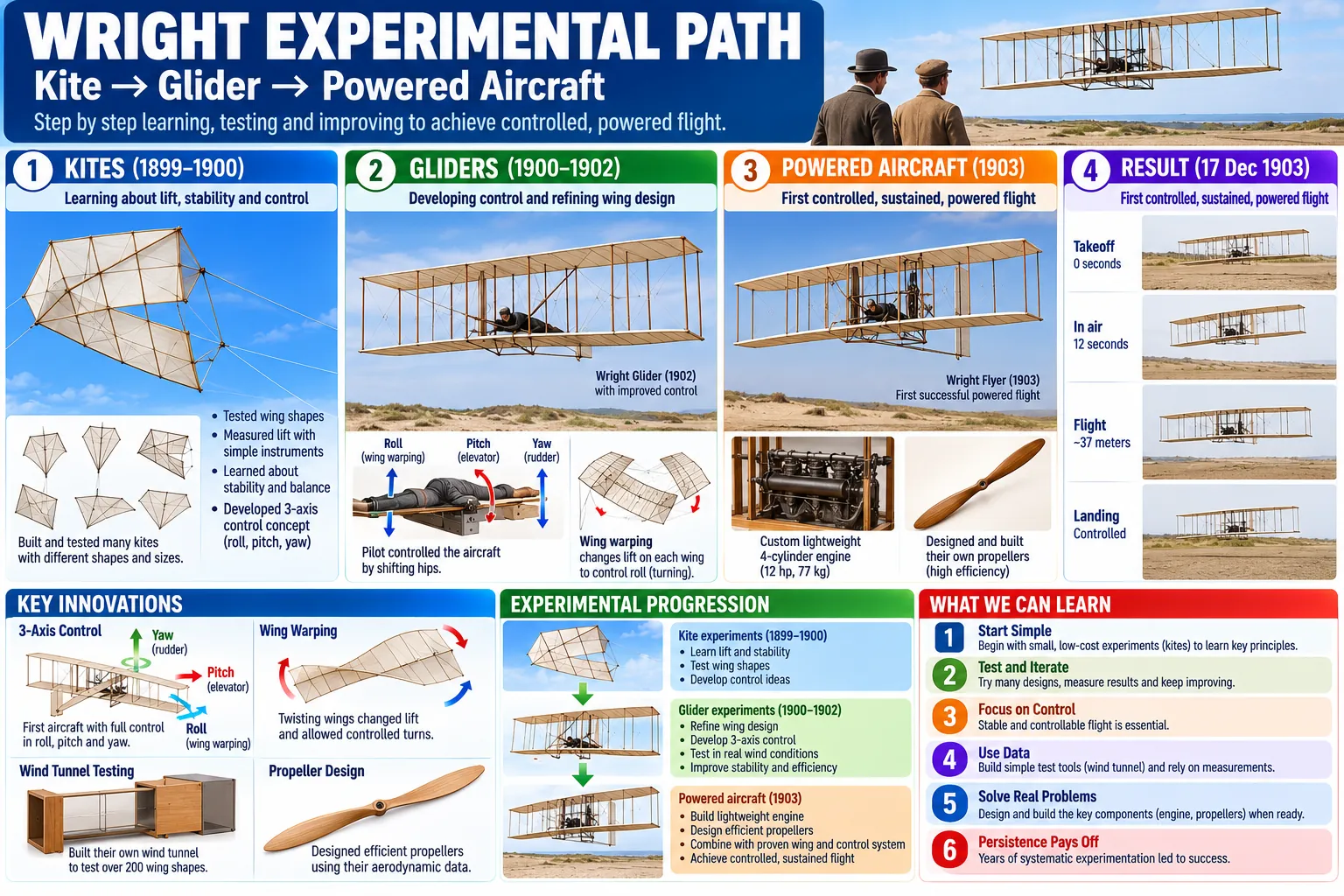
The Wrights' order of work: a kite in 1899, gliders in 1900–1902 with control in three axes, the 1903 machine with their own engine and propellers, the first flight of 17 December 1903 (12 seconds, about 37 m), wing warping, their wind tunnel, and what the method teaches.
The Wright brothers' path: kite, glider, powered aircraft On: Flight: The Wright machines, in numbers
Ten kinds of aircraft and what each is for — airliner, freighter, general aviation, helicopter, glider, seaplane, military, drone, special-purpose and spaceplane — seven further examples, and a size comparison from a 1 m drone to a 70 m freighter.
Aircraft types and missions On: Flight: Aviation today

Books and archives