Civilization101Blueprint

Wild food

What the land gives before anything is planted: fish, nuts and game, and the identification that keeps foraging from killing you.

Food Levels 0 1 step written
0
Level 0 · Triage · 1 of 1 in this track

Forage, trap and fish by what the land has

Choose by what you have. Tick what is on or near the site. The options you can build move to the top; nothing is hidden.

Nothing ticked: every option is shown in the site's order.

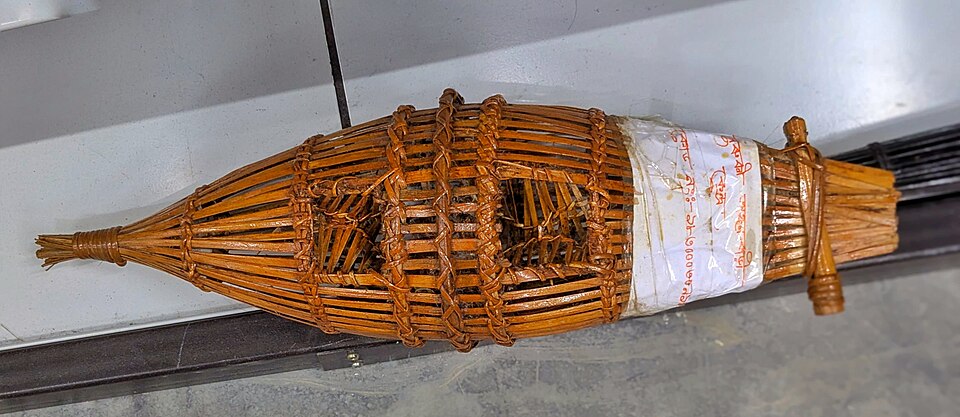
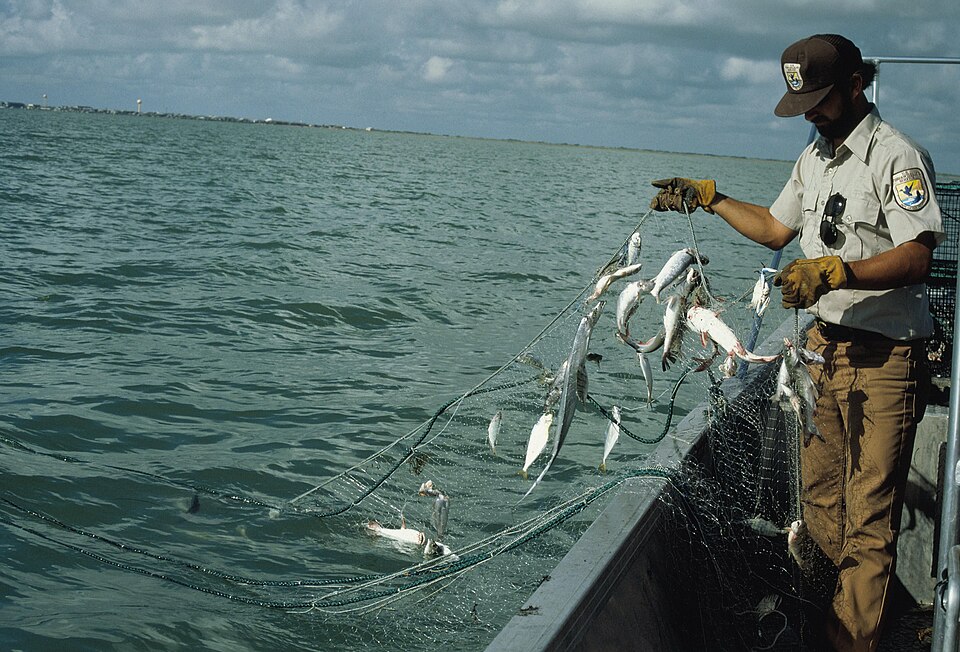
  1. Fish trap and gill net Build: Funnel basket fish trap →
    open water

    The highest calorie return available to a group with nothing, and it works while you sleep.

  2. nut trees

    Nuts give 600–650 kcal per 100 g. Acorns are the only wild staple worth the work, and only after leaching.

  3. game

    A trapline works all night. Check it every day, and learn the diseases game carries before butchering.

  4. Wild plants and fungi Foraging: The ones that kill →
    woodland or meadow

    Learn the ones that kill before the ones that feed. There is no edibility test.

Everything in this track

Every guide, build, reference sheet and book reached from the steps above.

Field guides

Builds

Reference sheets

Drawn overview sheets, each with its corrections printed under it. They orient; they are never the thing you identify from.

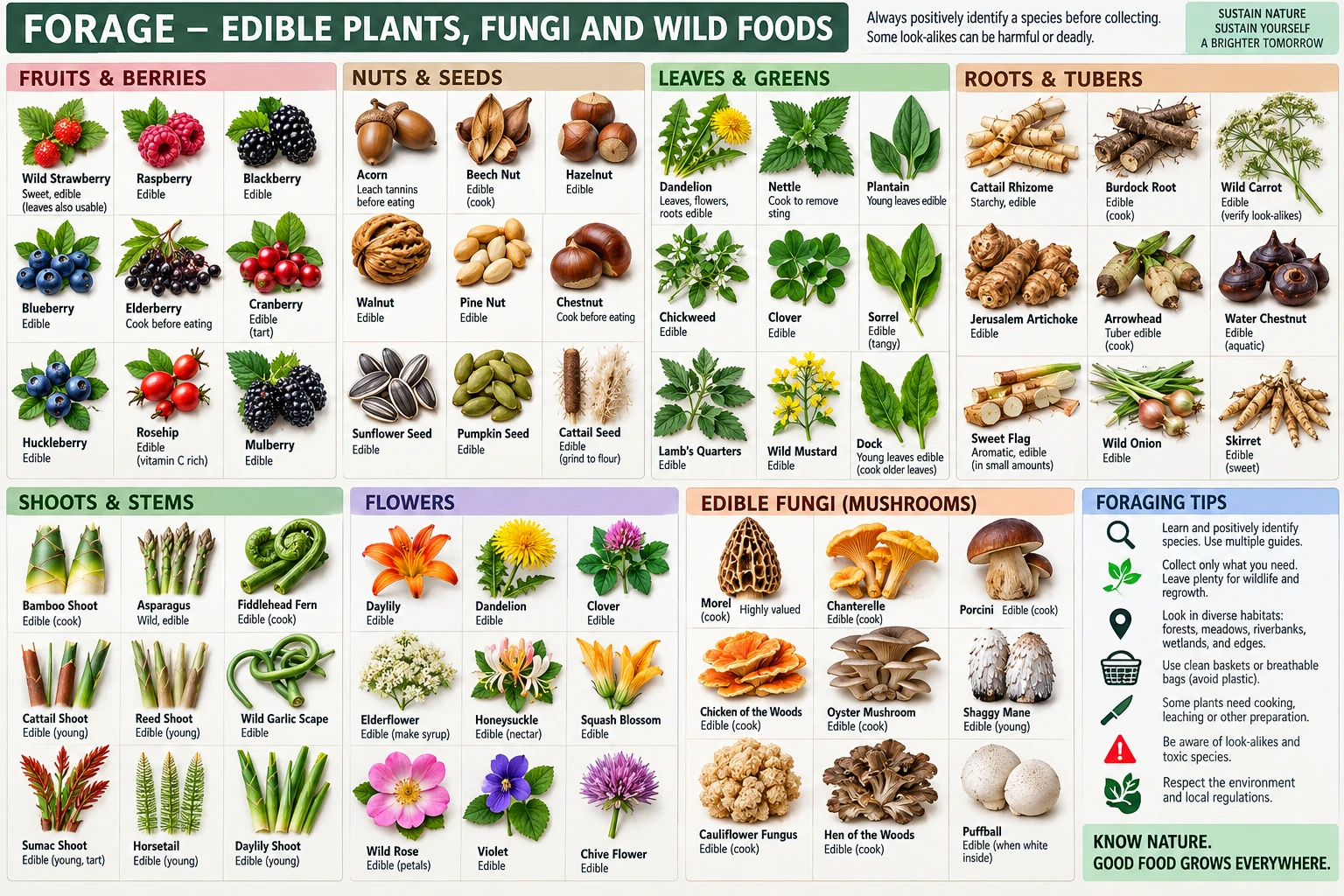
Wild foods worth learning first, grouped by the part you eat — fruits, nuts, greens, roots, shoots, flowers and fungi — each with the preparation it needs before it is food.
Forage: edible plants, fungi and wild foods On: Forage, trap, fish · Foraging: Rank by calories returned, not by what looks like food
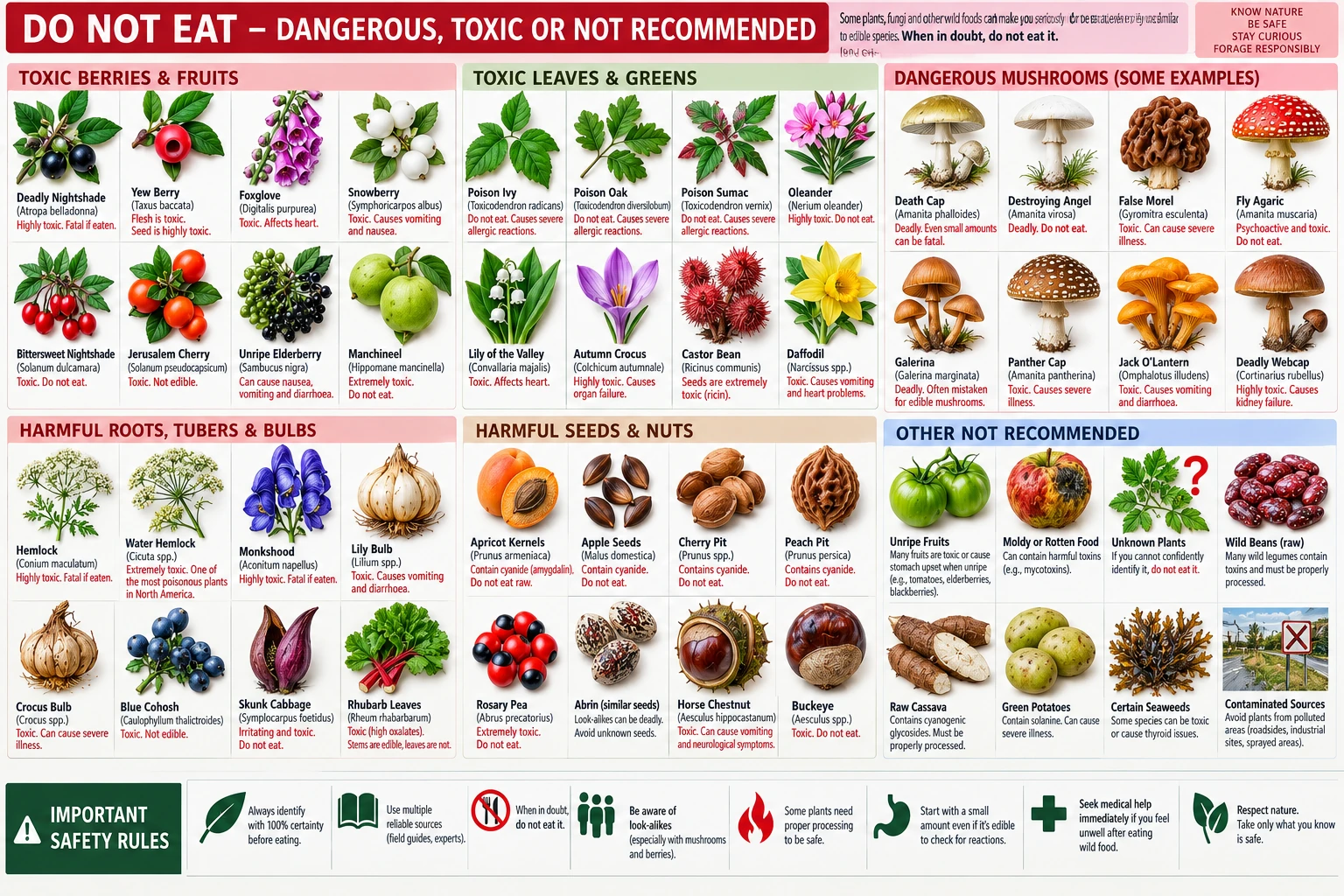
The other half of the foraging lesson — common plants, fungi, seeds, roots and bulbs that poison, the ones that poison only raw, and the look-alikes that account for most fatal mistakes.
Do not eat: dangerous, toxic or not recommended wild foods On: Forage, trap, fish · Foraging: The ones that kill
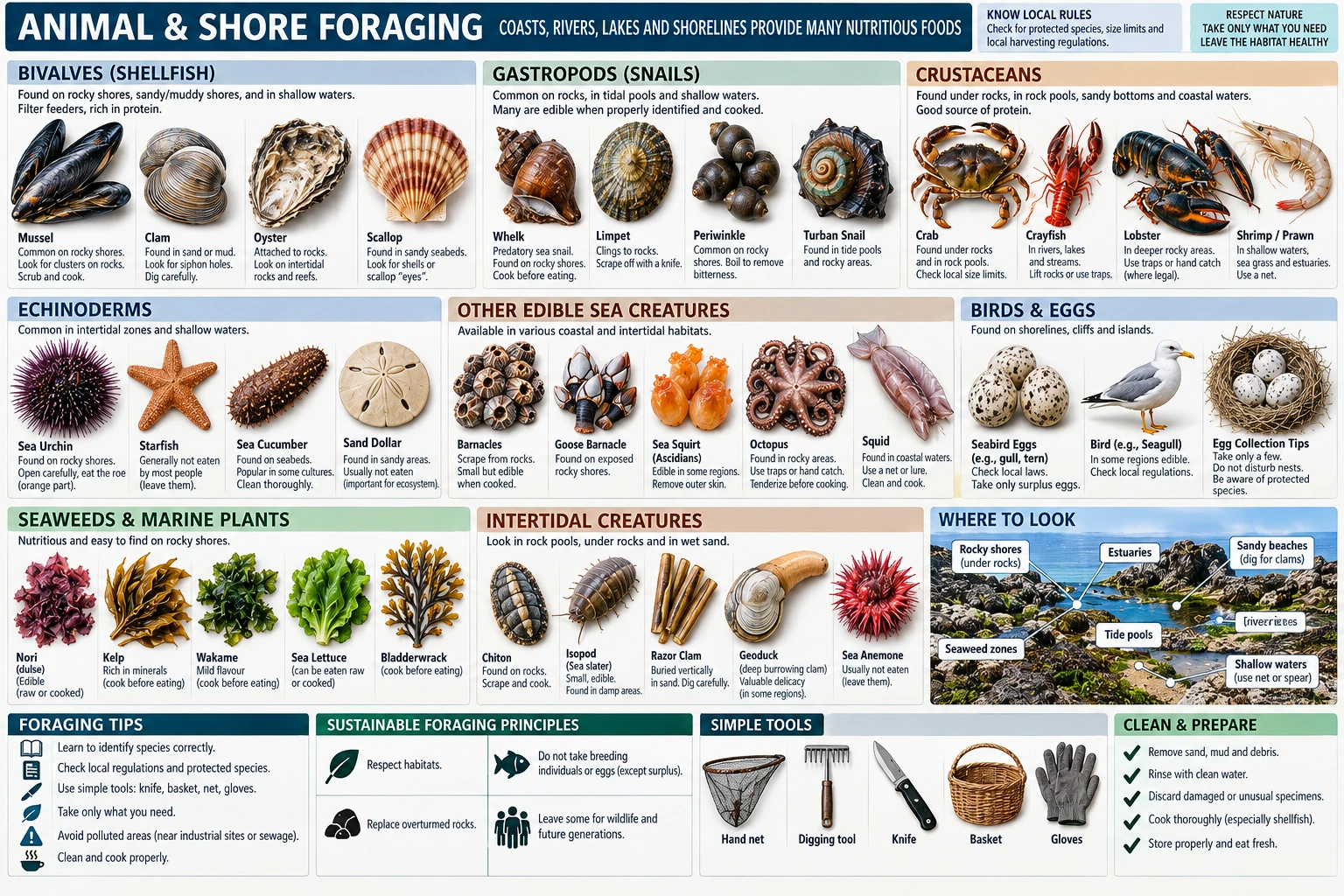
What a shoreline yields — bivalves, gastropods, crustaceans, echinoderms, seaweeds, intertidal animals and eggs — and where on the shore each of them is found.
Animal and shore foraging On: Forage, trap, fish · Fish and water foods: What is safe to eat — and what will kill you
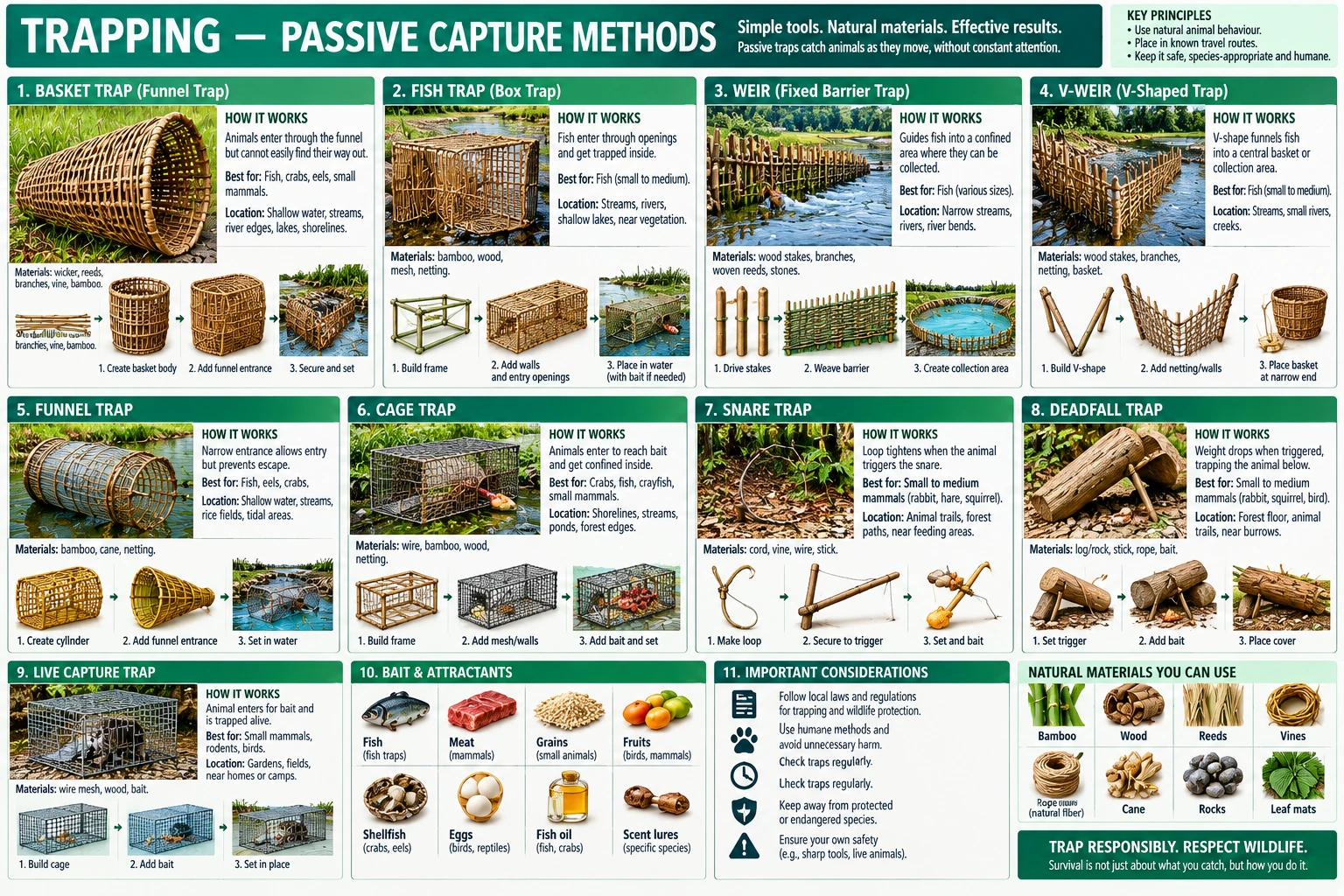
Snares, deadfalls, cage and live traps alongside the fish traps, each shown in three build stages with its materials, its best quarry and where to set it.
Trapping: passive capture on land and in water On: Forage, trap, fish · Hunting and trapping: Snares
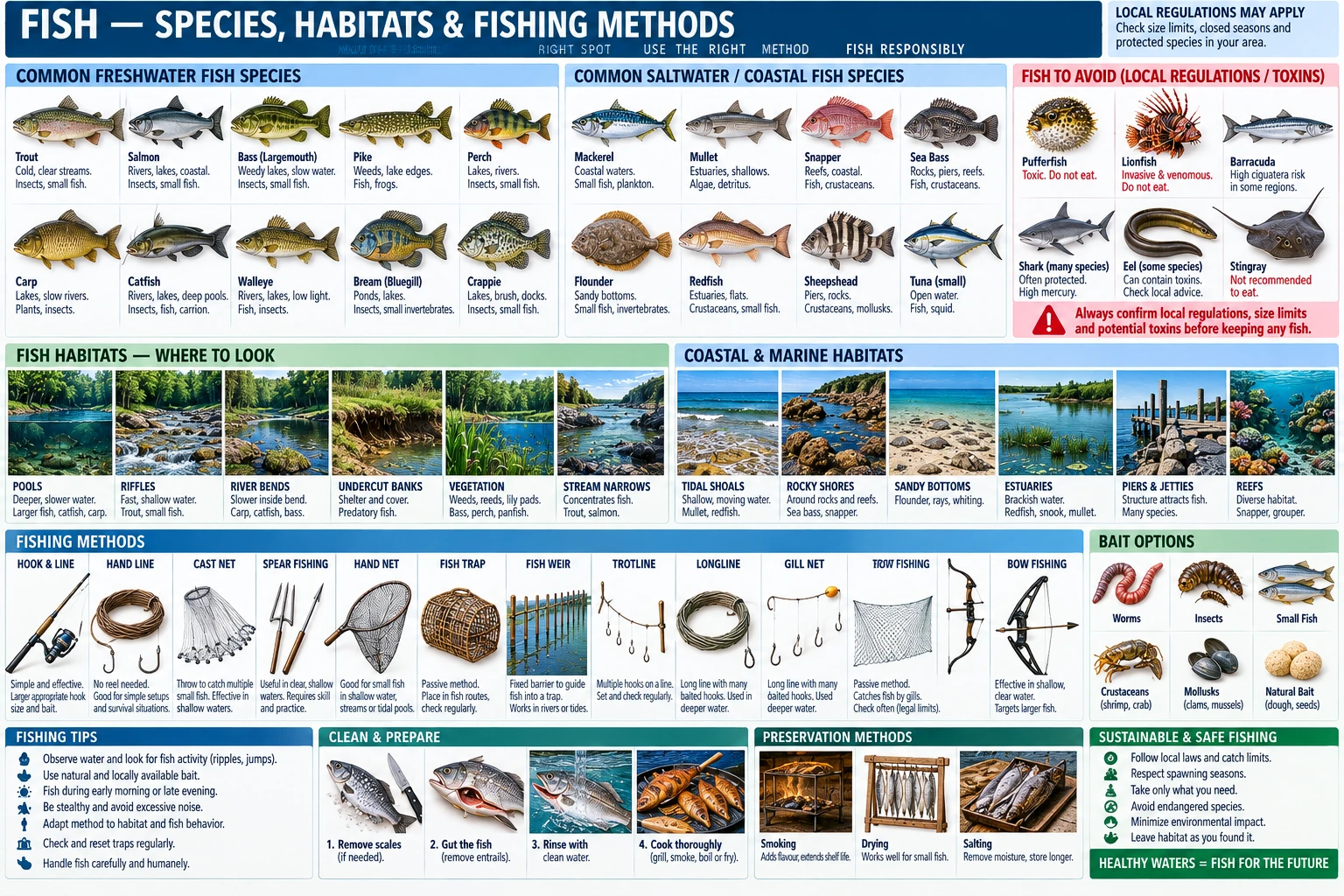
Common freshwater and coastal fish, the water each holds in, the methods and baits that take them, and the handful that are toxic or regulated.
Fish: species, habitats and fishing methods On: Fish and water foods: Read the water first
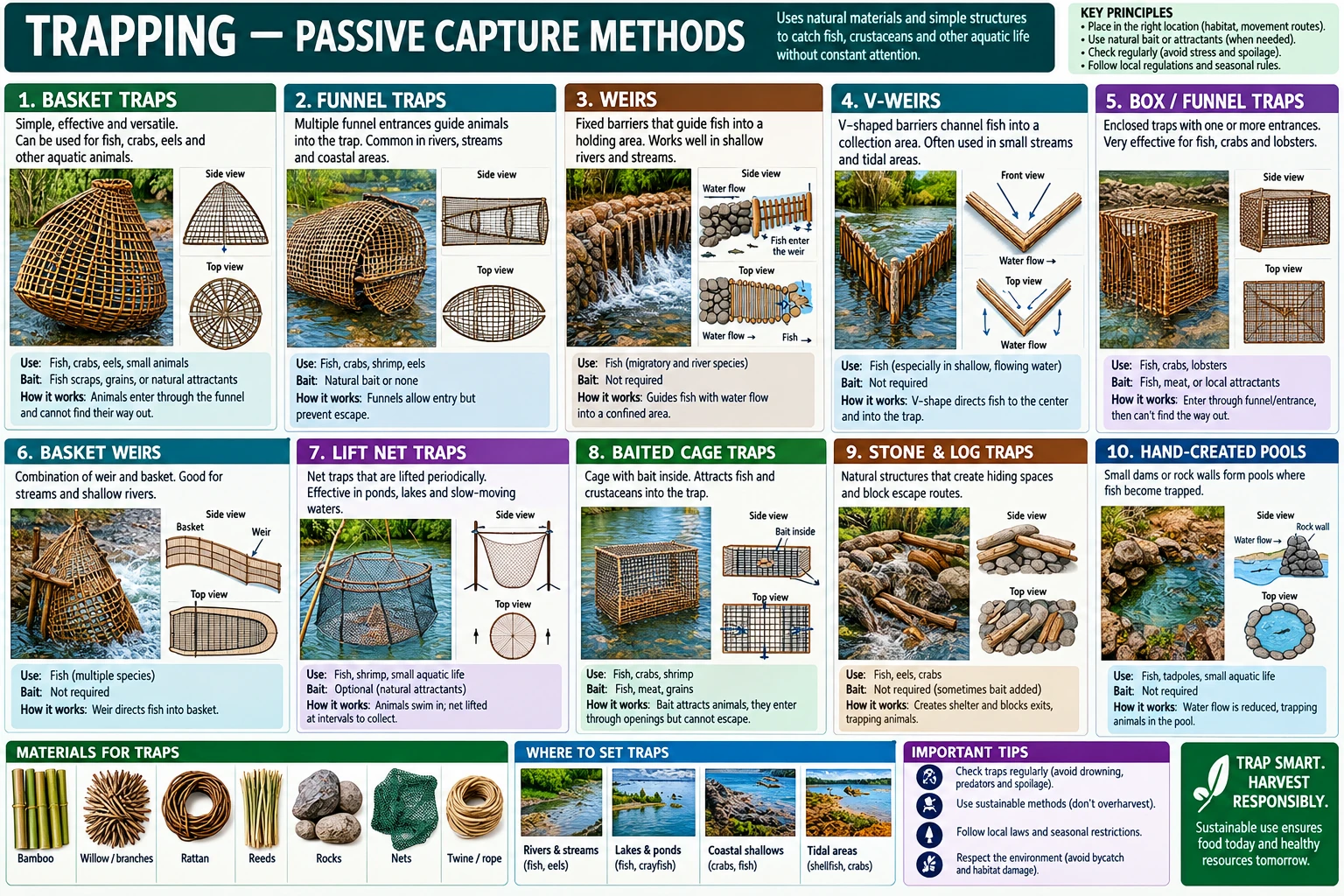
Ten passive water traps — basket, funnel, weir, V-weir, box, basket weir, lift net, baited cage, stone-and-log, and dammed pool — each with side and top view, bait, and the mechanism that stops an animal leaving.
Trapping: passive capture methods in water On: Fish and water foods: Methods, ranked by return per hour
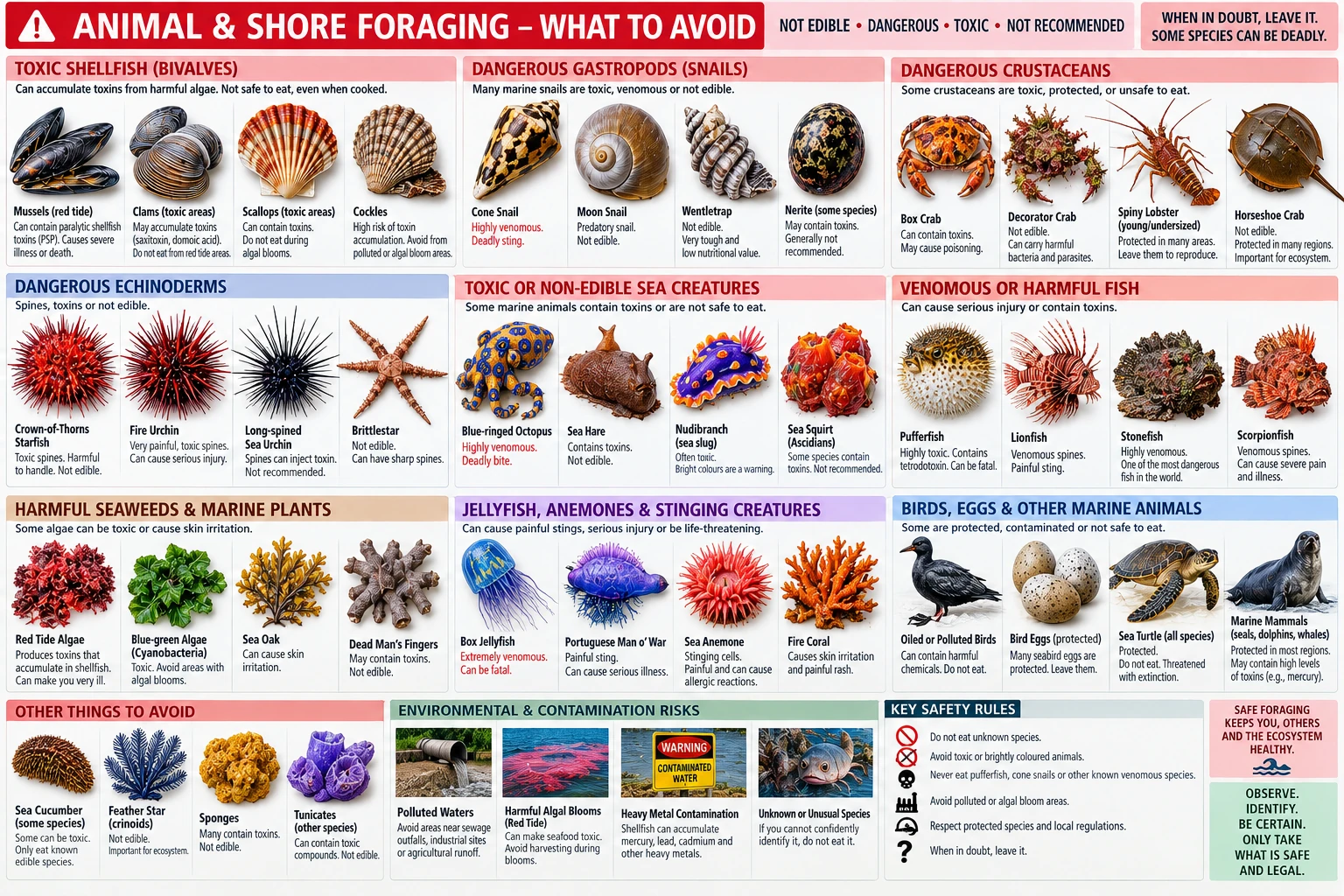
Shore species to leave alone: toxic shellfish, venomous snails and fish, stinging and spined animals, protected species, and the contamination that makes an otherwise safe species unsafe.
Animal and shore foraging — what to avoid On: Fish and water foods: What is safe to eat — and what will kill you

Books and archives

Other tracks in Food & Agriculture