Civilization101Blueprint

Crops and soil

Seed stock, the calendar, cleared ground and staples, then water control and fertiliser.

Food Levels 0–7 10 steps written
0
Level 0 · Triage · 1 of 7 in this track

Secure seed and breeding stock

Unlocks Plant staples
1
Level 1 · Foothold · 2 of 7 in this track

Read the year, open ground and plant staples

t1-clear Guide ×5BuildSheet

Open ground and hold fertility

Turn wild land into a field that does not lose its fertility in five years.

Needs first: Forage, trap, fish, A cutting edge (Tools), Read the year

t1-staples Guide ×3Build ×2Sheet

Plant staples

Grow enough storable calories to stop foraging.

Needs first: Secure seed and breeding stock, Open ground and hold fertility, Read the year

2
Level 2 · Forge · 3 of 7 in this track

Irrigation and water control

t2-irrigate Guide ×5Sheet ×2

Irrigation and water control

Put water where the crop is, when the crop needs it.

Needs first: Plant staples, Woodworking and the first machines (Tools), Blacksmithing (Tools)

3
Level 3 · Mill · 4 of 7 in this track

Rotation with fodder and clover, field drains and the drill

t3-rotation GuideSheet

The four-course rotation, field drains and the seed drill

Run the fields as one system: a rotation whose fodder crops feed the stock and whose manure feeds the grain, wet land underdrained so it can be worked and sown, and grain drilled in rows at a known rate and depth so it can be counted and hoed.

Needs first: Open ground and hold fertility, Plant staples, Livestock, Blacksmithing (Tools), Lime (Materials), Brick and tile (Materials)

  • Guide Sustainable farming
  • Build none yet
  • Sheets 1 reference sheet on the step and its guides
  • Read FAO agricultural documents; Project Gutenberg (complete)
5
Level 5 · Current · 5 of 7 in this track

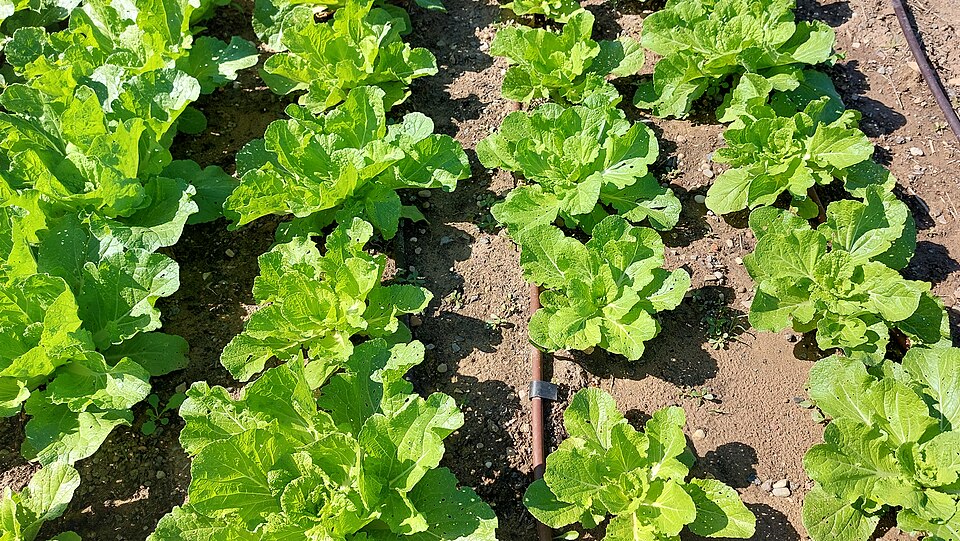
Drip irrigation and synthetic nitrogen

t5-drip GuideBuildSheet

Drip and sprinkler irrigation

Put each crop's water at its roots through pipes, in the amount the crop uses, when the soil says it needs it, with every emitter on a line delivering within 10 % of the others.

Needs first: Irrigation and water control, Polymers (Materials), One metre, one kilogram, everywhere (Knowledge), Acids (Materials)

6
Level 6 · Logic · 6 of 7 in this track

High-yield varieties, and their bill

t6-greenrev Guide ×2Sheet

High-yield varieties, and the Green Revolution's bill

Breed and supply short-strawed, high-yielding cereal varieties with the fertilizer and water they need, and pay their known costs up front: metered groundwater, no highly hazardous pesticides, a gene bank for the varieties they replace, and nutrients bred back into the staples.

Needs first: Synthetic nitrogen (Materials), Drip and sprinkler irrigation, The four-course rotation, field drains and the seed drill

  • Guide Sustainable farming, Biology
  • Build none yet
  • Sheets 1 reference sheet on the step and its guides
  • Read FAO agricultural documents; Wikipedia, offline (Kiwix ZIM)
7
Level 7 · Frontier · 7 of 7 in this track

More food from the same land, with less waste

t7-farming GuideSheet

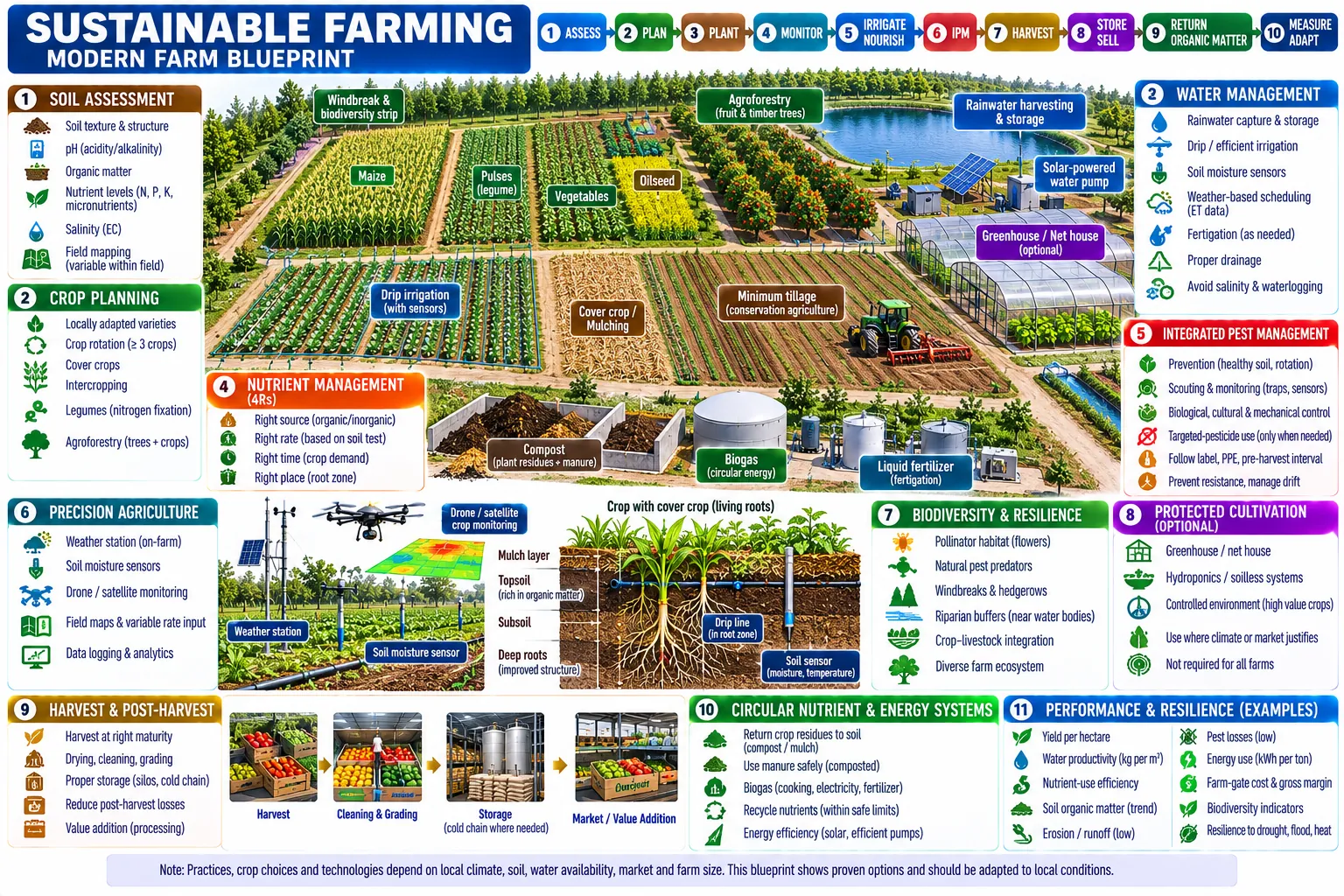
Sustainable intensification

Raise yields on the land already farmed while cutting the nitrogen, water, methane and soil each tonne costs, and stop losing the harvest after it is grown, each change measured on the farm.

Needs first: High-yield varieties, and the Green Revolution's bill, Computing (Computing), Drip and sprinkler irrigation, The four-course rotation, field drains and the seed drill

  • Guide Sustainable farming
  • Build none yet
  • Sheets 1 reference sheet on the step and its guides
  • Read FAO agricultural documents

Everything in this track

Every guide, build, reference sheet and book reached from the steps above.

Field guides

Level 1
Seeds and the growing year

A seed is a living embryo with a shelf life. Kept dry and cold it waits for years; kept warm and damp it dies in a season — and the difference is two rules of thumb and a sealed jar.

Level 1
Soils and plant nutrition

What a soil is made of, why its acidity matters, and how to read a nutrient shortage in the leaves before it costs a harvest.

Level 1
Sustainable farming

Keep the soil covered, feed it, water the roots and fight pests without poisoning yourself: the modern practice that needs knowledge rather than machinery.

Level 1
Livestock husbandry

Animals turn grass nobody can eat into milk, meat, wool, leather, manure and traction. They also turn raw milk, a birthing ewe and a dog fed on offal into diseases that kill people.

Level 3
The sciences

Fourteen branches, each with the handful of results a civilization cannot rebuild without, and where to learn the rest.

Level 3
Biology

Life from the cell up: the human body, microbes and immunity, inheritance and epidemics. Each result with what it lets you do and who first found it.

Level 2
Navigation and the sky

North is written in the sky twice a day and all night. Latitude is one angle measured at noon. Everything else is counting paces and not lying to yourself about the count.

Level 3
Astronomy

The sky as calendar, clock and compass, then orbits, distances and the universe: each result with what it lets you do and who first found it.

Level 3
Micro-organisms

The two dozen that decide who lives where there is no doctor: what each does, how it spreads, what kills it and which step stops it.

Level 0
Wild water and wells

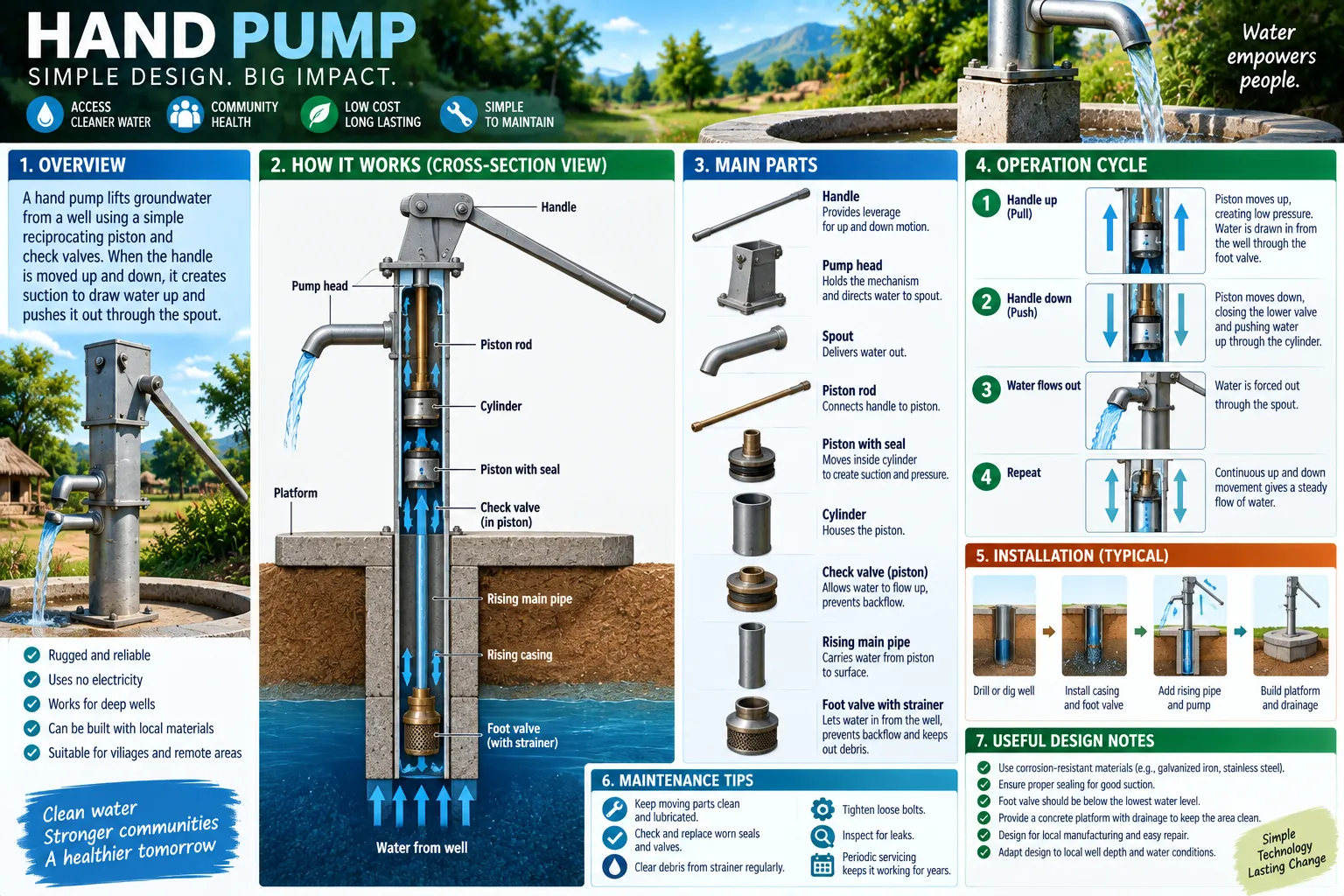
Surface water is a treatment problem every single day. Groundwater, reached and sealed properly, is a treatment problem once.

Level 3
Earth sciences

Water in and on the ground, the air and weather, rocks and time, earthquakes and tsunamis, and the climate: each result with what it lets you do and who first found it.

Level 3
Engineering

Turning the sciences into things that work: machines, structures, water in pipes and channels, heat through walls, and feedback control. Each result with what it lets you do and who first found it.

Level 3
Chemistry

What matter is made of and how it changes: amounts, gases, acids, the energy and speed of reactions, electrochemistry, and the reactions every industry on the ladder runs on.

Builds

Reference sheets

Drawn overview sheets, each with its corrections printed under it. They orient; they are never the thing you identify from.

Books and archives

Other tracks in Food & Agriculture