Civilization101Blueprint

Emergency and temporary shelter

The first nights: off the ground, out of the wind, and dry.

Shelter Levels 0 1 step written
0
Level 0 · Triage · 1 of 1 in this track

Off the ground, out of the wind, and dry

t0-shelter Guide ×2Sheet ×11

Shelter and body heat

Get off the ground, out of the wind, and dry.

Needs first: nothing — start with bare hands.

Choose by what you have. Tick what is on or near the site. The options you can build move to the top; nothing is hidden.

Nothing ticked: every option is shown in the site's order.

  1. Debris hut
    branchesleaf litter

    Barely larger than the body, 60–90 cm of debris over everything, and a bed that is still 30 cm thick when you lie on it. No fire needed.

  2. polescordfire

    For a group with fire: the roof faces a long fire with a reflector wall behind it.

  3. tarp or hidecord

    A ridge line, taut lines and the ground insulated first. Wet insulation is not insulation.

  4. Snow trench or snow cave Not yet written
    deep snow

    Not written yet. Snow insulates well, and a sealed snow shelter with a stove or candle can kill with carbon monoxide. It needs its own entry with the ventilation hole and the cold-sink entrance.

Everything in this track

Every guide, build, reference sheet and book reached from the steps above.

Field guides

Reference sheets

Drawn overview sheets, each with its corrections printed under it. They orient; they are never the thing you identify from.

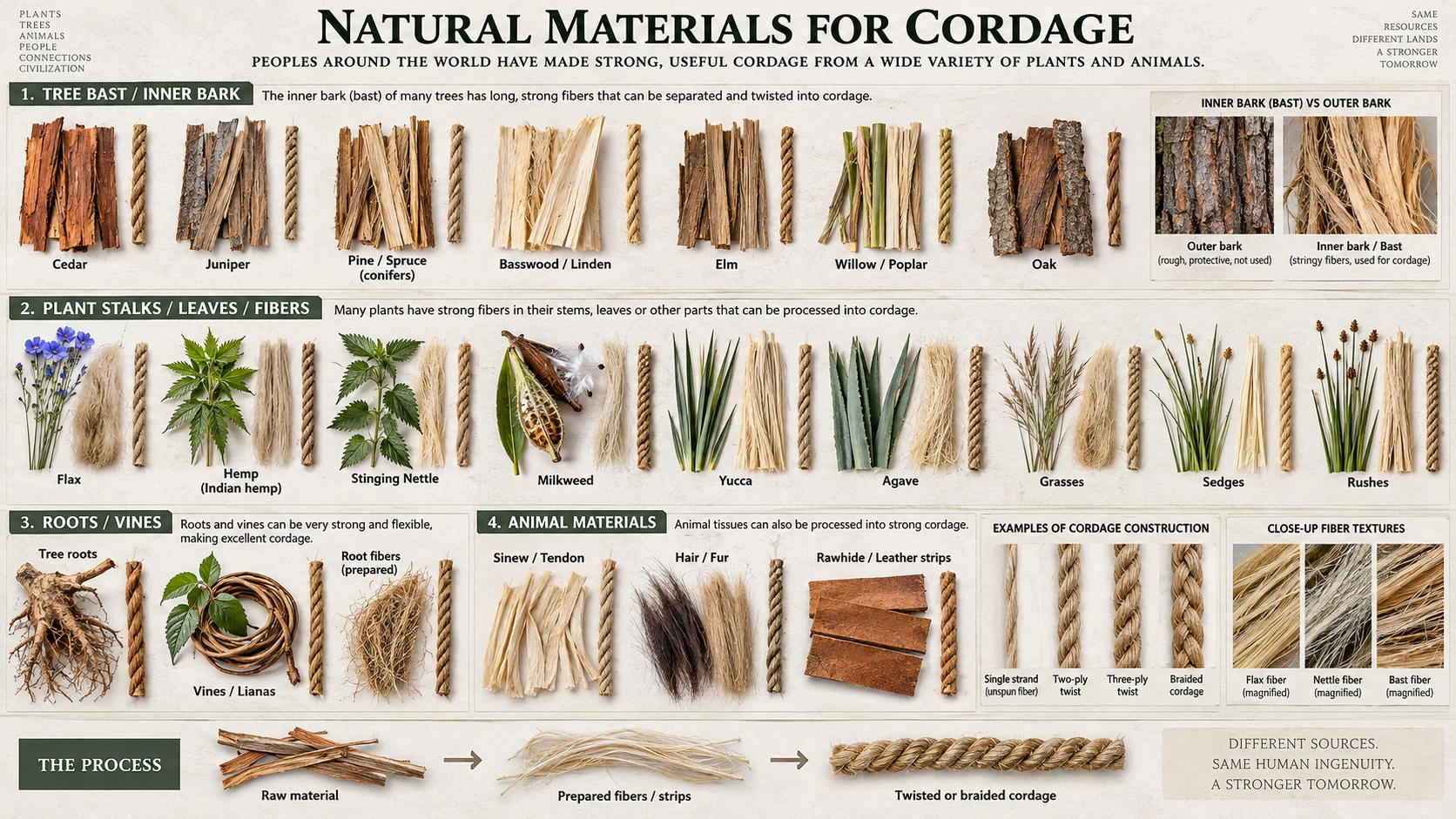
Where cordage fibre comes from — tree bast, plant stalks and leaves, roots and vines, and animal sinew, hair and rawhide — with the cord each yields and the raw → fibre → cord sequence at the foot.
Natural materials for cordage On: Cordage · Rope, knots and lashings: Splicing: the strongest way to make a loop or a join · Fibre to cloth: The fibres, and what each is for
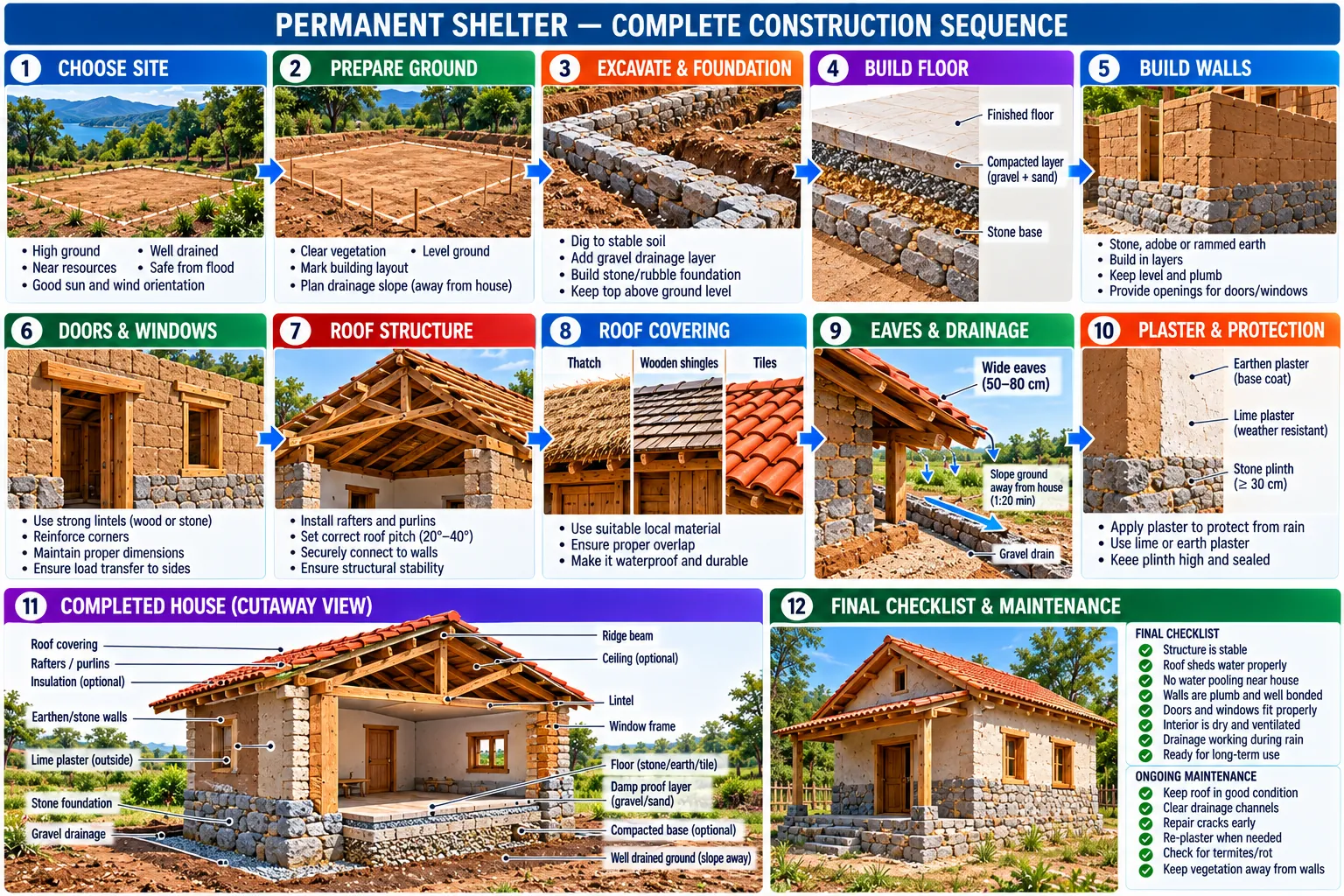
Twelve panels in order: site, ground preparation, foundation, floor, walls, doors and windows, roof frame, roof covering, eaves and drainage, plaster, a cutaway of the finished house, and a final checklist with ongoing maintenance.
Permanent shelter: the complete construction sequence On: Stone and earth building: The order of work
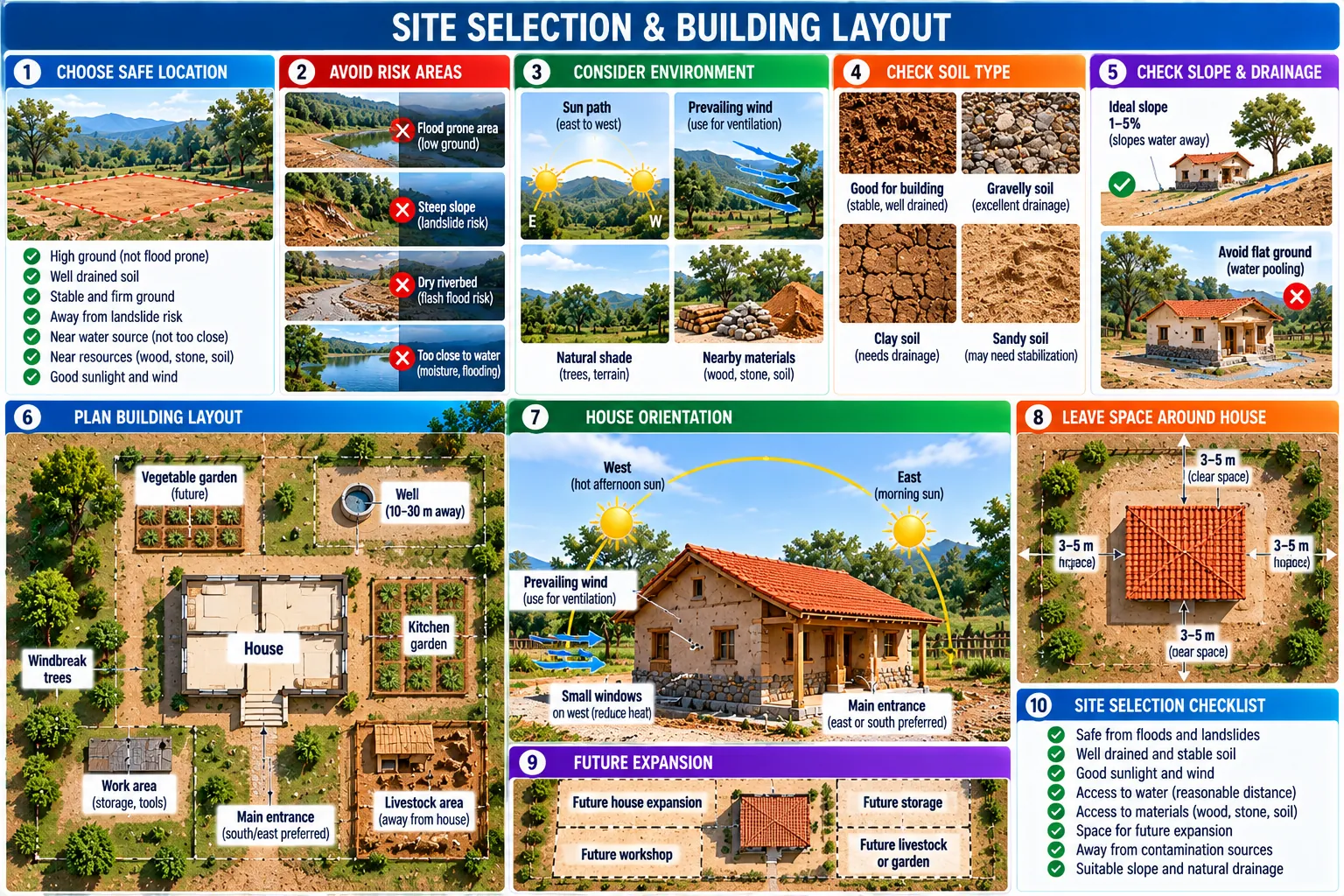
Ten panels: a safe location, areas to avoid, sun, wind, shade and materials, soil types, slope and drainage, a homestead layout, orientation, clear space round the house, future expansion, and a site checklist.
Site selection and building layout On: Stone and earth building: Choose the site and set it out
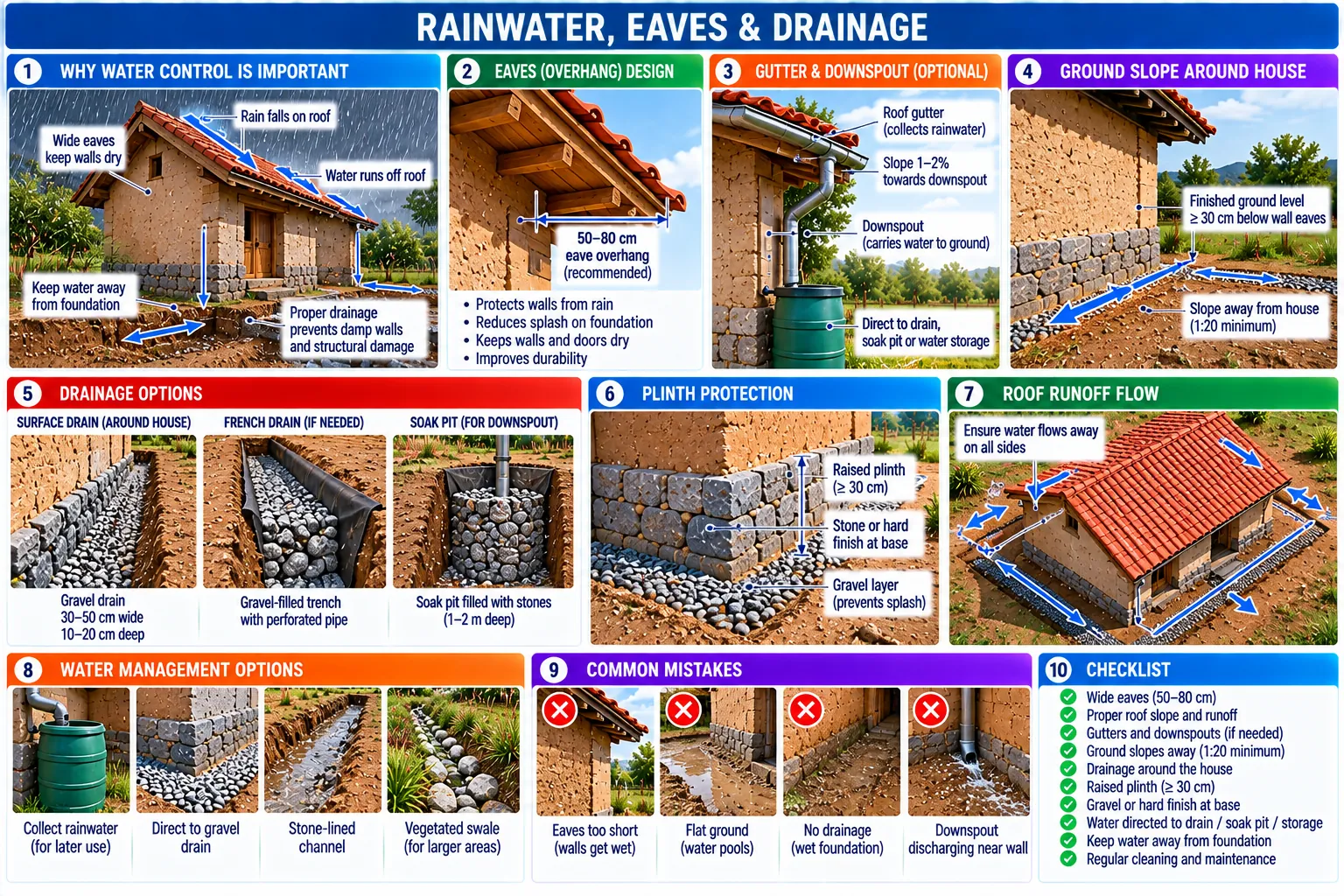
Ten panels: why water control matters, eaves, gutters and downspouts, ground slope, drainage options, plinth protection, roof runoff, water management, common mistakes, and a checklist.
Rainwater, eaves and drainage On: Stone and earth building: Where the water goes
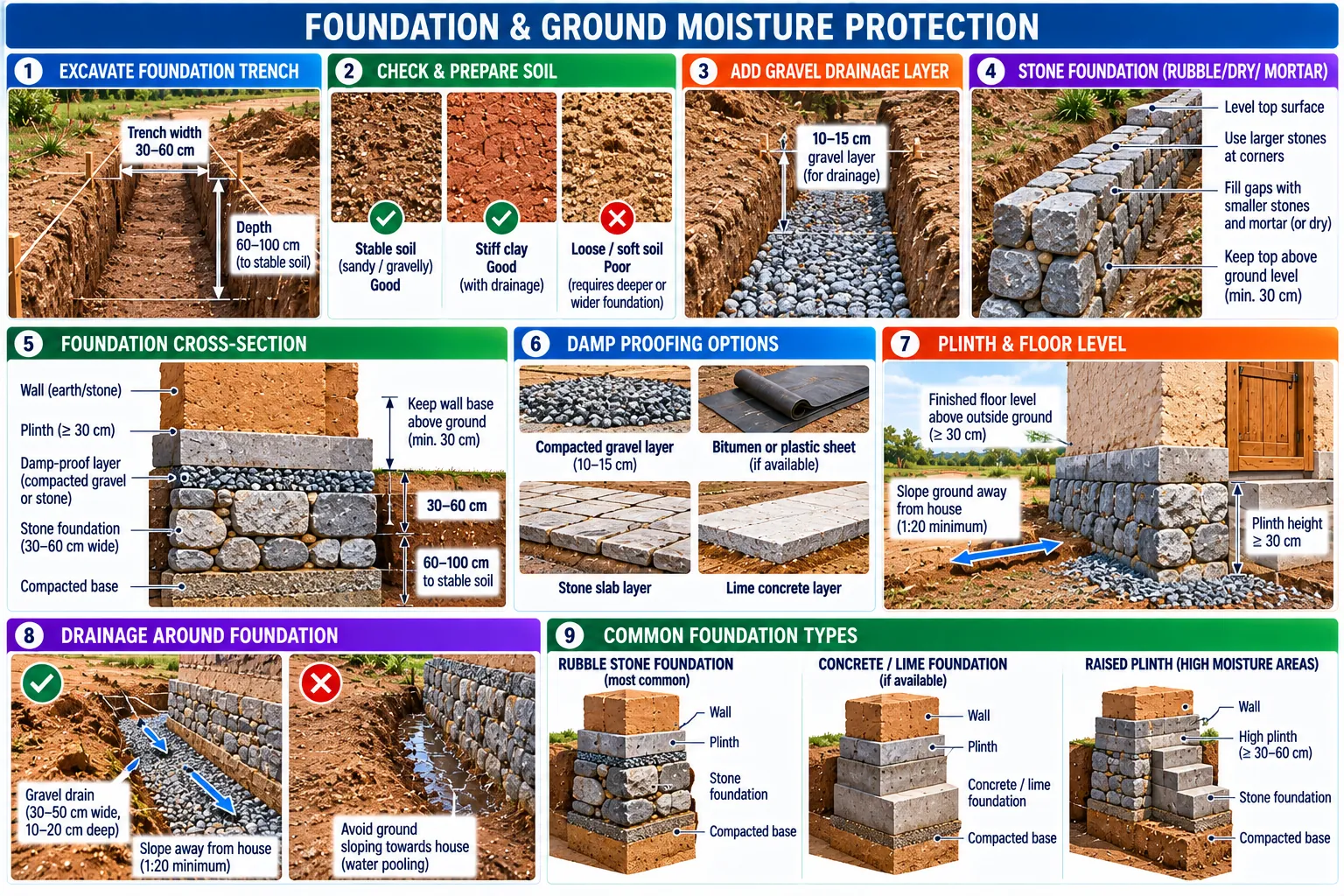
Nine panels: the trench, soil types, a gravel layer, the stone foundation, a cross-section, damp-proofing options, plinth and floor level, drainage round the foundation, and three common foundation types.
Foundation and ground moisture protection On: Stone and earth building: Foundations and plinths: the boots
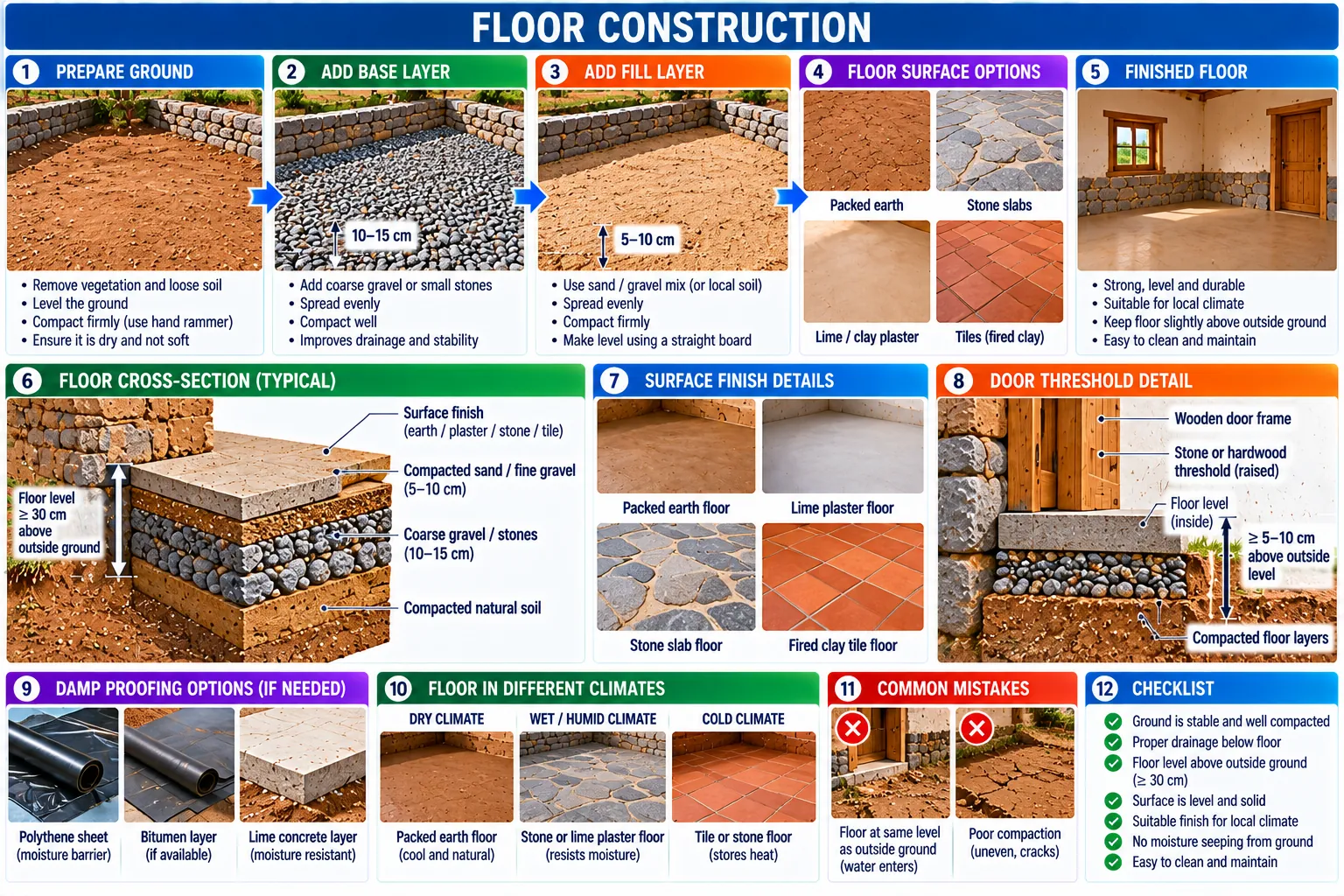
Twelve panels: preparing the ground, the gravel base, the fill layer, surface options, a cross-section, finishes, the door threshold, damp-proofing, floors for different climates, common mistakes, and a checklist.
Floor construction On: Stone and earth building: Floors
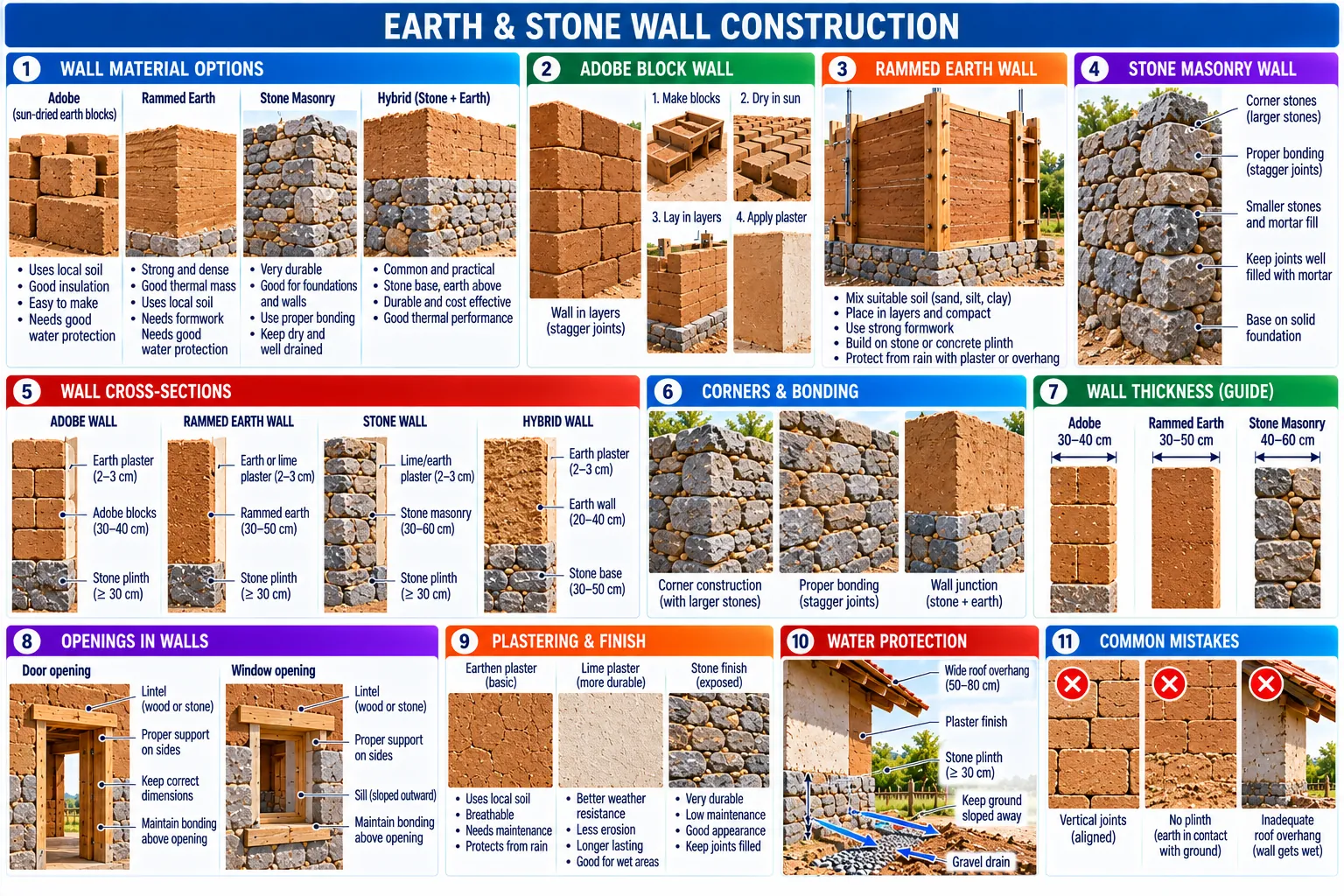
Eleven panels: wall materials, adobe, rammed earth and stone masonry, cross-sections, corners and bonding, a thickness guide, openings, plaster, water protection, and common mistakes.
Earth and stone wall construction On: Stone and earth building: Building the walls
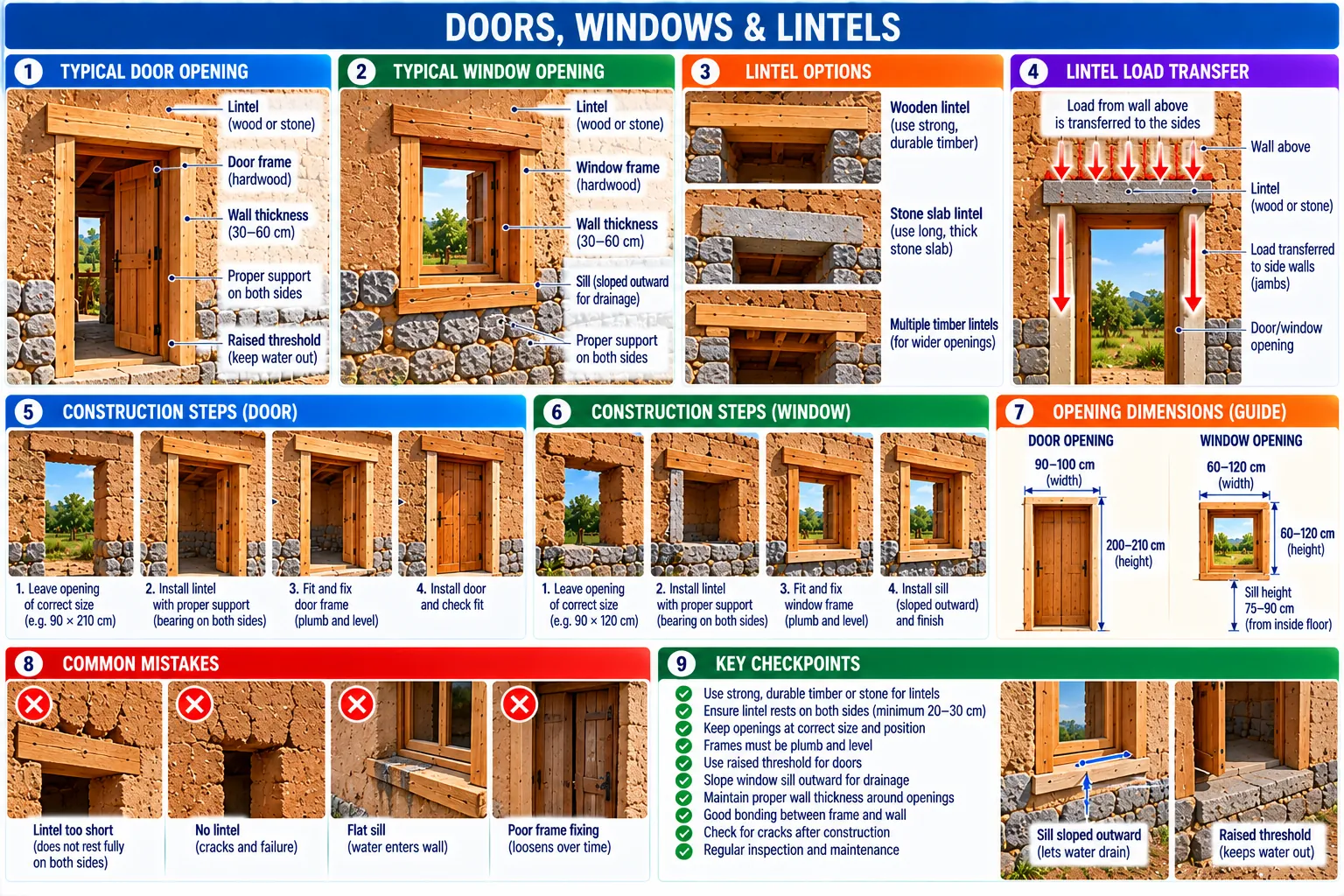
Nine panels: a typical door and window, lintel options, how a lintel carries the wall, construction steps for each, opening dimensions, common mistakes, and key checkpoints.
Doors, windows and lintels On: Stone and earth building: Openings, lintels, corners and arches
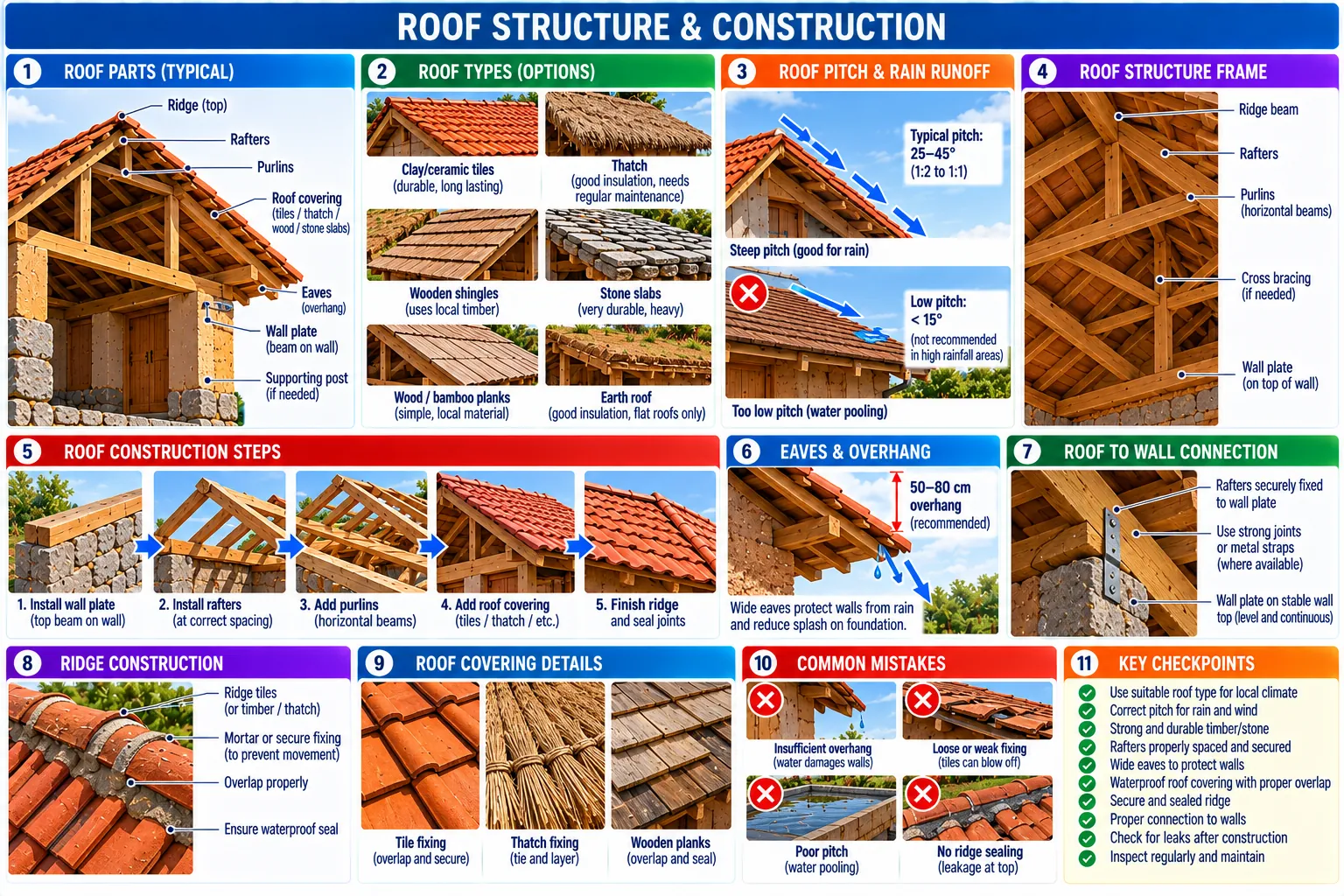
Eleven panels: roof parts, roof types, pitch and runoff, the frame, construction steps, eaves, the roof-to-wall joint, the ridge, covering details, common mistakes, and checkpoints.
Roof structure and construction On: Stone and earth building: Roofs: the hat
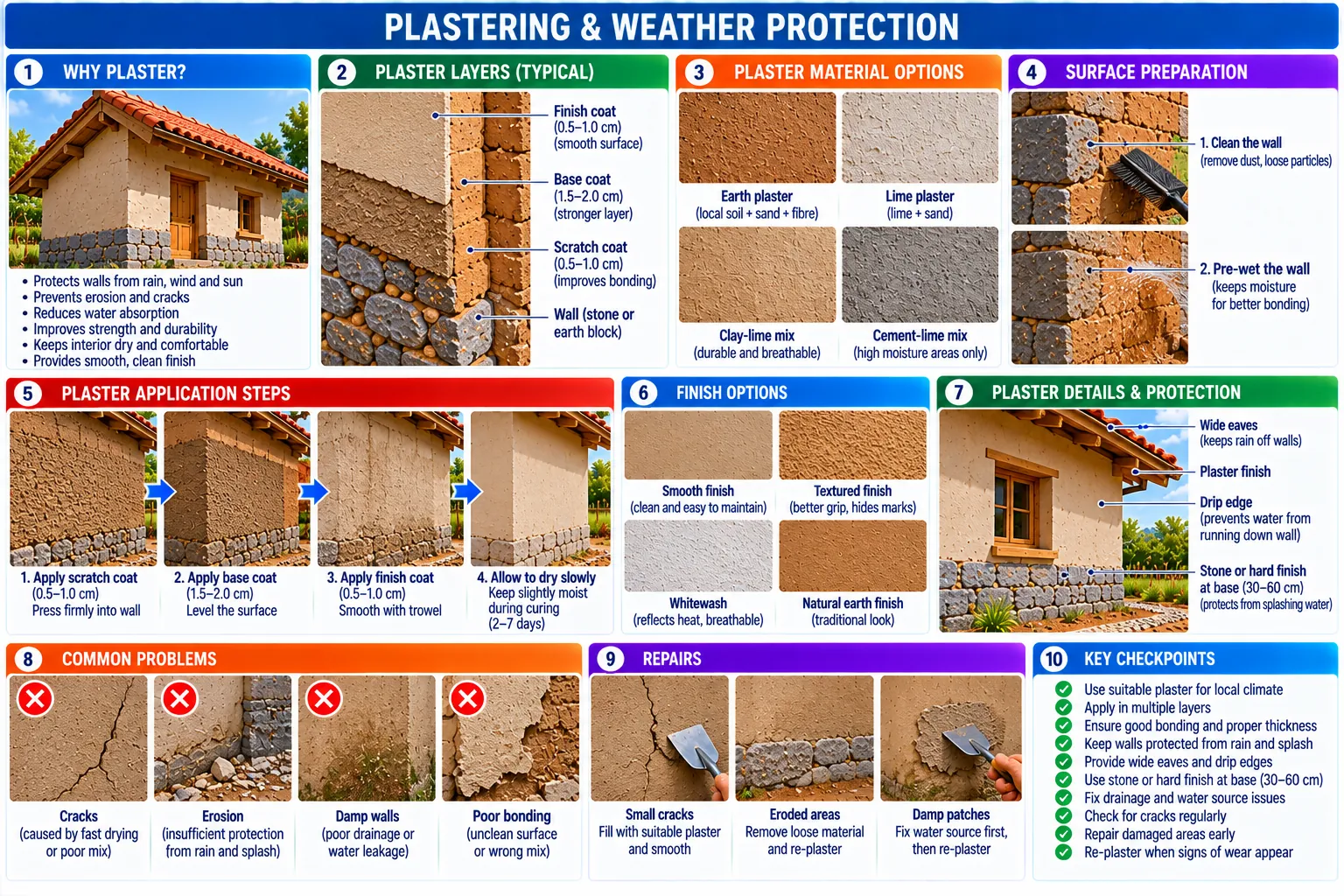
Ten panels: why to plaster, the three coats, material options, surface preparation, application steps, finishes, details and protection, common problems, repairs, and key checkpoints.
Plastering and weather protection On: Stone and earth building: When it goes wrong: diagnosis and repair
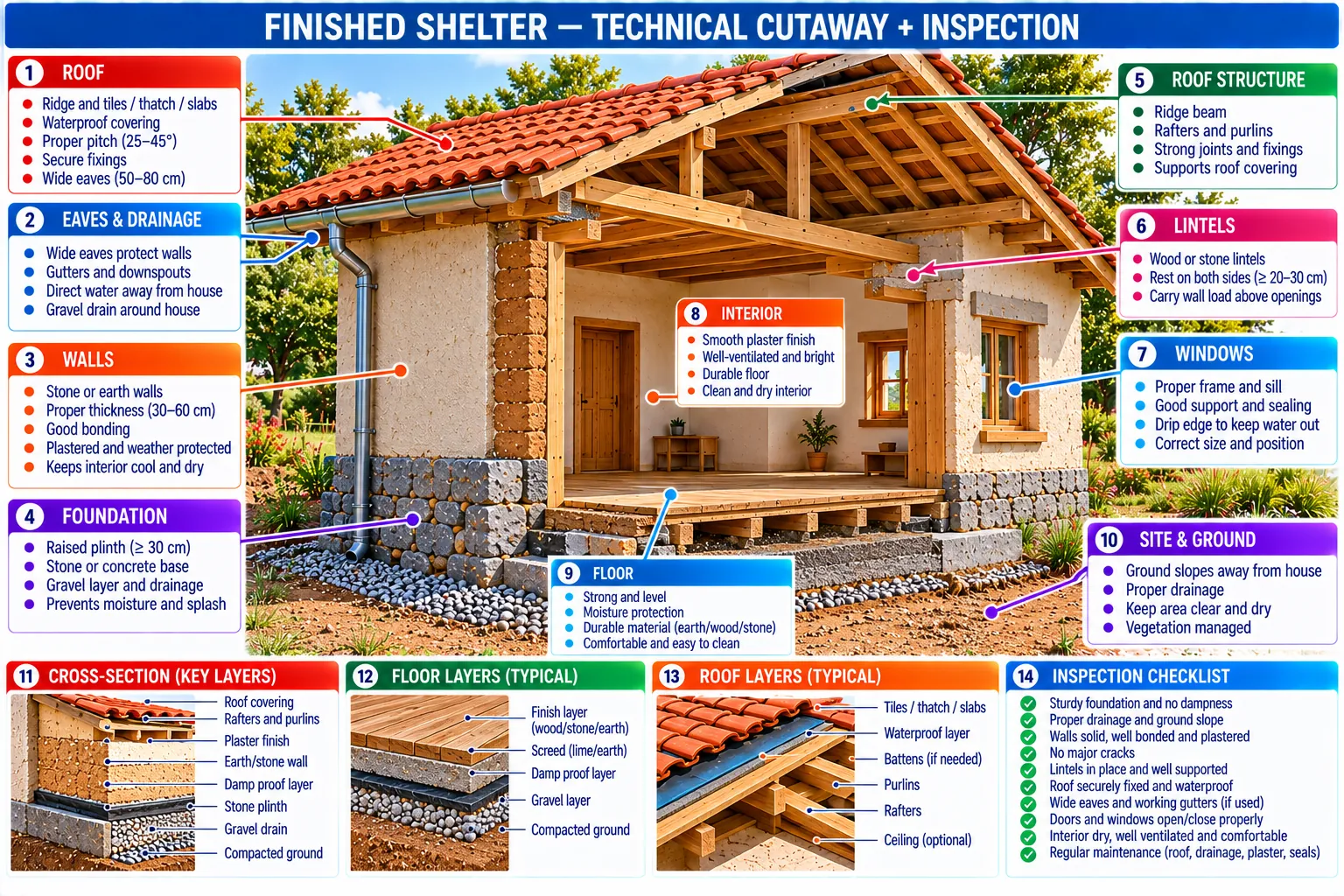
A labelled cutaway of the finished house (roof, eaves, walls, foundation, lintels, windows, interior, floor and site), cross-sections of the wall, floor and roof, and an inspection checklist.
Finished shelter: technical cutaway and inspection On: Stone and earth building: Maintenance calendar

Books and archives

Other tracks in Shelter & Architecture