Shelter & Architecture
Tracks
Each track is one line of development climbing the eight levels. A cell holds the step written at that level; cross-listed steps have their home in another sector and are shown here because this subject depends on them. Dashed cells are planned and not yet written; blank ones have nothing planned.
Emergency and temporary shelter
The first nights: off the ground, out of the wind, and dry.
Dwellings
The same need at every level — dry, standing, warm and free of smoke — met with better materials and more people.
Storage and farm buildings
Keeping the harvest, the animals and the tools dry and free of rats: granaries and cellars first, then barns and cold stores.
Building materials
Brick, lime, cement and glass make building permanent. Their primary home is Materials & Chemistry; they are listed here so the building cascade can be read in one place.
Everything in Shelter & Architecture
Gathered from the steps above: the guides and builds that serve them, the reference sheets those carry, and every book the steps, guides and builds cite.
Field guides
A dozen knots cover almost everything. Two of the most familiar ones — the reef knot and the granny — have killed people who used them for the one job they cannot do.
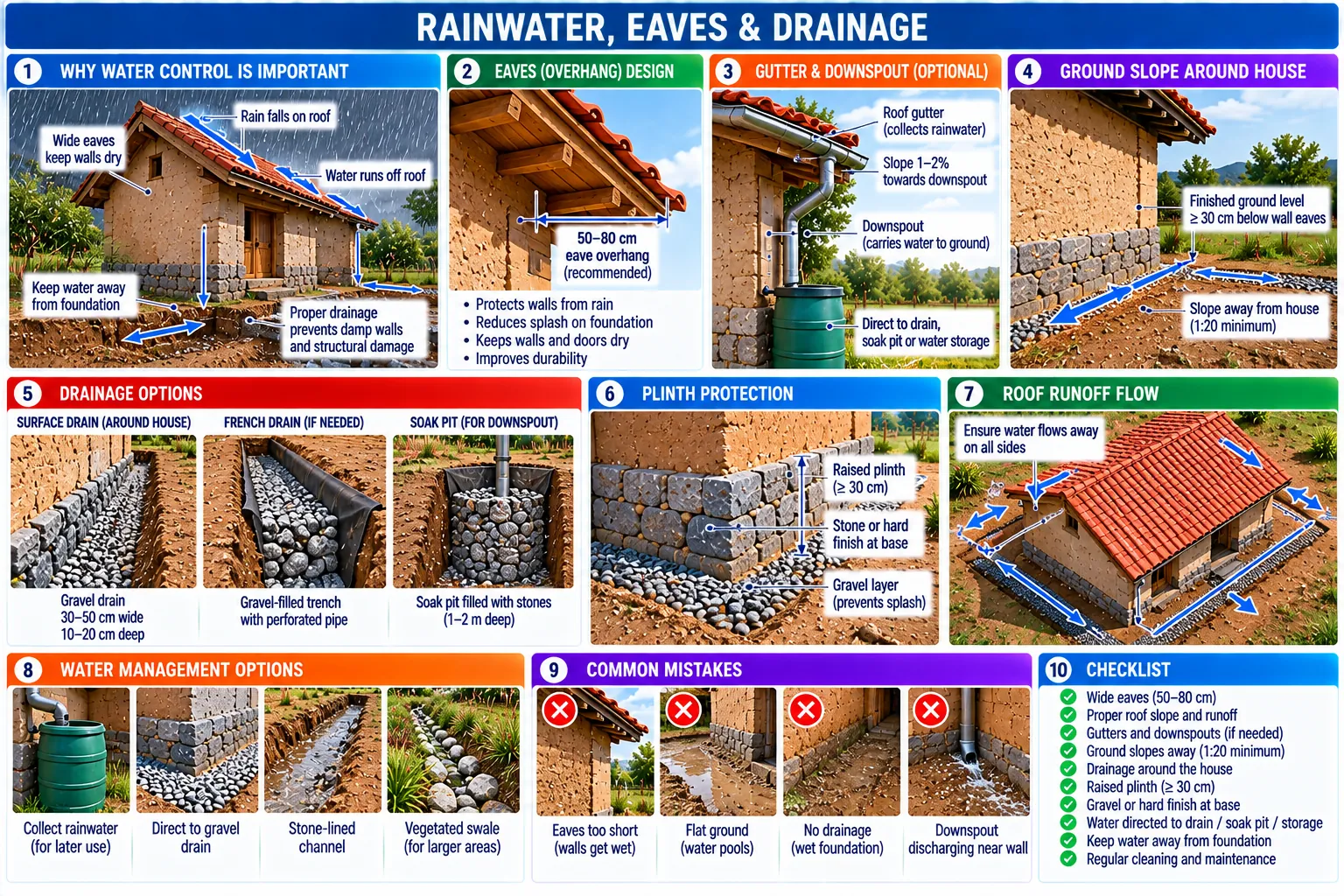
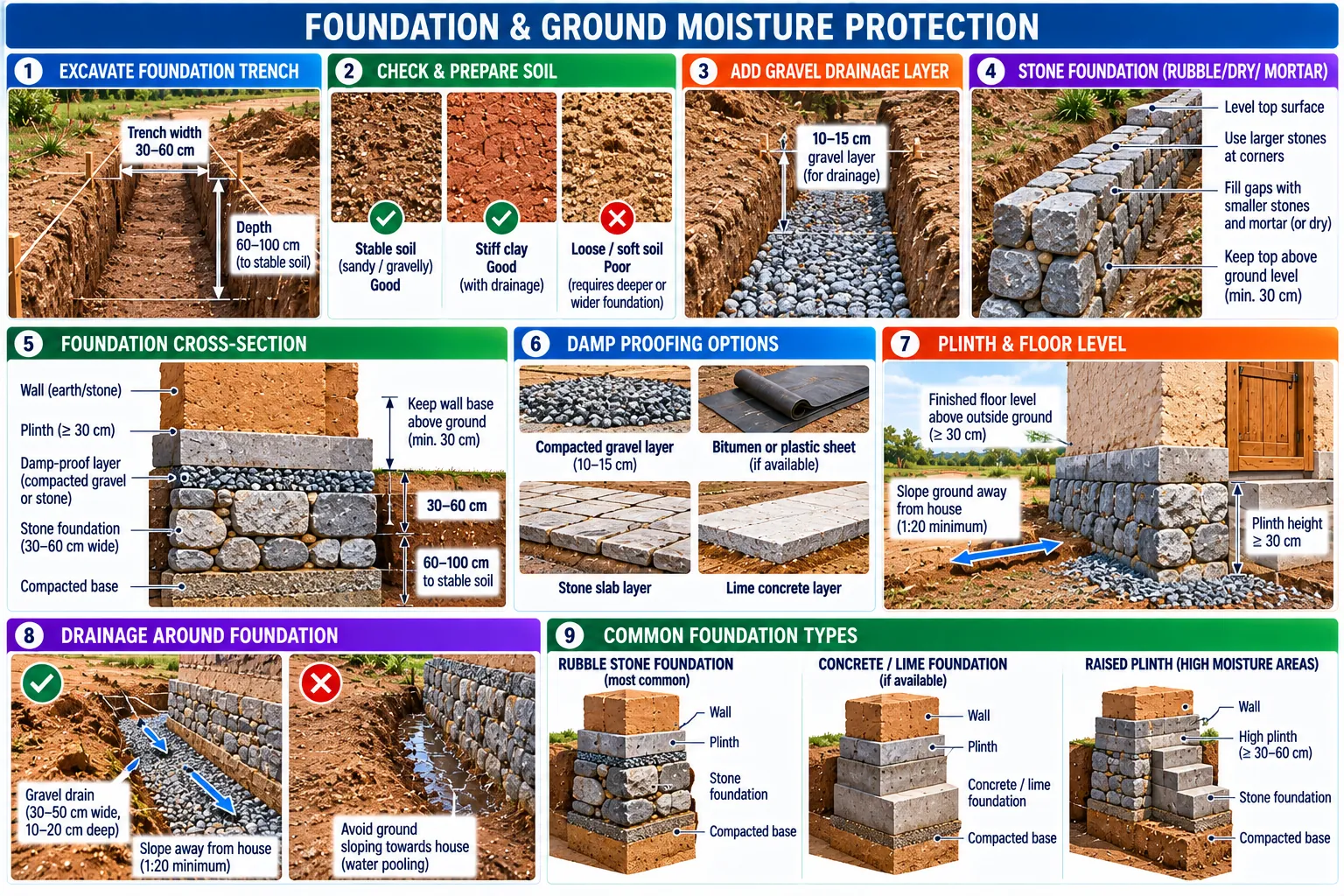
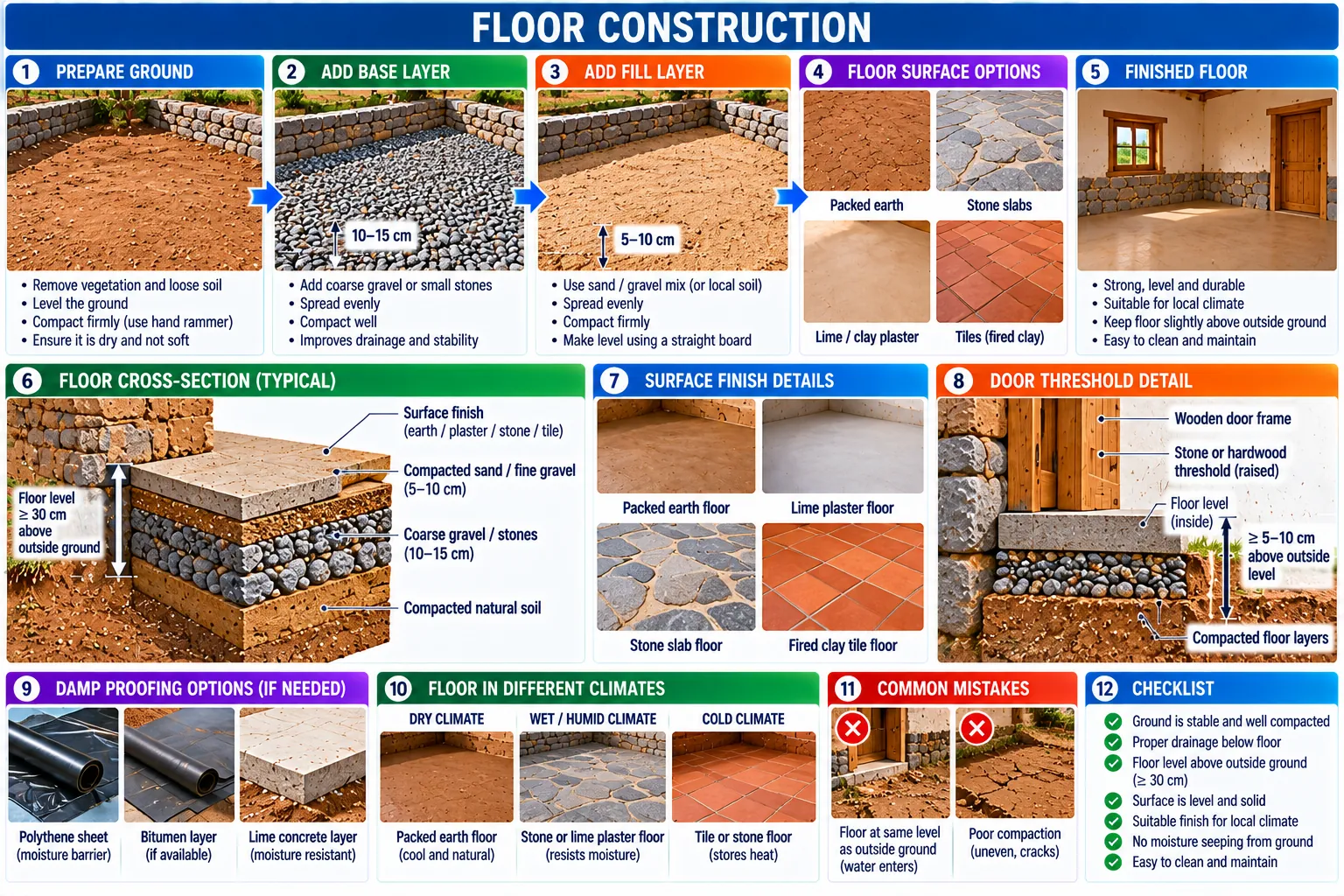
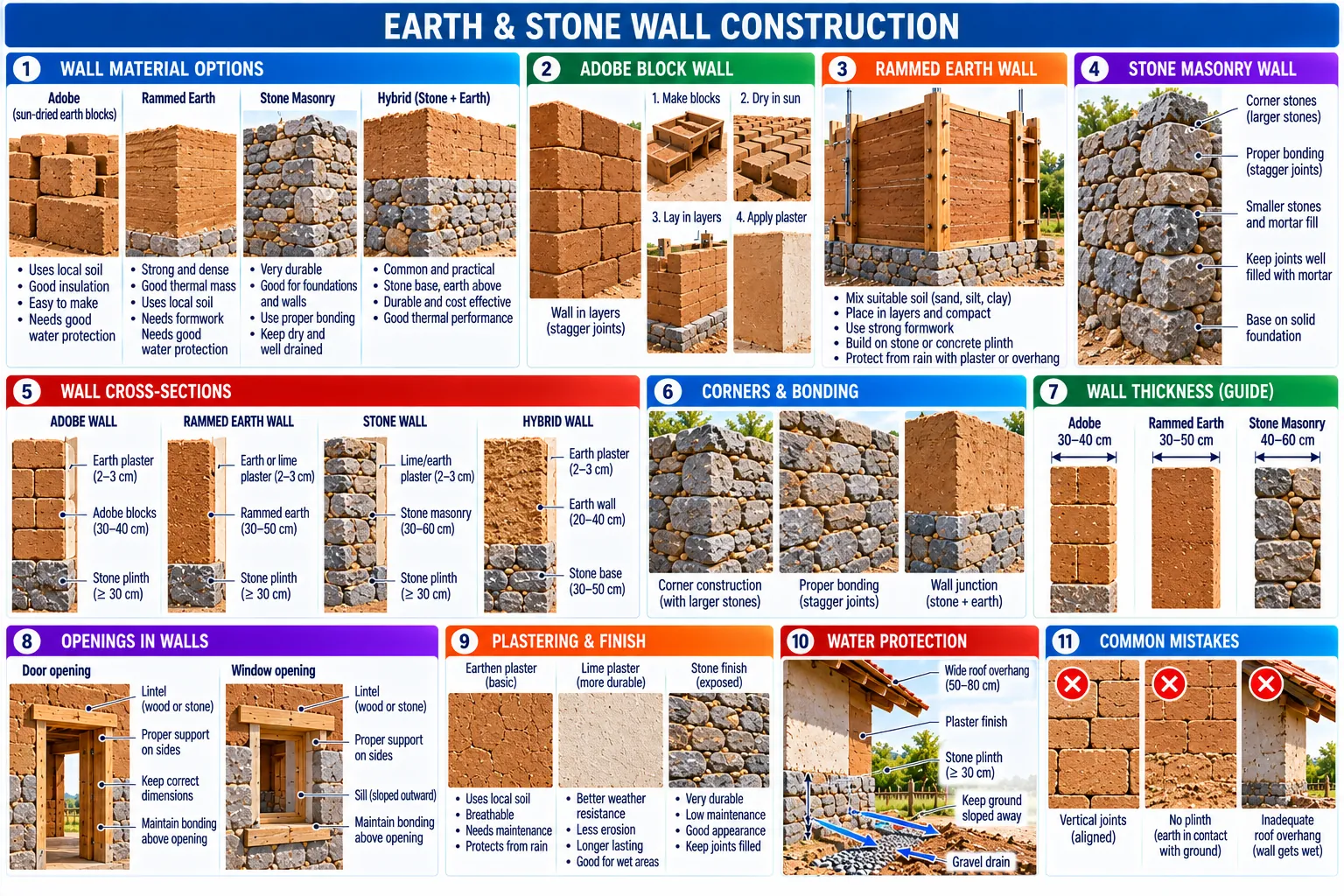
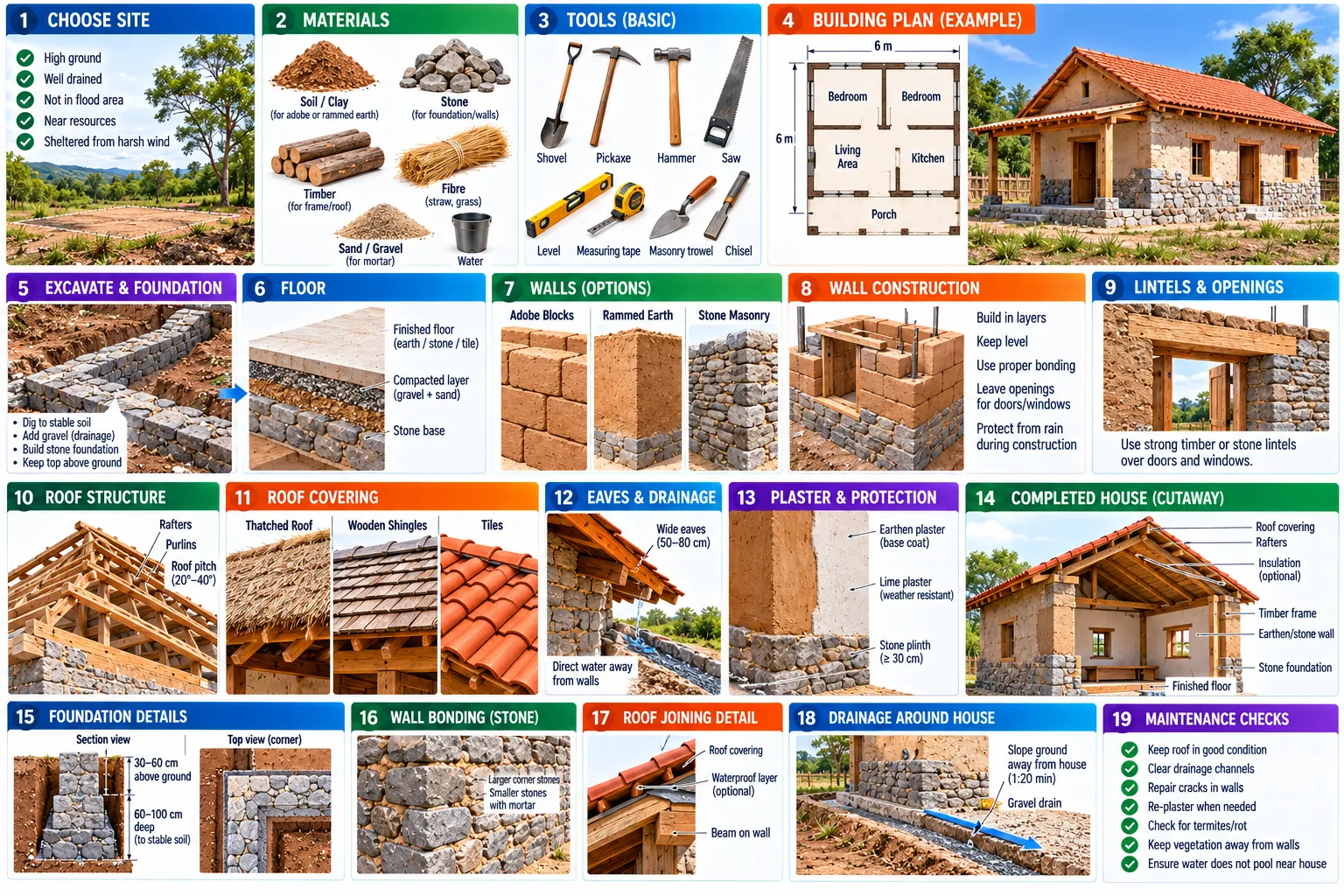
Level 1How to build a dwelling that stays dry and standing for thirty years from subsoil, stone and timber: choosing the method, setting out, foundations, walls, roof, drainage, and how to inspect, repair and maintain it.
Level 3Turning the sciences into things that work: machines, structures, water in pipes and channels, heat through walls, and feedback control. Each result with what it lets you do and who first found it.
Level 1The forest is the first material store, the first fuel supply and the first thing a group kills itself cutting down. Managed, it is also the only one of the three that grows back.
Level 3Density, stiffness, expansion and melting point for the materials the ladder makes, and what each number decides.
Level 0The highest calorie-return food source available to a group with nothing — and the one most often worked in the least productive way.
Level 1A glut eaten in the week it arrives is a feast. The same glut dried, salted, fermented or cellared is the difference between March and a famine.
Level 3The two dozen that decide who lives where there is no doctor: what each does, how it spreads, what kills it and which step stops it.
Level 3Life from the cell up: the human body, microbes and immunity, inheritance and epidemics. Each result with what it lets you do and who first found it.
Level 3Force, energy, heat, light, electricity, relativity and the atom: the laws every engine, wire and lens obeys, each with what it lets you do and who first found it.
Level 1Fired clay is the first material a group makes that does not exist in nature: a rock with a shape you chose. Getting there is mostly patience — in the drying, and in the heating.
Level 2Burn a rock, add water, and it turns back into rock in the shape you gave it. Mortar, plaster, whitewash, soap and tanning all start there — and so does an alkali burn that can blind in seconds.
Level 1The poisonings a rebuilding community is most likely to meet: where each comes from, how it shows, and the first thing to do.
Level 2How to tell the ores that matter with nothing but a streak plate, a knife and your hand: colour lies, streak and weight do not.
Level 1What a soil is made of, why its acidity matters, and how to read a nutrient shortage in the leaves before it costs a harvest.
Level 3What matter is made of and how it changes: amounts, gases, acids, the energy and speed of reactions, electrochemistry, and the reactions every industry on the ladder runs on.
Builds
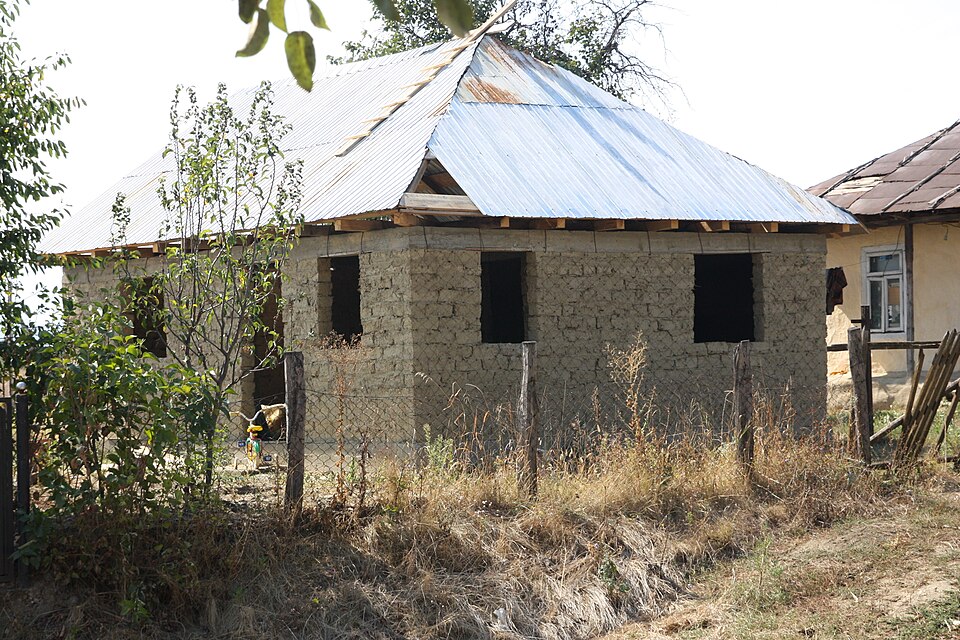
Sun-dried earth blocks on a stone plinth under a thatched roof, 4.0 × 3.6 m inside — the worked example for the building guide, from pegs in the ground to the first winter.
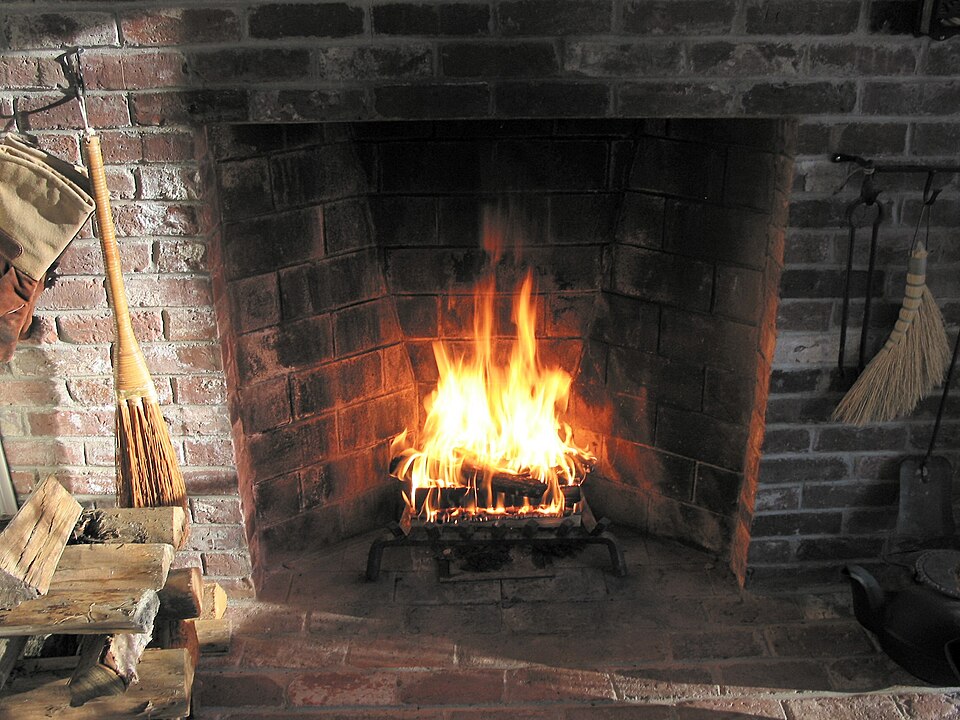
A fireplace that throws its heat into the room and a lined flue that takes every trace of smoke out of the house: the part of a house most likely to burn it down or poison the people in it.
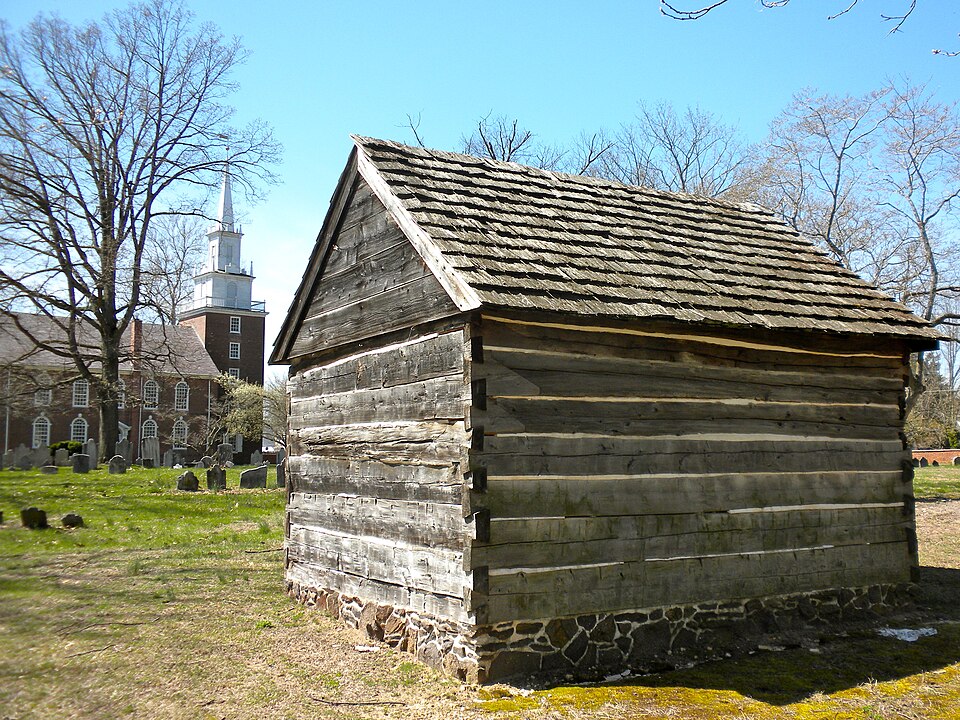
Where straight timber grows and there is no clay or stone, the fastest permanent walls an axe can raise: structure, enclosure and insulation in one piece.
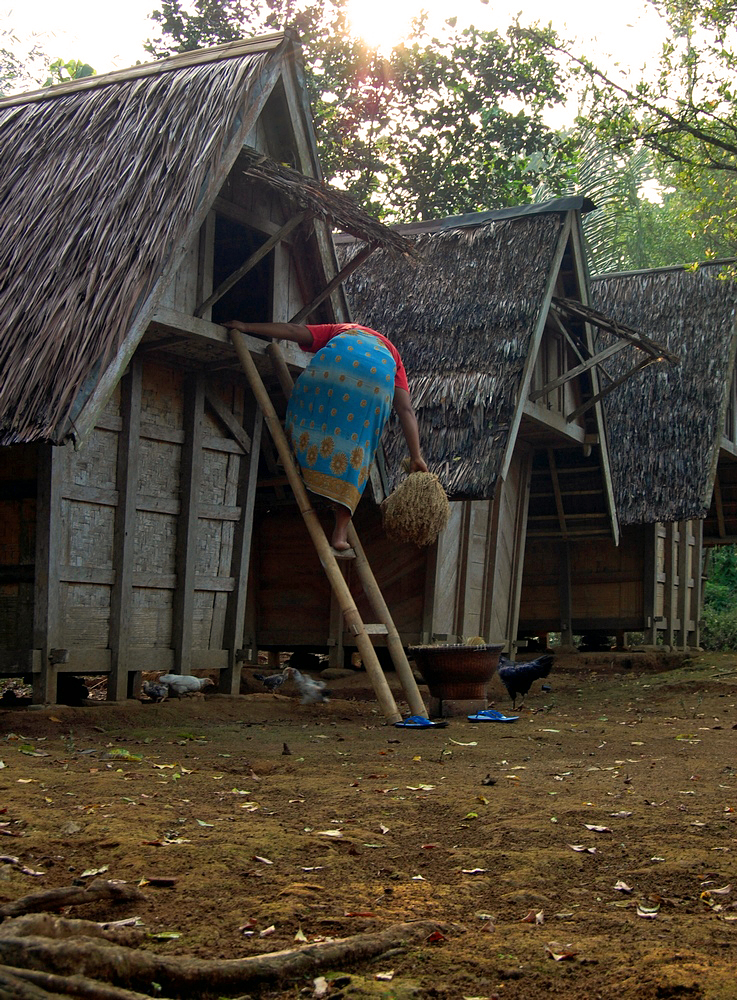
Keep a year of grain dry, cool and away from rodents — the single highest-return building on the site.
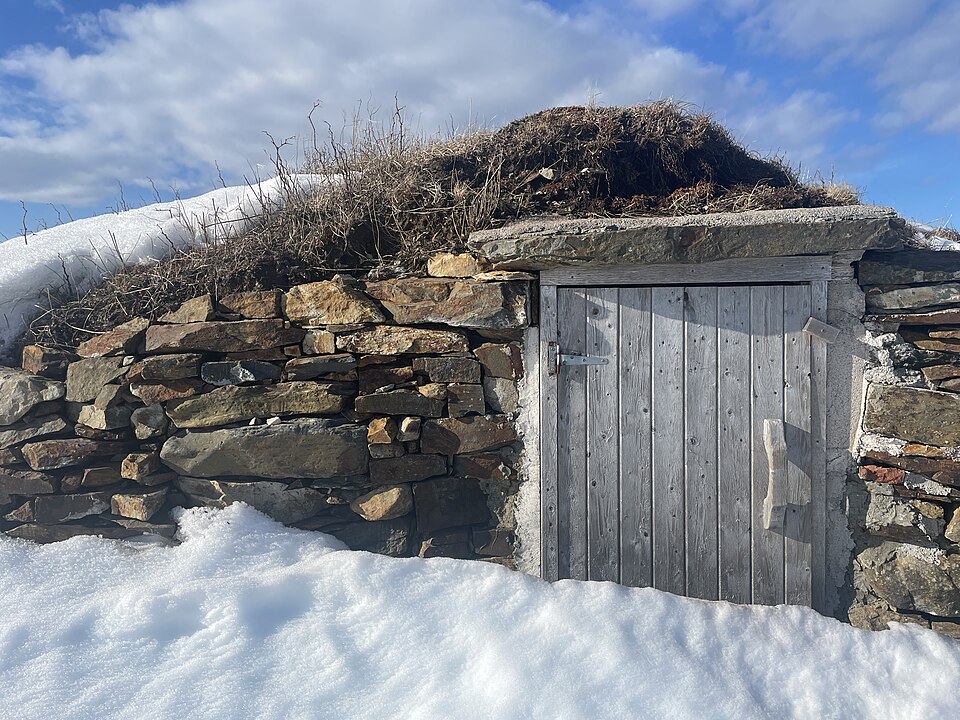
Cold, damp and dark, without power — how a harvest survives to the following spring.
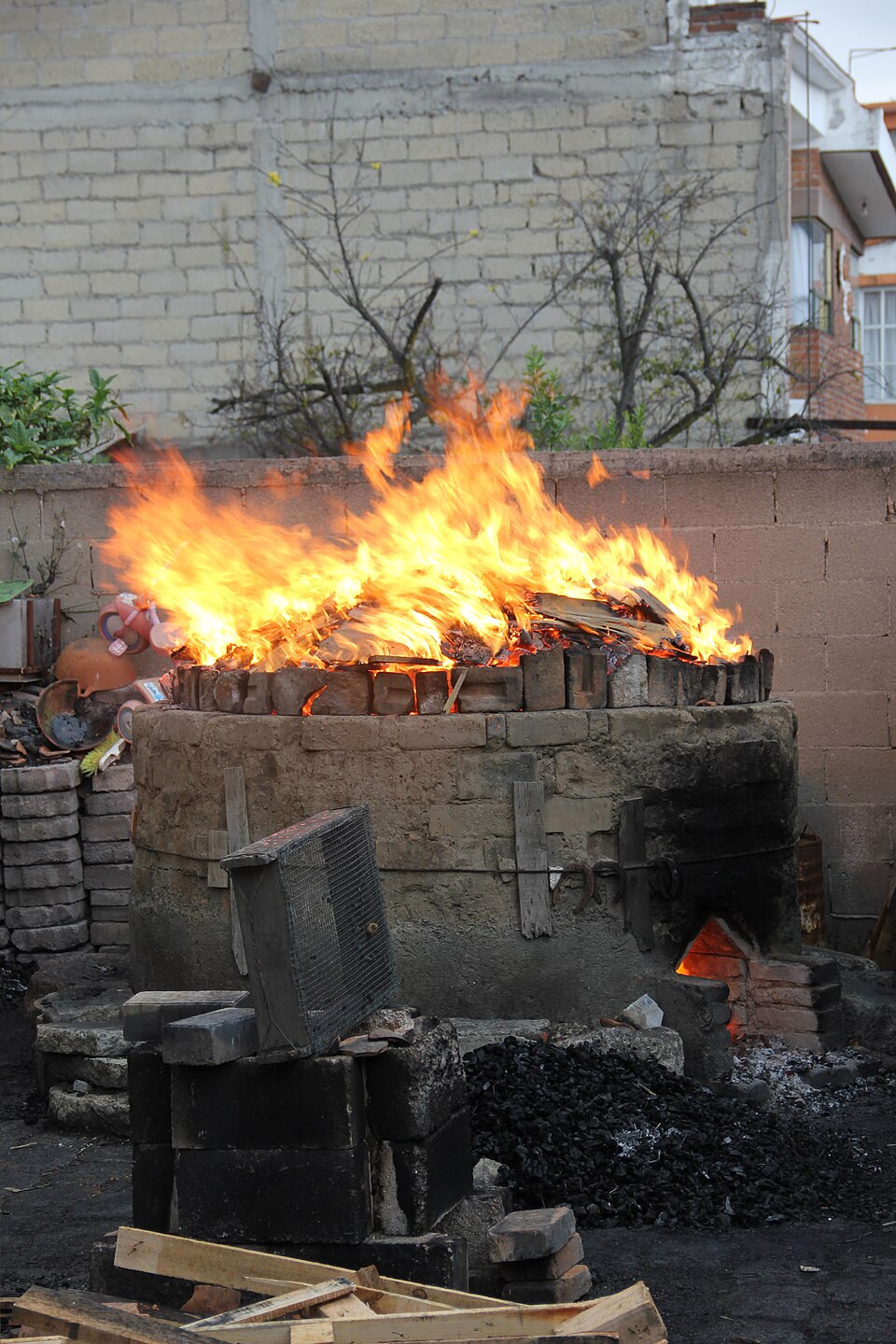
The first machine that holds a temperature — pottery, brick and tile, and the training ground for every furnace above it.
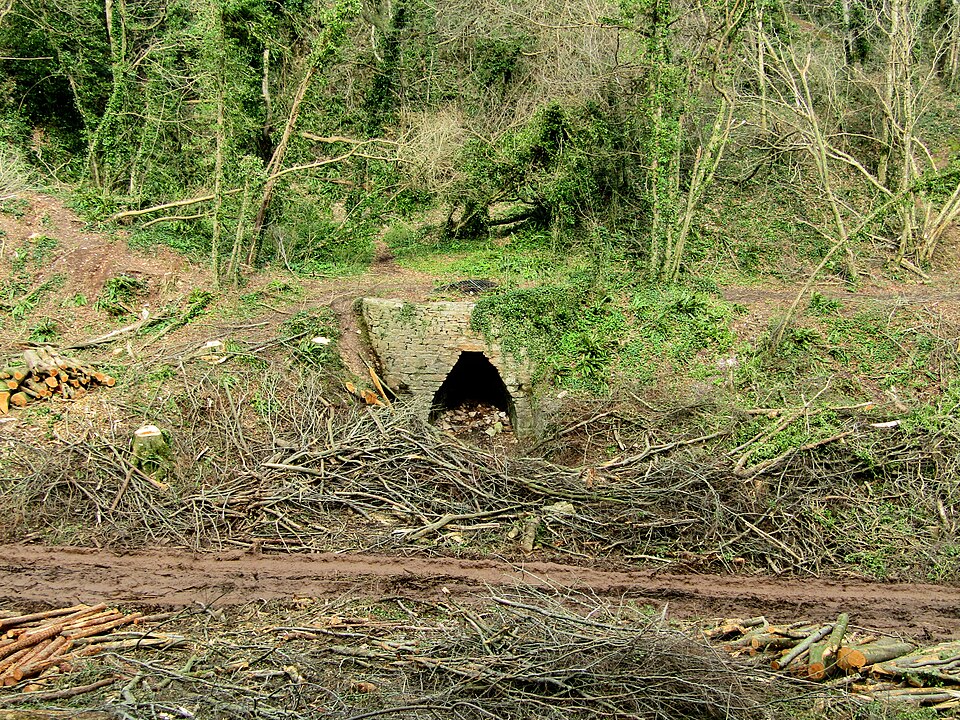
Burn limestone into quicklime — mortar, plaster, whitewash, flux, tannery liquor and soil correction, from one shaft.
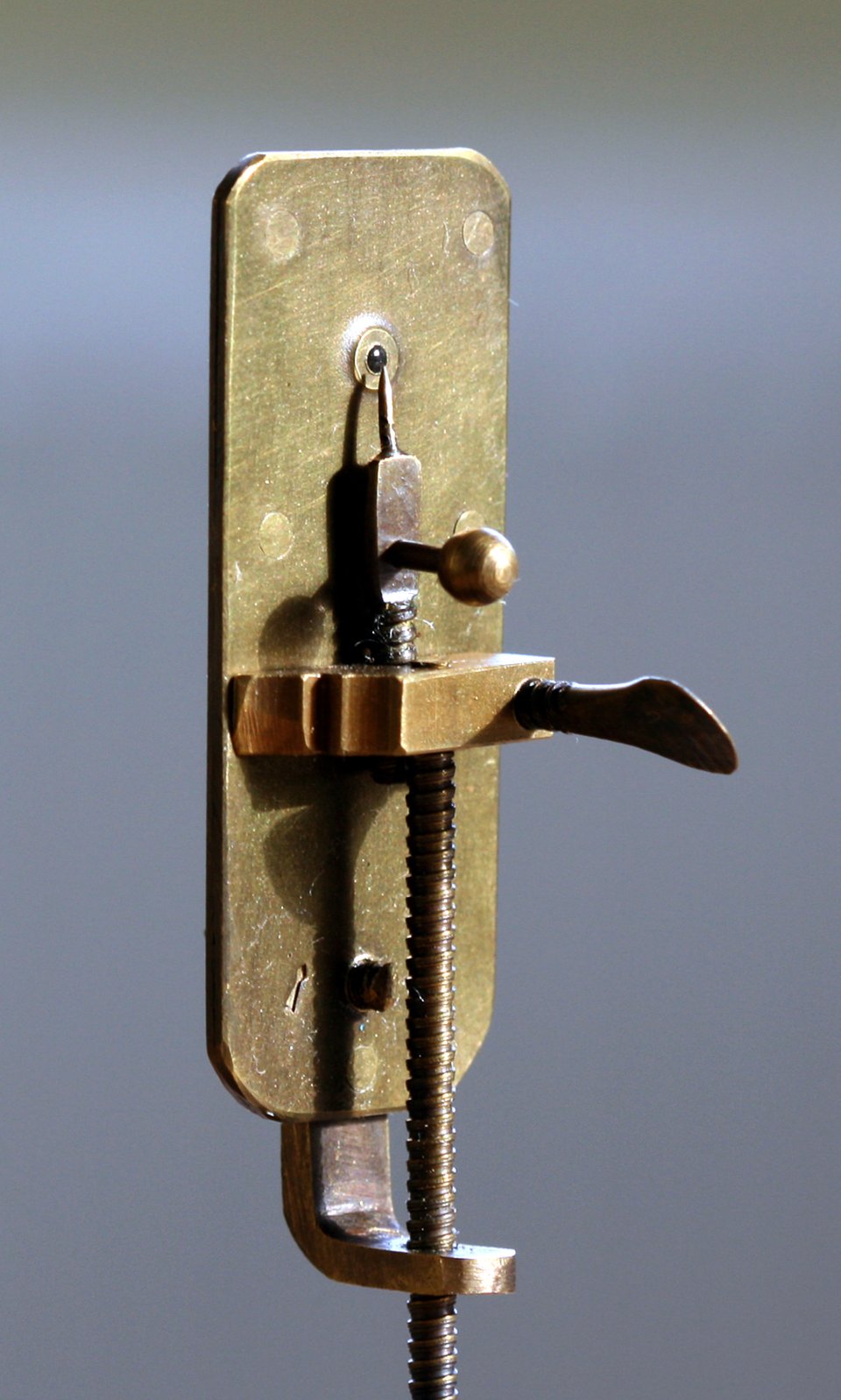
A glass bead the size of a pinhead magnifies 150–350 times: enough to see yeast, blood cells and the larger bacteria that cause disease.
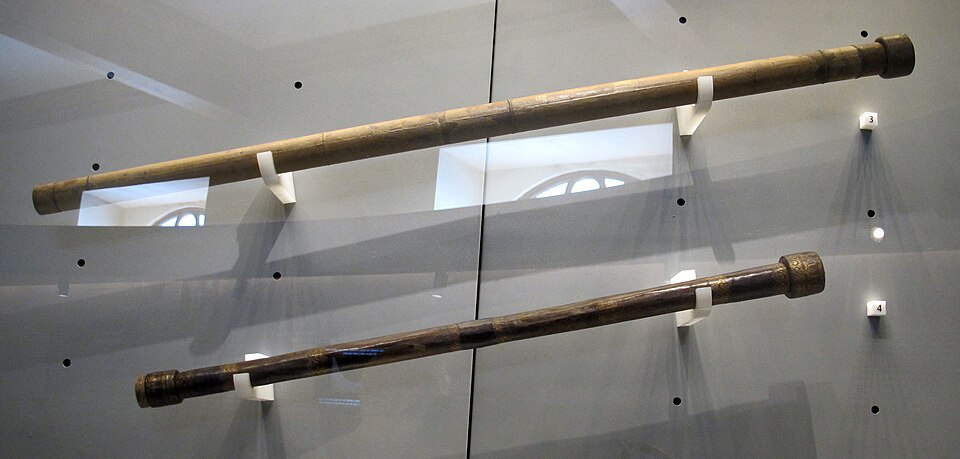
Two lenses in a tube: a 1-metre objective and a 25 mm eyepiece give 40×, enough to see Jupiter's moons and the phases of Venus.
Reference sheets
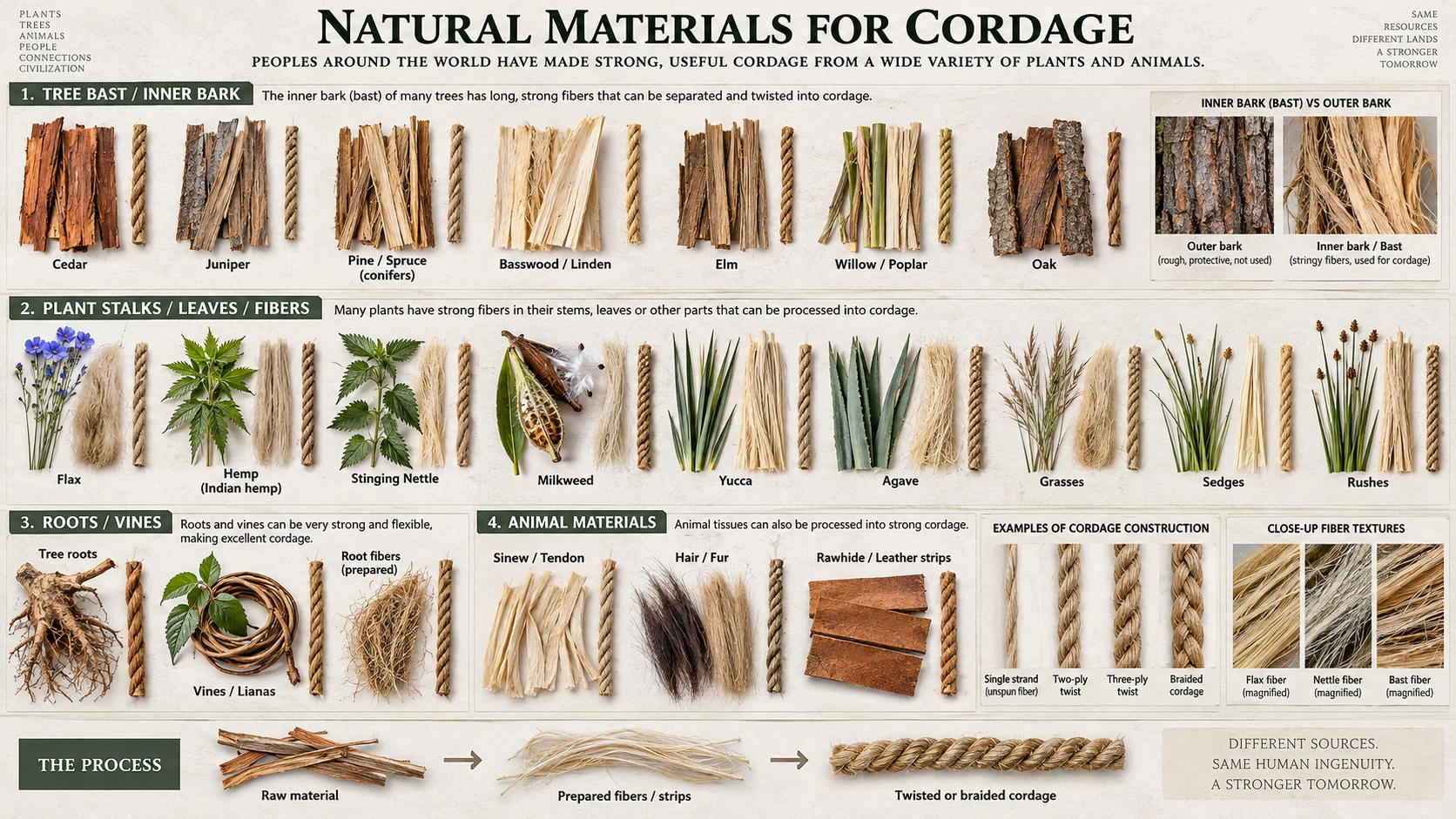
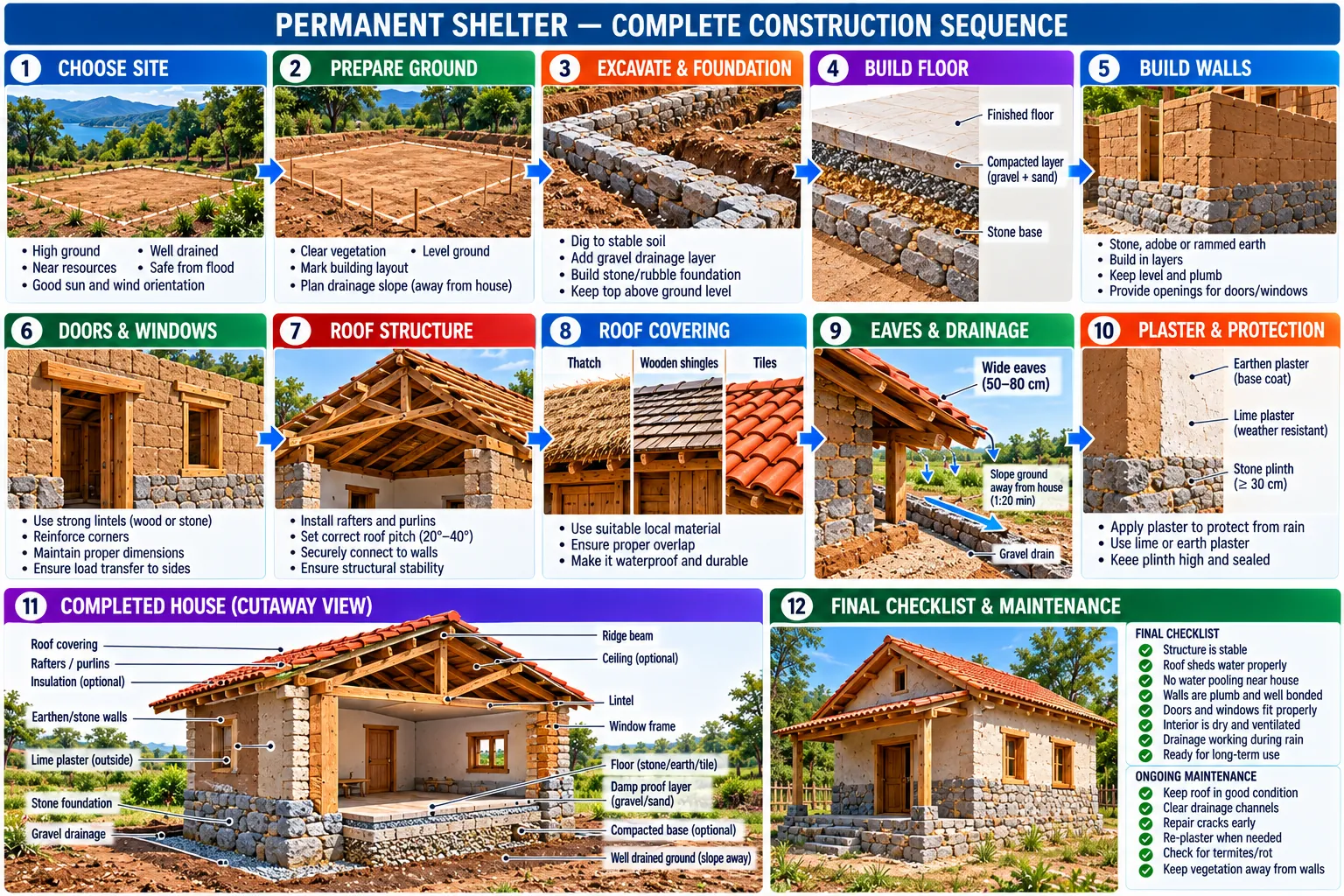
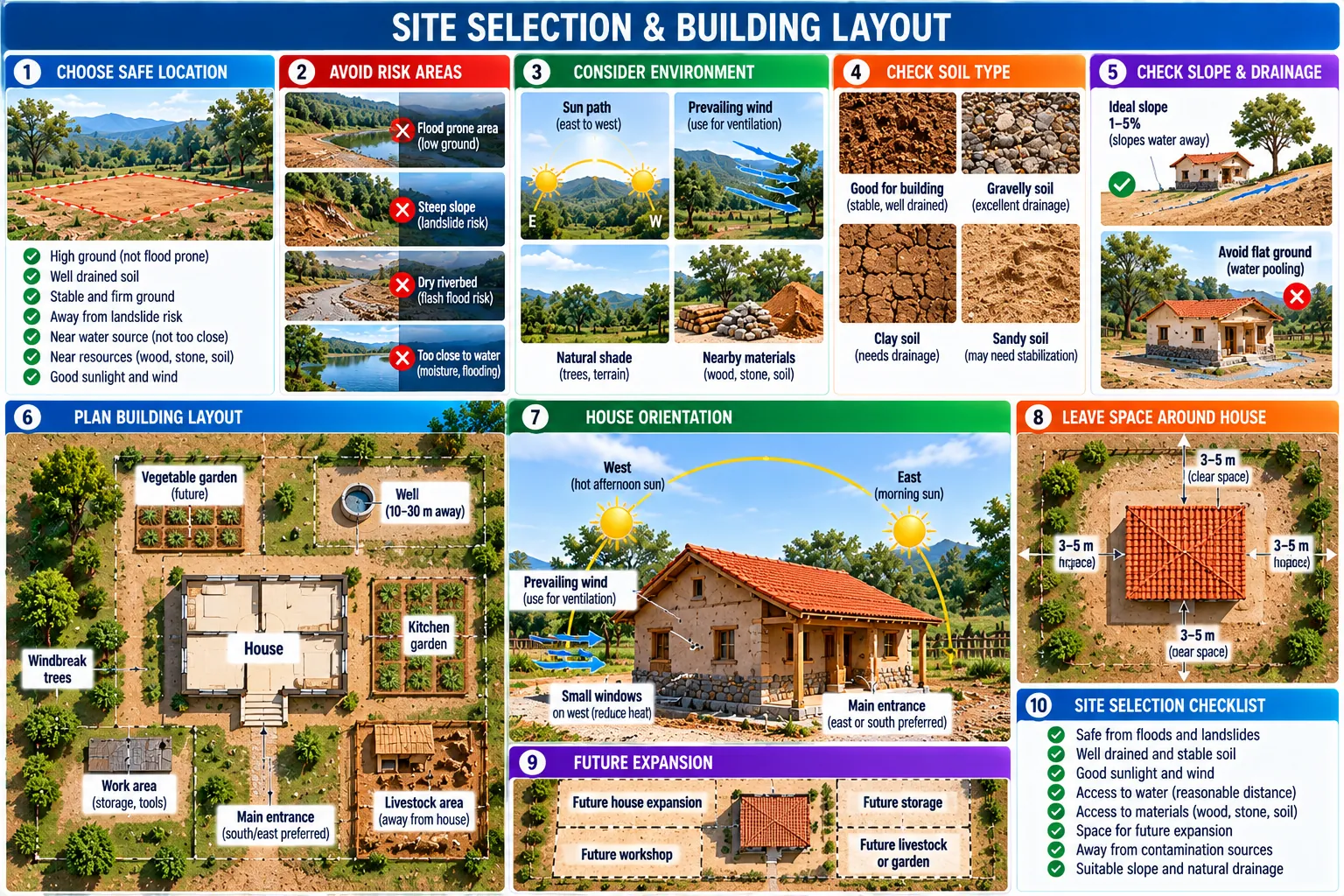
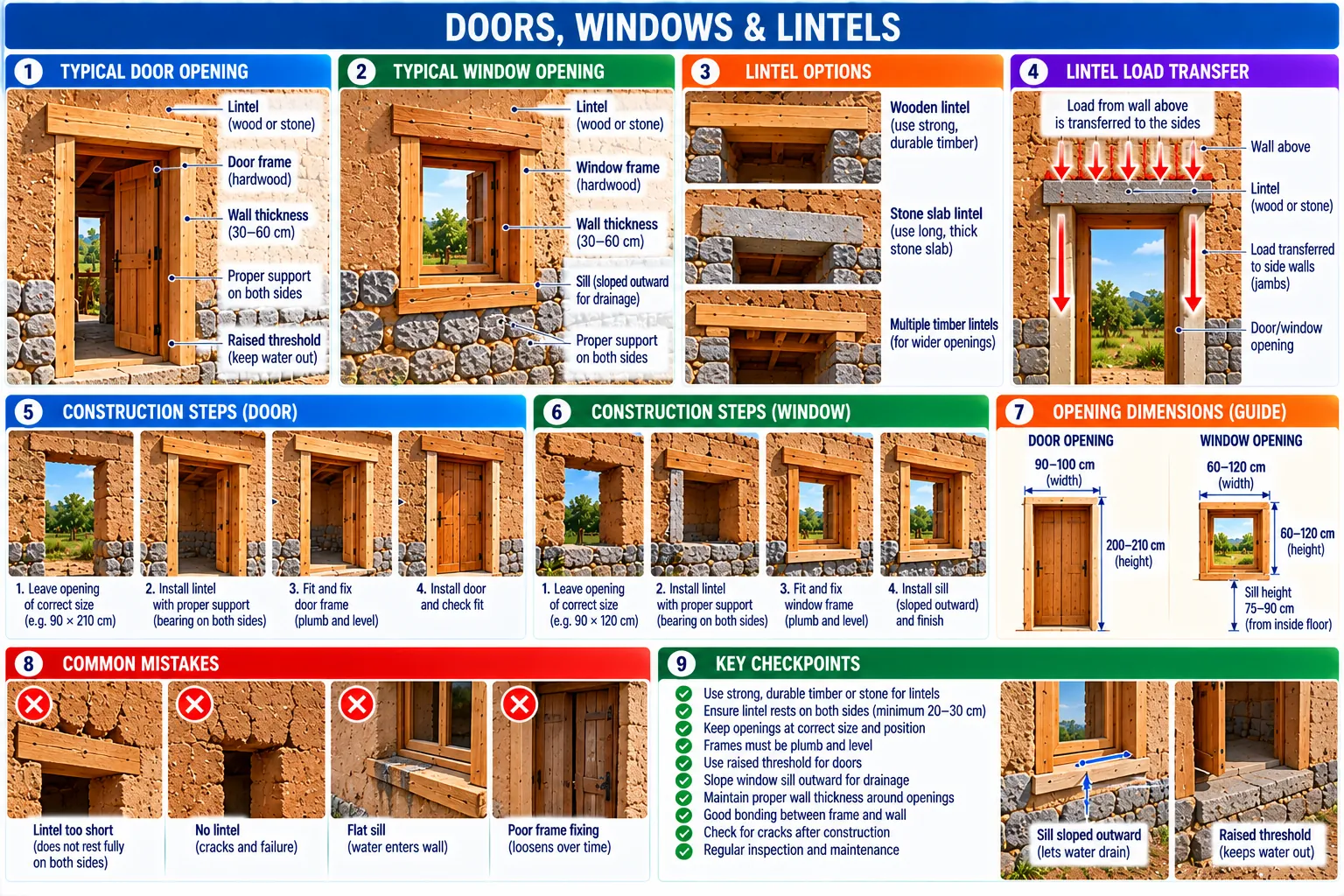
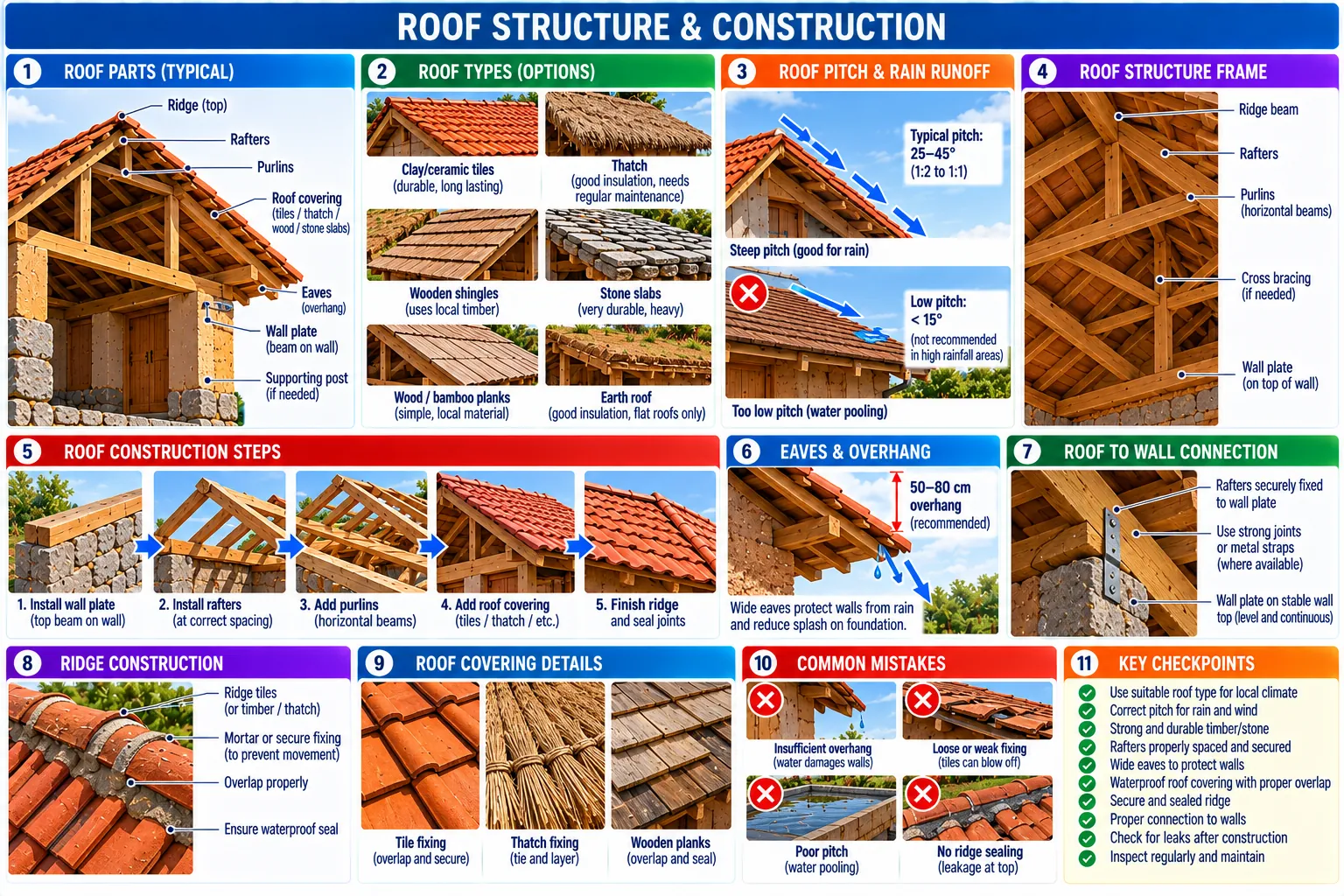
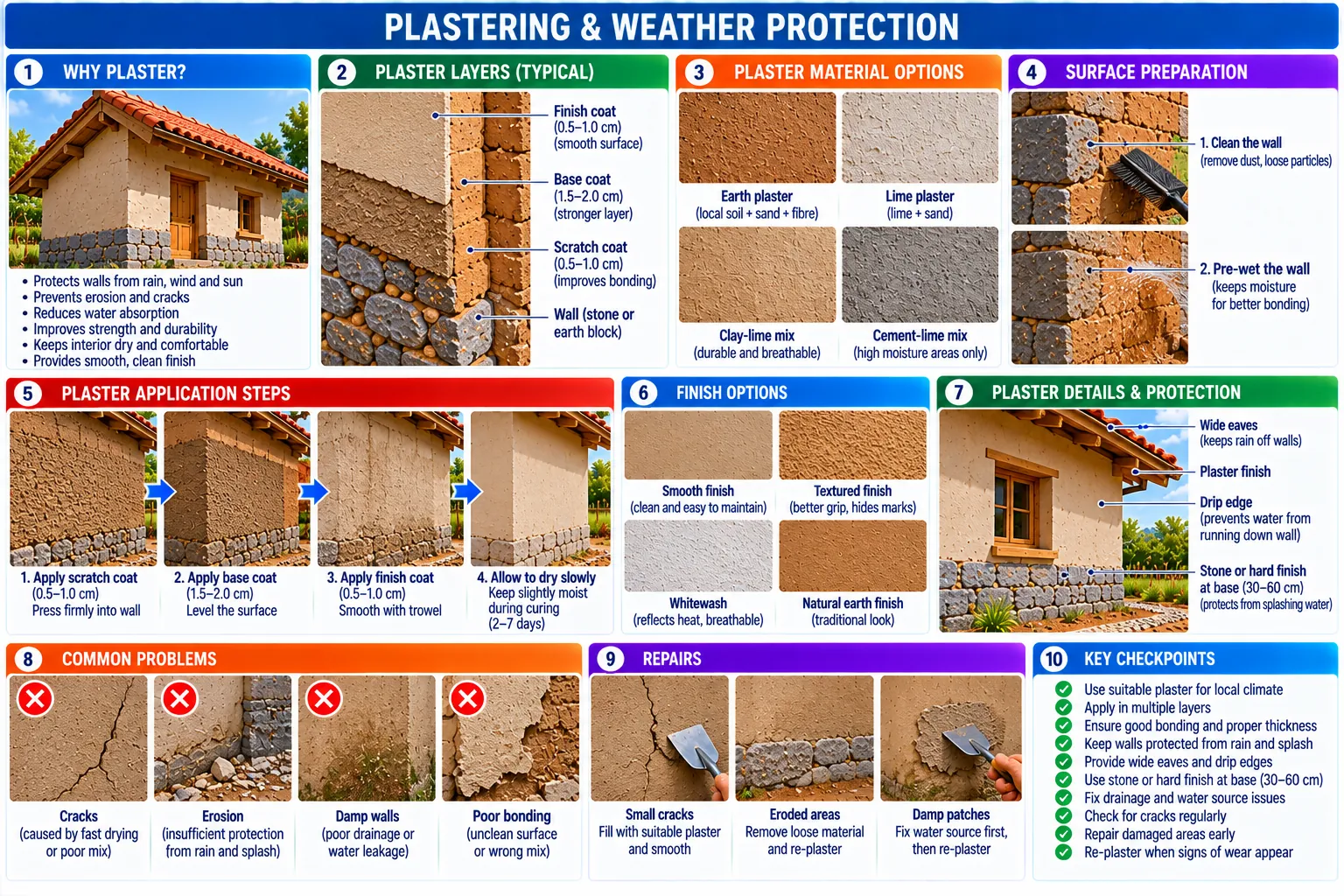
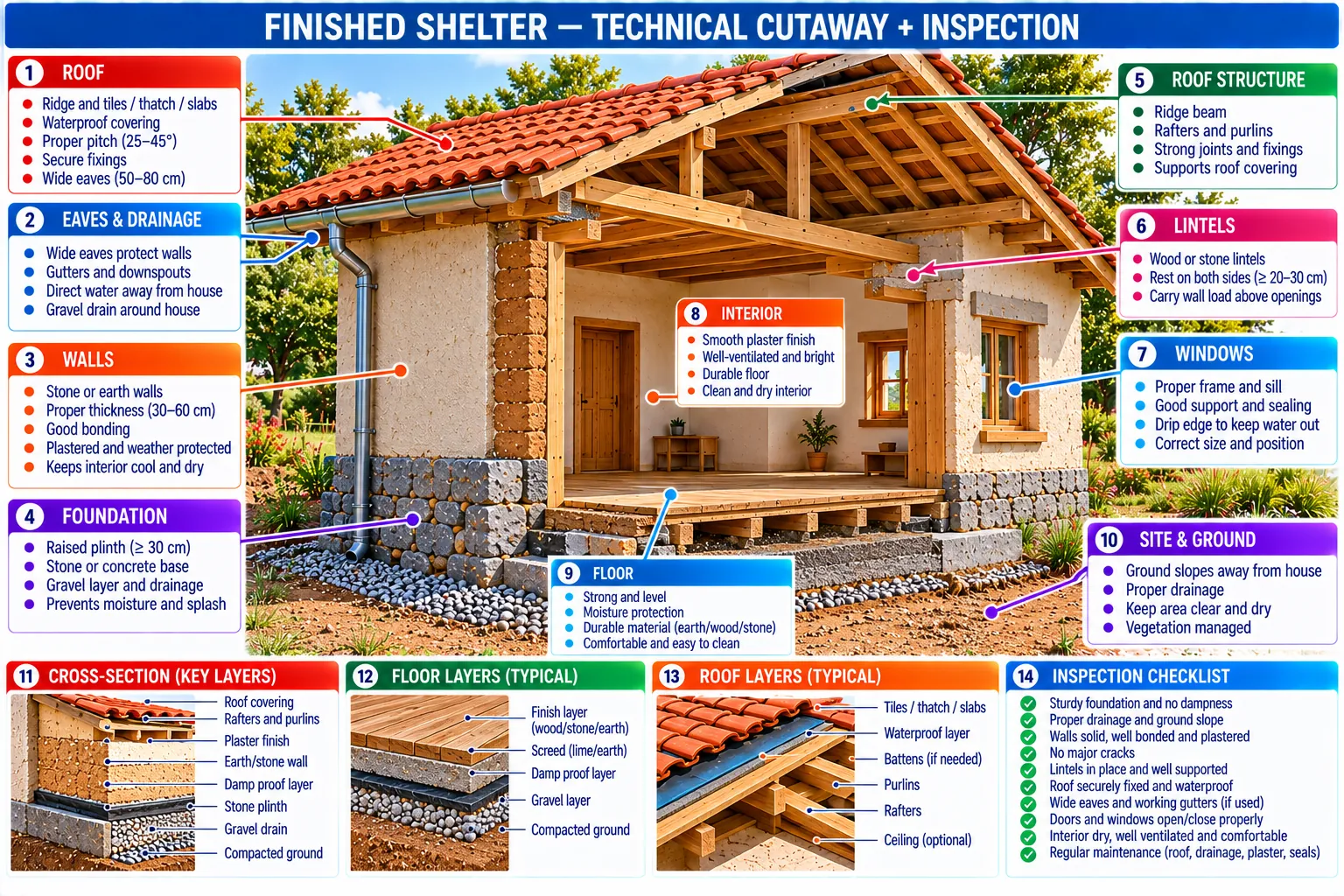
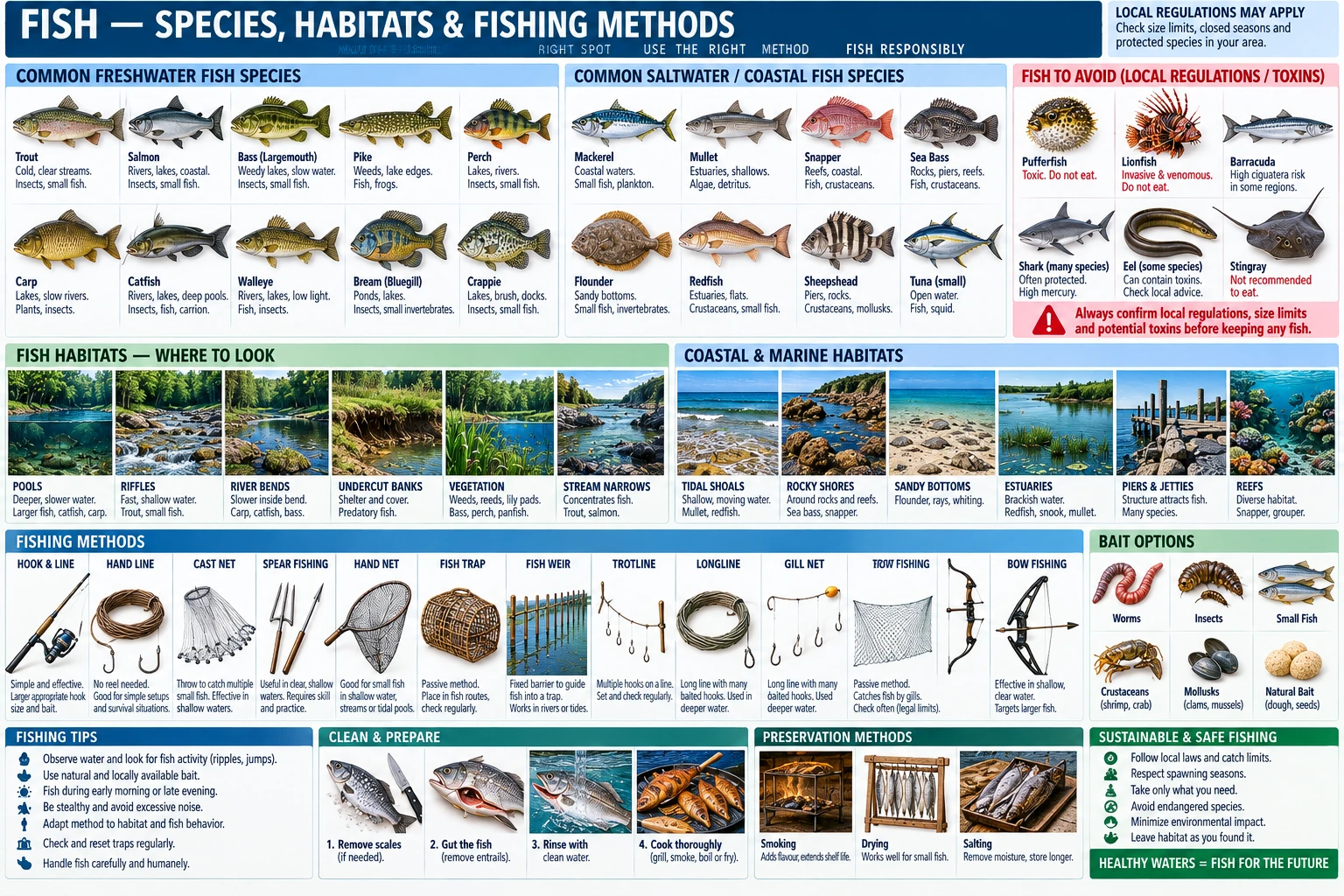
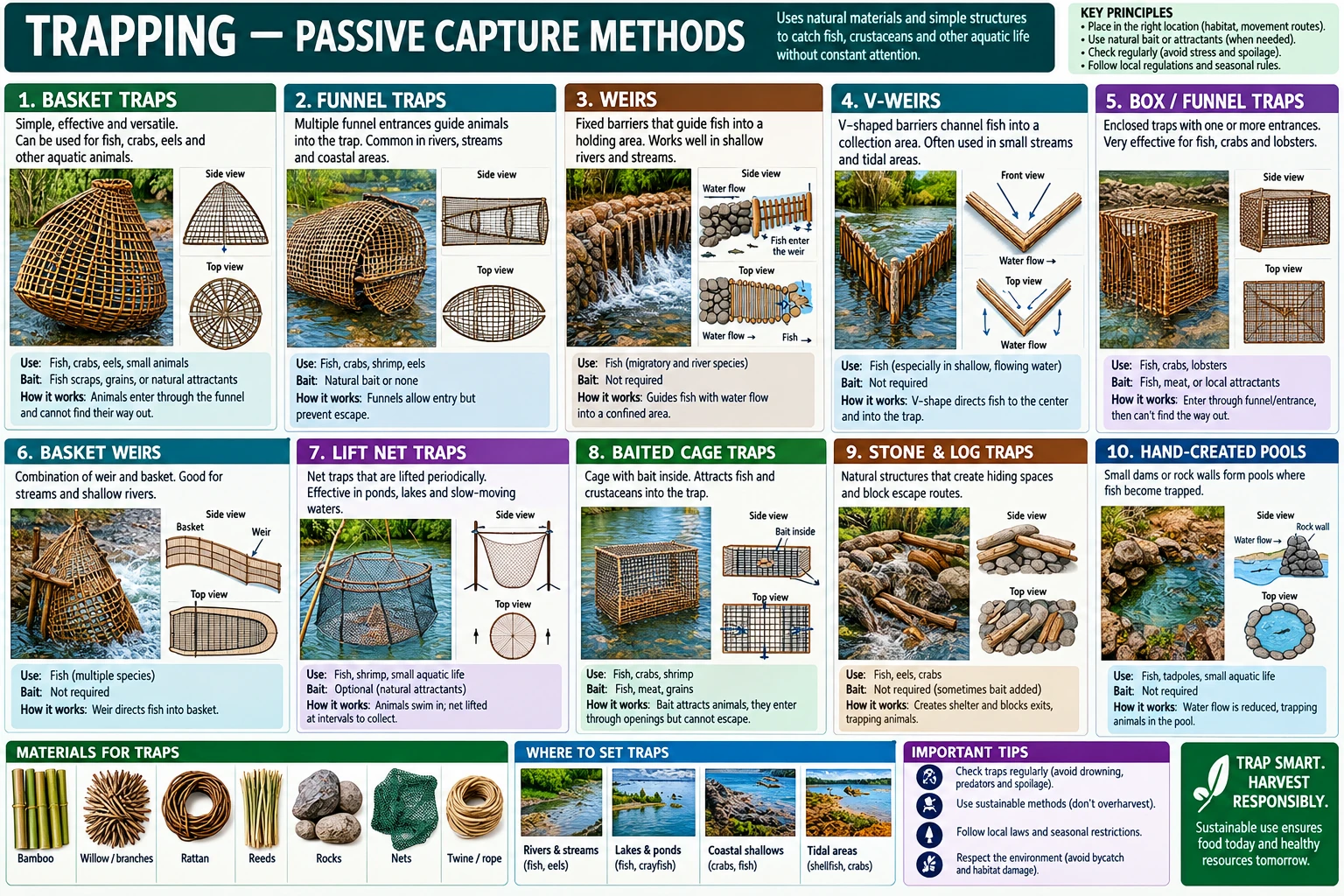
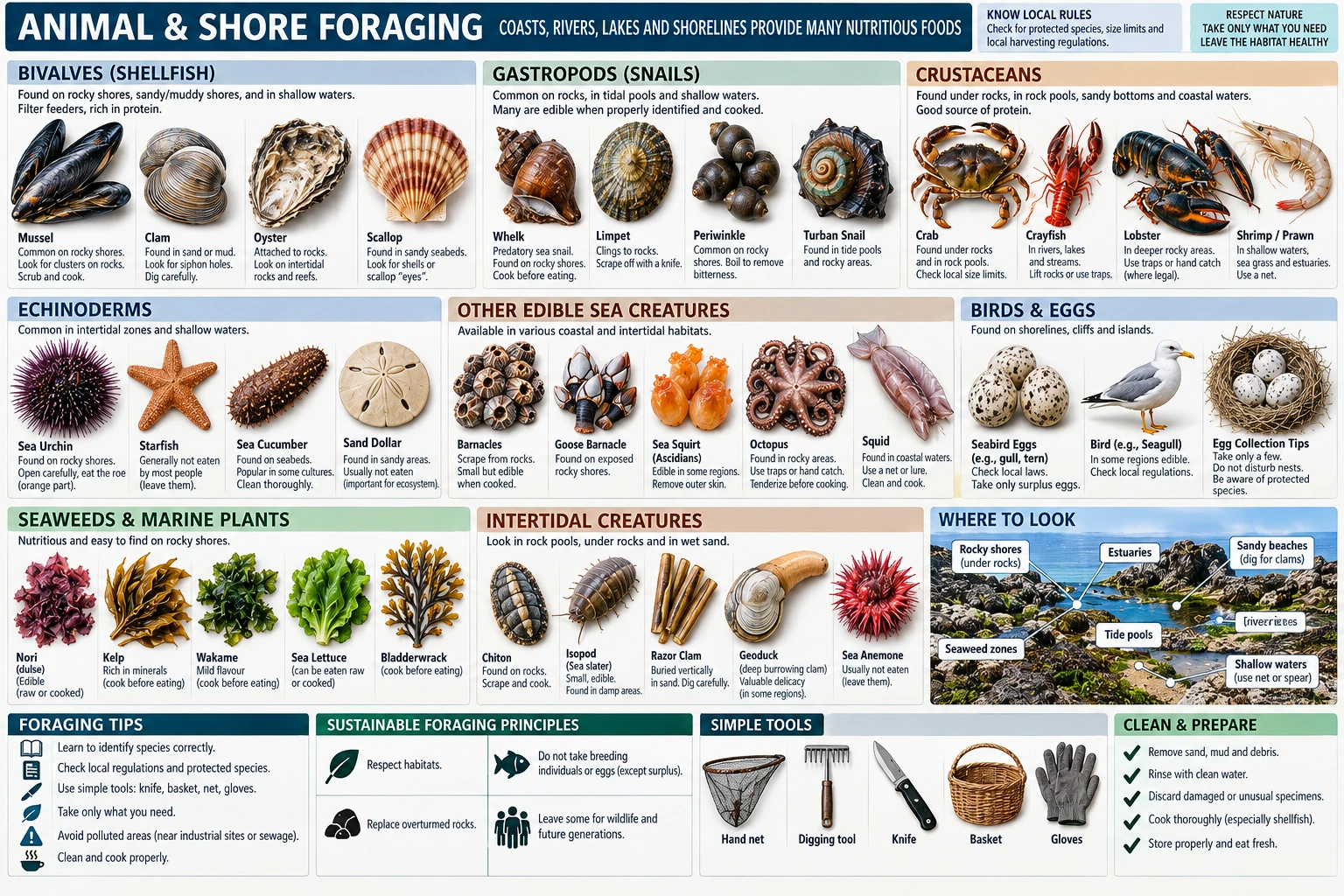
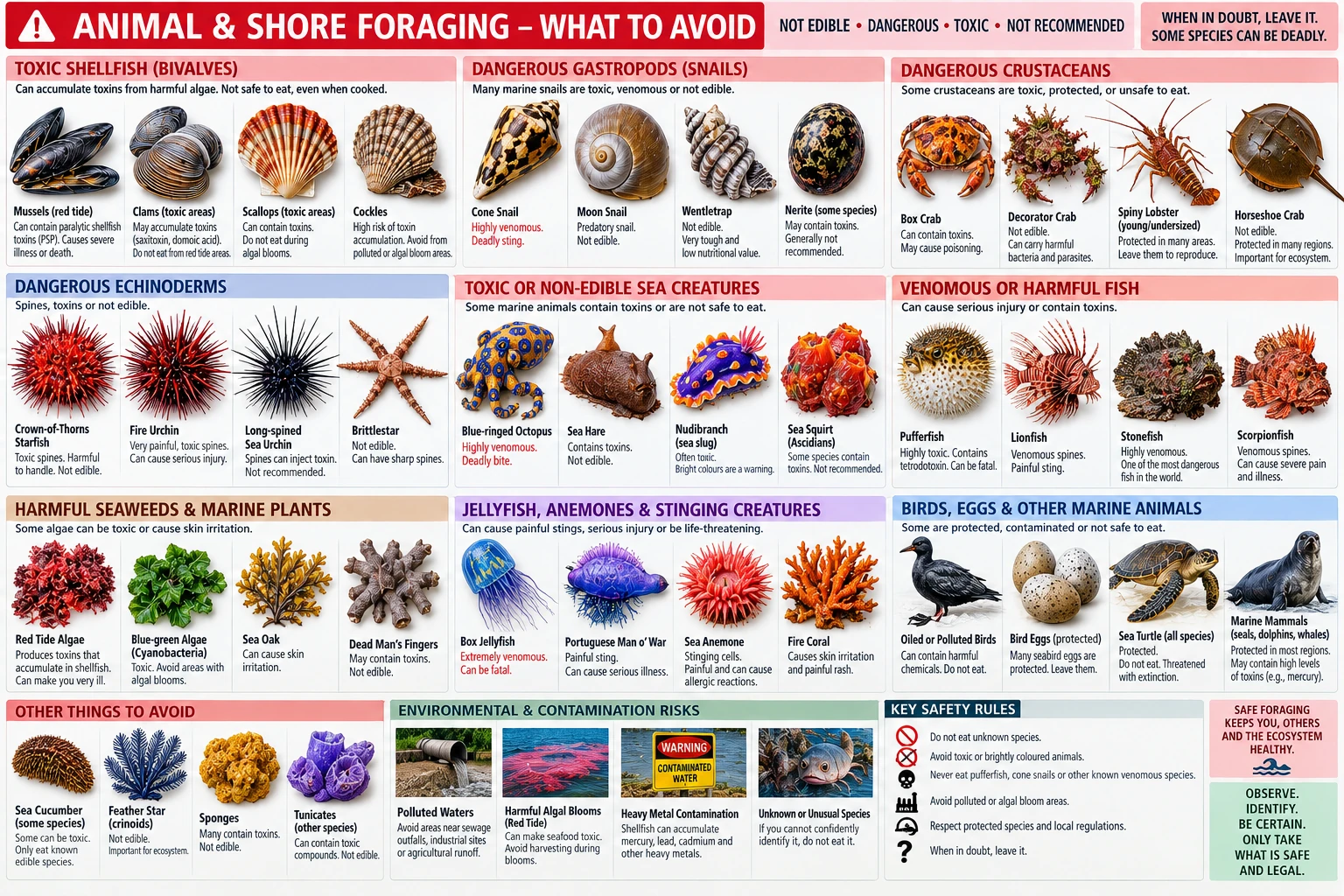
Drawn overview sheets, each with its corrections printed under it. They orient; they are never the thing you identify from.
Books and archives
- Shelters, Shacks and Shanties Daniel Carter Beard · Gutenberg #28255
- Cottage Building in Cob, Pisé, Chalk and Clay Clough Williams-Ellis · Gutenberg #32048
- The Use of Ropes and Tackle Homer J. Dana and W. A. Pearl · Gutenberg #56585
- The Story of Rope Plymouth Cordage Company · Gutenberg #71807
- Wikipedia, offline (Kiwix ZIM) Archive · ~110 GB full with images · ~55 GB no-image · ~5 GB 'best of'
- CD3WD appropriate-technology archive Archive · ~13 GB
- Practical Farm Buildings: Plans and Suggestions Andrew Frederick Hunter · Gutenberg #65618
- The Science of Brickmaking George F. Harris · Gutenberg #60550
- Appropedia Archive · ~4 GB
- UNHCR Emergency Handbook Archive · a website; each entry saves as a PDF
- Carpentry Ira Samuel Griffith · Gutenberg #70226
- ABC of the Steel Square and Its Uses Fred T. Hodgson · Gutenberg #49273
- Chimneys and Fireplaces A. M. Daniels (USDA) · Gutenberg #48360
- Lectures on Ventilation Lewis W. Leeds · Gutenberg #36936
- Lightning Conductors: Their History, Nature, and Mode of Application Richard Anderson · Gutenberg #54576
- Building with logs Clyde P. Fickes · Gutenberg #59380
- A manual of face brick construction American Face Brick Association · Gutenberg #69285
- Fireplaces and Chimneys Arthur H. Senner · Gutenberg #48378
- Essays; Political, Economical, and Philosophical — Volume 1 Benjamin Thompson, Count Rumford · Gutenberg #1025
- Plank Frame Barn Construction John L. Shawver · Gutenberg #65399
- Glass Manufacture Walter Rosenhain · Gutenberg #52724
- Encyclopædia Britannica, 11th edition (1911) Archive · ~1–8 GB depending on format
- Internet Archive Archive · Unbounded — curate
- Wood Handbook (USDA Forest Products Laboratory) Archive · one PDF book
- Mechanics: The Science of Machinery A. Russell Bond · Gutenberg #49445
- Pumps and Hydraulics (Part 1) N. Hawkins · Gutenberg #56339
- The Mechanical Properties of Wood Samuel J. Record · Gutenberg #12299
- Woodwork Joints William Fairham · Gutenberg #21531
- A Course in Wood Turning Archie S. Milton · Gutenberg #15460
- OpenStax textbooks Archive · ~2 GB
- Creative Chemistry Edwin E. Slosson · Gutenberg #17149
- A Treatise on Grain Stacking John N. De Lamater · Gutenberg #34586
- FAO agricultural documents Archive · ~10 GB
- USDA / NRCS soil and conservation library Archive · ~5 GB
- The Field and Garden Vegetables of America Fearing Burr · Gutenberg #21682
- Home Vegetable Gardening F. F. Rockwell · Gutenberg #7123
- The Complete Book of Cheese Robert Carlton Brown · Gutenberg #14293
- The Survivor Library Archive · ~100 GB
- Project Gutenberg (complete) Archive · ~90 GB with all formats · ~15 GB text only
- WHO, Immunization in Practice Archive · Free PDF download
- Hesperian Health Guides Archive · ~50–400 MB
- Bee Hunting John R. Lockard · Gutenberg #34044
- WHO water, sanitation and health guidance Archive · ~200 MB
- Alcoholic Fermentation Arthur Harden · Gutenberg #44985
- The Fundamentals of Bacteriology Charles B. Morrey · Gutenberg #43227
- The Elements of Bacteriological Technique J. W. H. Eyre · Gutenberg #27713
- Principles of Public Health Thomas Dyer Tuttle · Gutenberg #53974
- On the Origin of Species By Means of Natural Selection Charles Darwin · Gutenberg #1228
- An anatomical disquisition on the motion of the heart & blood in animals William Harvey · Gutenberg #67065
- Micrographia Robert Hooke · Gutenberg #15491
- An Inquiry into the Causes and Effects of the Variolae Vaccinae Edward Jenner · Gutenberg #29414
- LibreTexts Archive · ~15 GB
- Newton's Principia: The mathematical principles of natural philosophy Isaac Newton · Gutenberg #76404
- Treatise on Light Christiaan Huygens · Gutenberg #14725
- Experimental Researches in Electricity, Volume 1 Michael Faraday · Gutenberg #14986
- Reflections on the motive power of heat Sadi Carnot · Gutenberg #78610
- The Natural History of Clay Alfred B. Searle · Gutenberg #43297
- Concrete Construction: Methods and Costs Halbert P. Gillette · Gutenberg #24855
- Firemen and Their Exploits F. M. Holmes · Gutenberg #50575
- De Re Metallica Georgius Agricola (tr. Herbert Hoover) · Gutenberg #38015
- Acids, Alkalis and Salts George H. J. Adlam · Gutenberg #50552
- Concrete Construction for the Home and the Farm Atlas Portland Cement Company · Gutenberg #62312
- Plain Concrete for Farm Use T. A. H. Miller · Gutenberg #59379
- A Handbook of Laboratory Glass-Blowing Bernard D. Bolas · Gutenberg #32962
- The Art of Glass-Blowing T.-P. Danger · Gutenberg #55266
- On Laboratory Arts Richard Threlfall · Gutenberg #22784
- Pottery, for Artists, Craftsmen and Teachers George J. Cox · Gutenberg #38248
- How to Make Pottery Mary White · Gutenberg #64281
- The Story of the Soil Cyril G. Hopkins · Gutenberg #4527
- Elements of Chemistry, In a New Systematic Order, Containing all the Modern Discoveries Antoine Laurent Lavoisier · Gutenberg #30775
- The Chemical History of a Candle Michael Faraday · Gutenberg #14474
- The Microscope: Its History, Construction, and Application Jabez Hogg · Gutenberg #61233
- The Telescope Louis Bell · Gutenberg #53740
- On the Construction of a Silvered Glass Telescope Henry Draper · Gutenberg #53542