Civilization101Blueprint

Fire and fuel

Fire, then charcoal, coal and coke, and oil: each fuel hotter, denser or easier to move than the last.

Energy Levels 0–5 4 steps written
0
Level 0 · Triage · 1 of 4 in this track

Fire, and keeping it

t0-fire Guide ×3Sheet ×16

Fire, and keeping it

Make fire from nothing, then never make it from nothing again.

Needs first: nothing — start with bare hands.

  • Guide Fire, Poisons, Energy sources
  • Build none yet
  • Sheets 16 reference sheets on the step and its guides
  • Read Shelters, Shacks and Shanties; The Young Mechanic; The Chemical History of a Candle
2
Level 2 · Forge · 2 of 4 in this track

Charcoal

4
Level 4 · Engine · 3 of 4 in this track

Coal and coke

5
Level 5 · Current · 4 of 4 in this track

Petroleum and refining

t5-oil GuideSheet ×16

Petroleum and refining

Get a liquid fuel — dense, portable and pourable.

Needs first: Fermentation and distilling (Materials), Acids (Materials)

  • Guide Energy sources
  • Build none yet
  • Sheets 16 reference sheets on the step and its guides
  • Read Gas-Engines and Producer-Gas Plants; Gas and Oil Engines, Simply Explained; Creative Chemistry and 1 more on the step page

Everything in this track

Every guide, build, reference sheet and book reached from the steps above.

Field guides

Builds

Reference sheets

Drawn overview sheets, each with its corrections printed under it. They orient; they are never the thing you identify from.

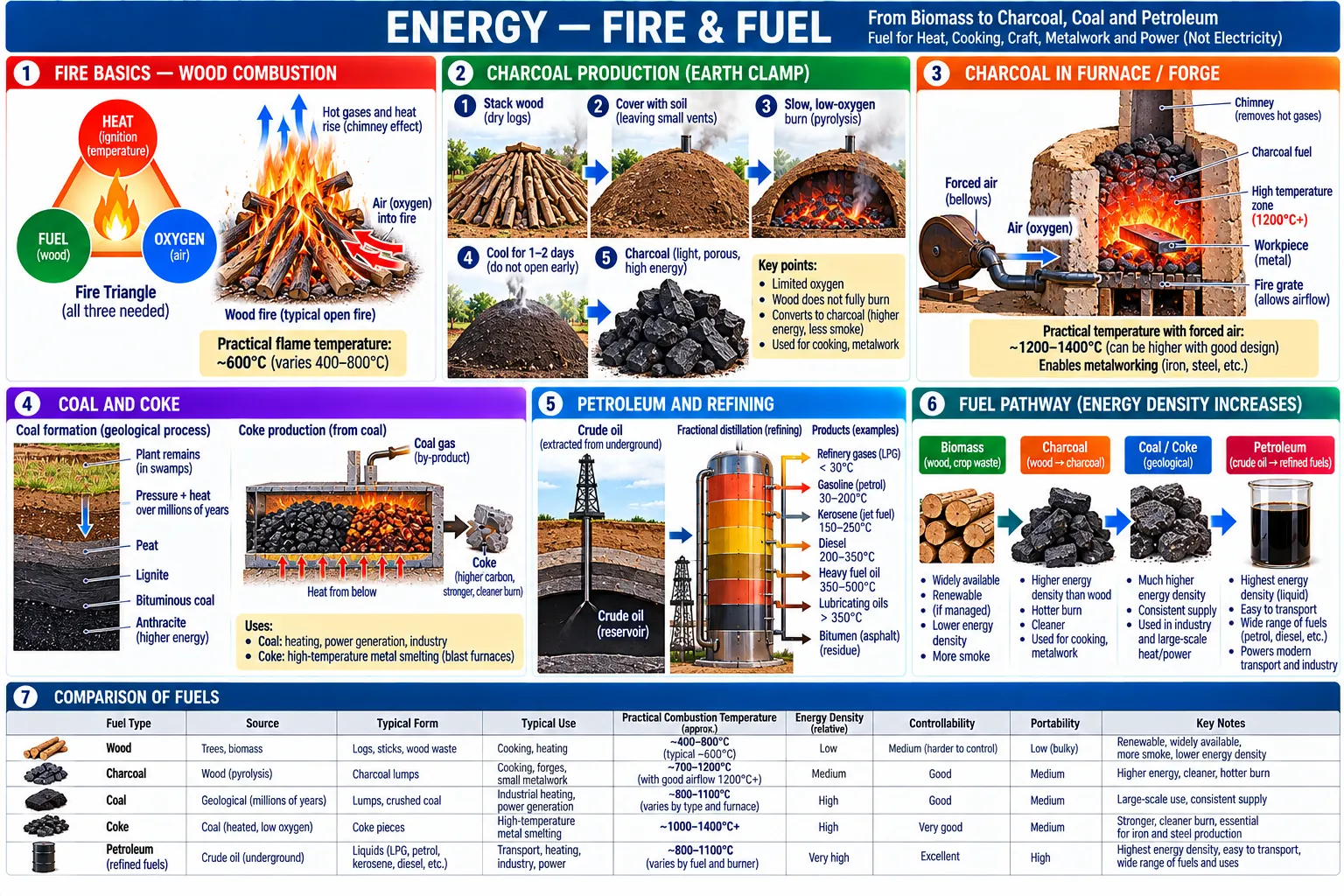
Seven panels: the fire triangle and a wood fire, charcoal made in an earth clamp, a charcoal forge with bellows, how coal forms and how coke is made from it, crude oil and its fractions, the fuel pathway from biomass to petroleum, and a table comparing wood, charcoal, coal, coke and petroleum.
Energy: fire and fuel On: Charcoal · Coal and coke · Charcoal: What charcoal is for · Energy sources: Fire and fuel: wood, charcoal, coal, oil and gas
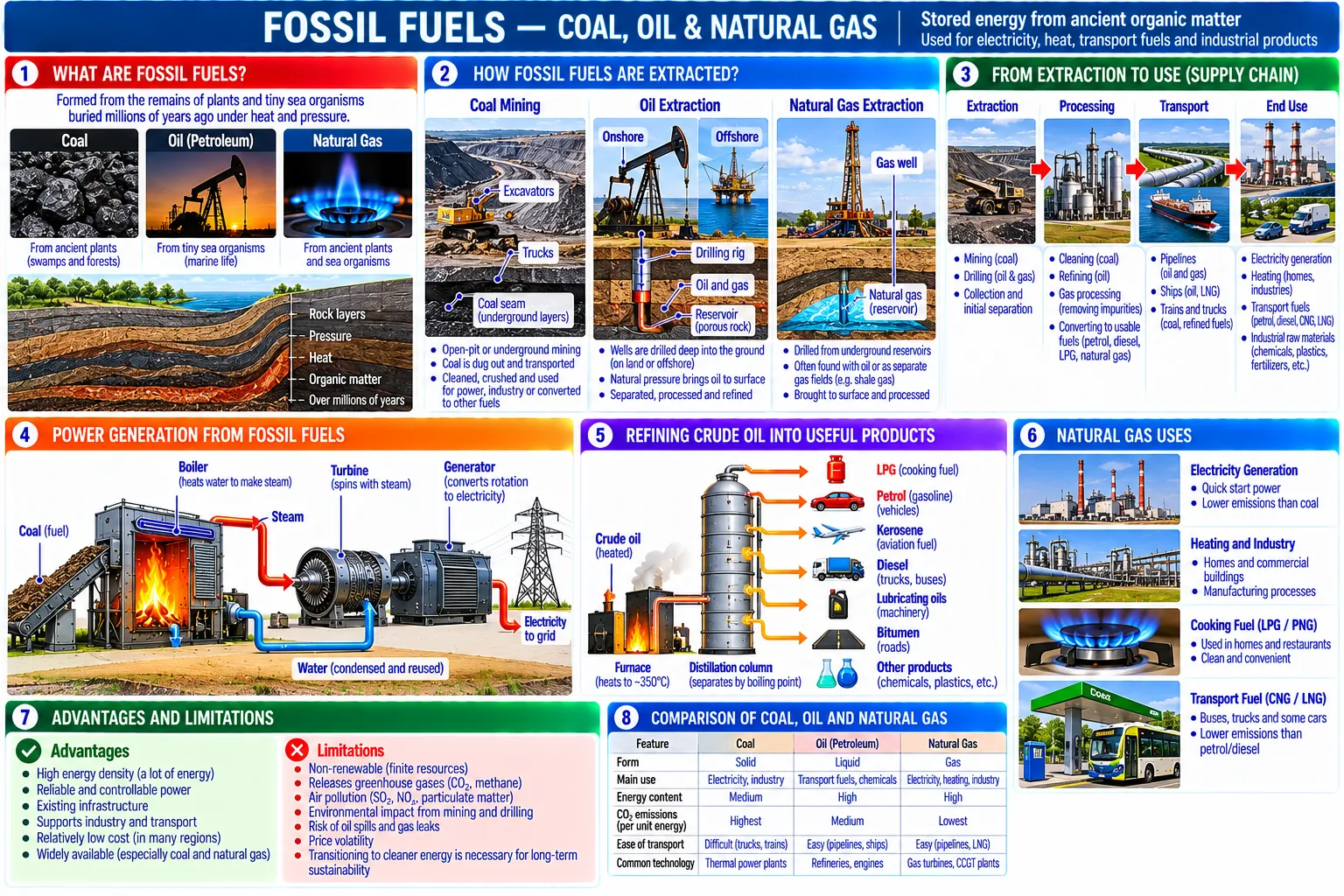
Eight panels: how coal, oil and gas formed, how each is mined or drilled, the chain from extraction to use, a coal-fired power station, refining crude oil, the uses of natural gas, advantages and limits, and a comparison of the three.
Fossil fuels: coal, oil and natural gas On: Coal and coke · Petroleum and refining · Energy sources: Coal, oil and natural gas
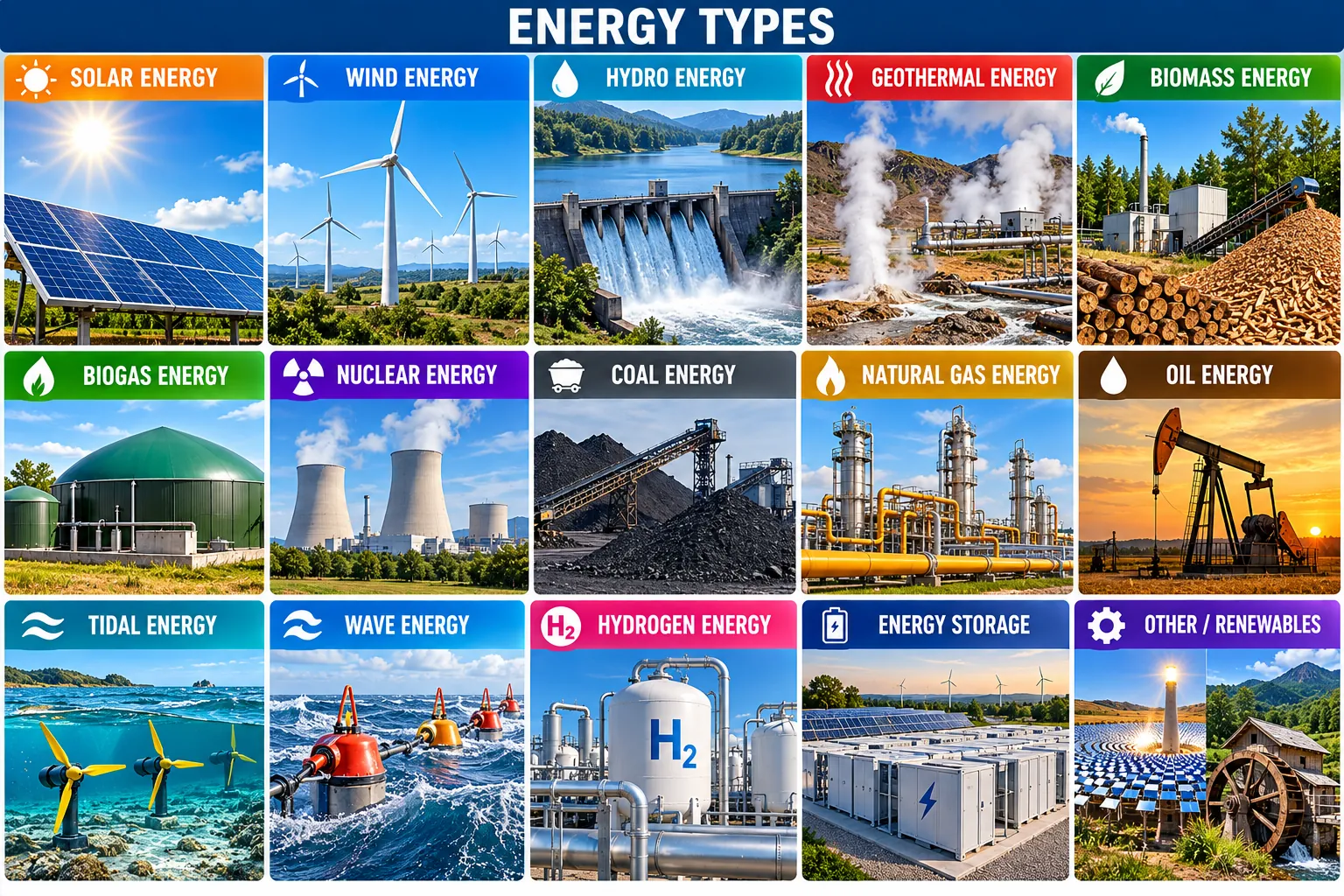
Fifteen panels, one picture each: solar, wind, hydro, geothermal, biomass, biogas, nuclear, coal, natural gas, oil, tidal, wave, hydrogen, energy storage, and other renewables such as concentrated solar and the waterwheel.
Energy types On: Energy sources: The sources at a glance
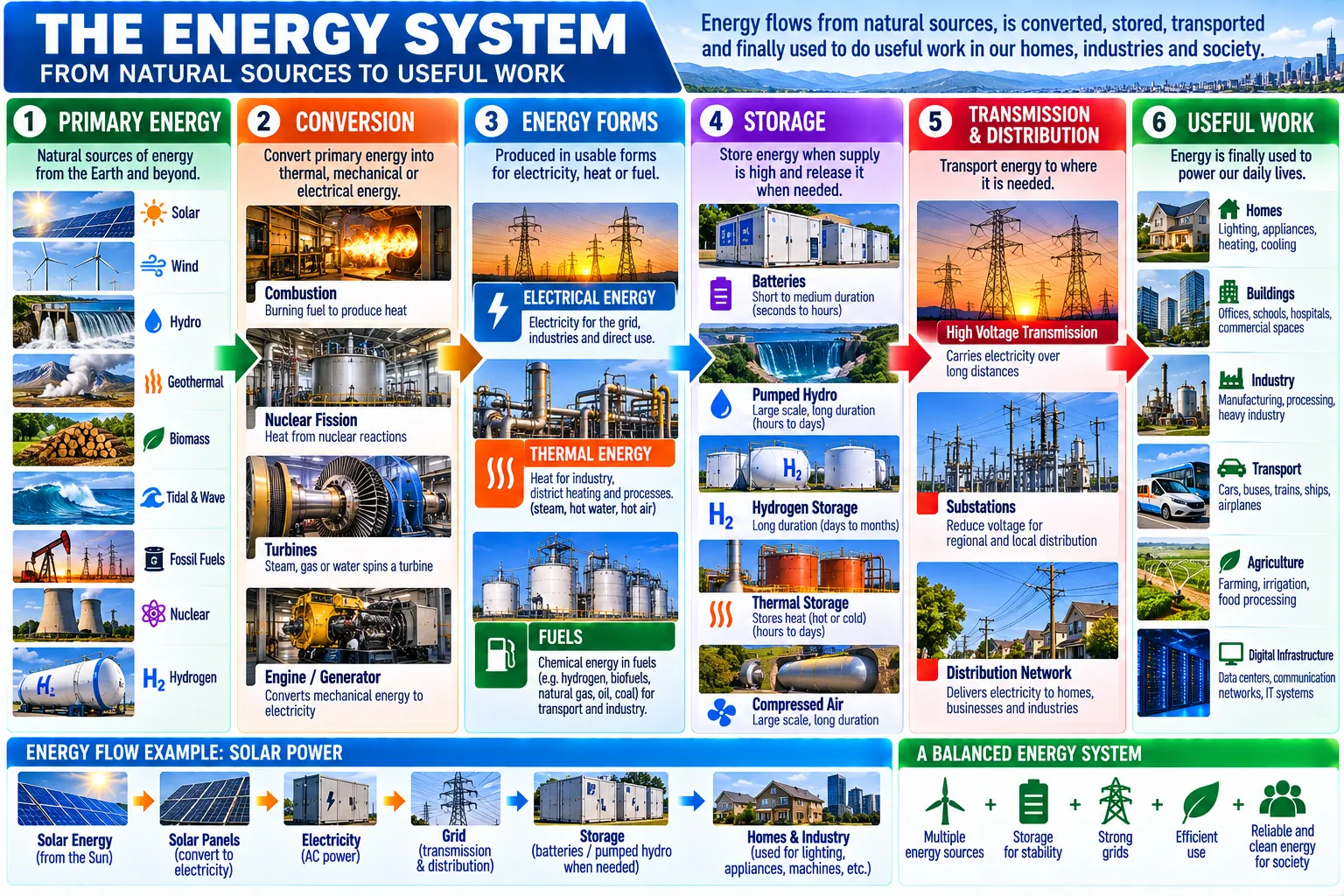
Six columns from left to right: primary energy, conversion, energy forms, storage, transmission and distribution, and useful work. Below them, a solar example from sunlight to homes, and the parts of a balanced system.
The energy system: from natural sources to useful work On: Energy sources: From source to useful work
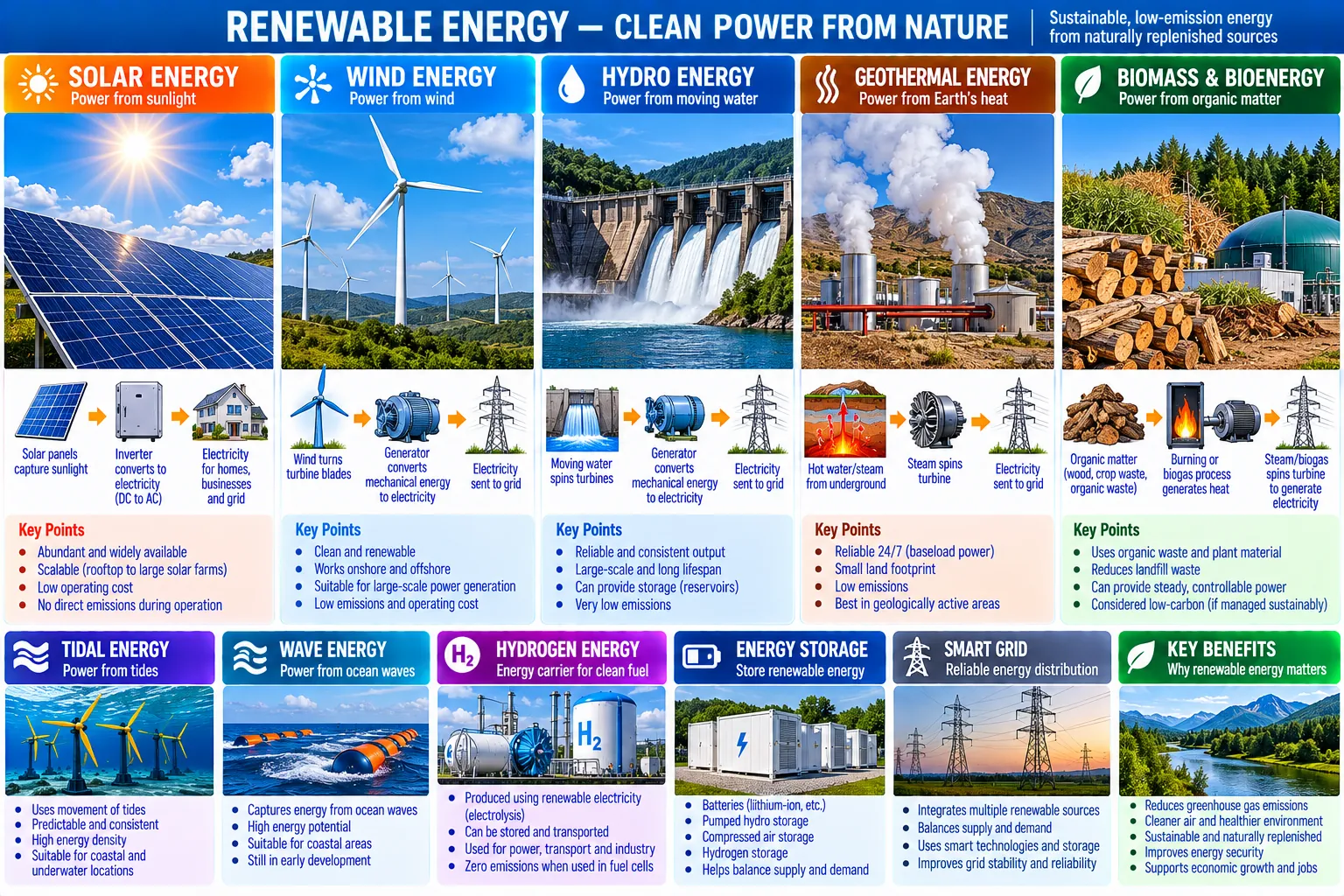
Eleven panels: solar, wind, hydro, geothermal and biomass, each with a picture, its chain from source to grid and its key points, then tidal, wave, hydrogen, energy storage, the smart grid, and why renewables matter.
Renewable energy: clean power from nature On: Energy without the carbon bill · Energy sources: Renewable sources side by side
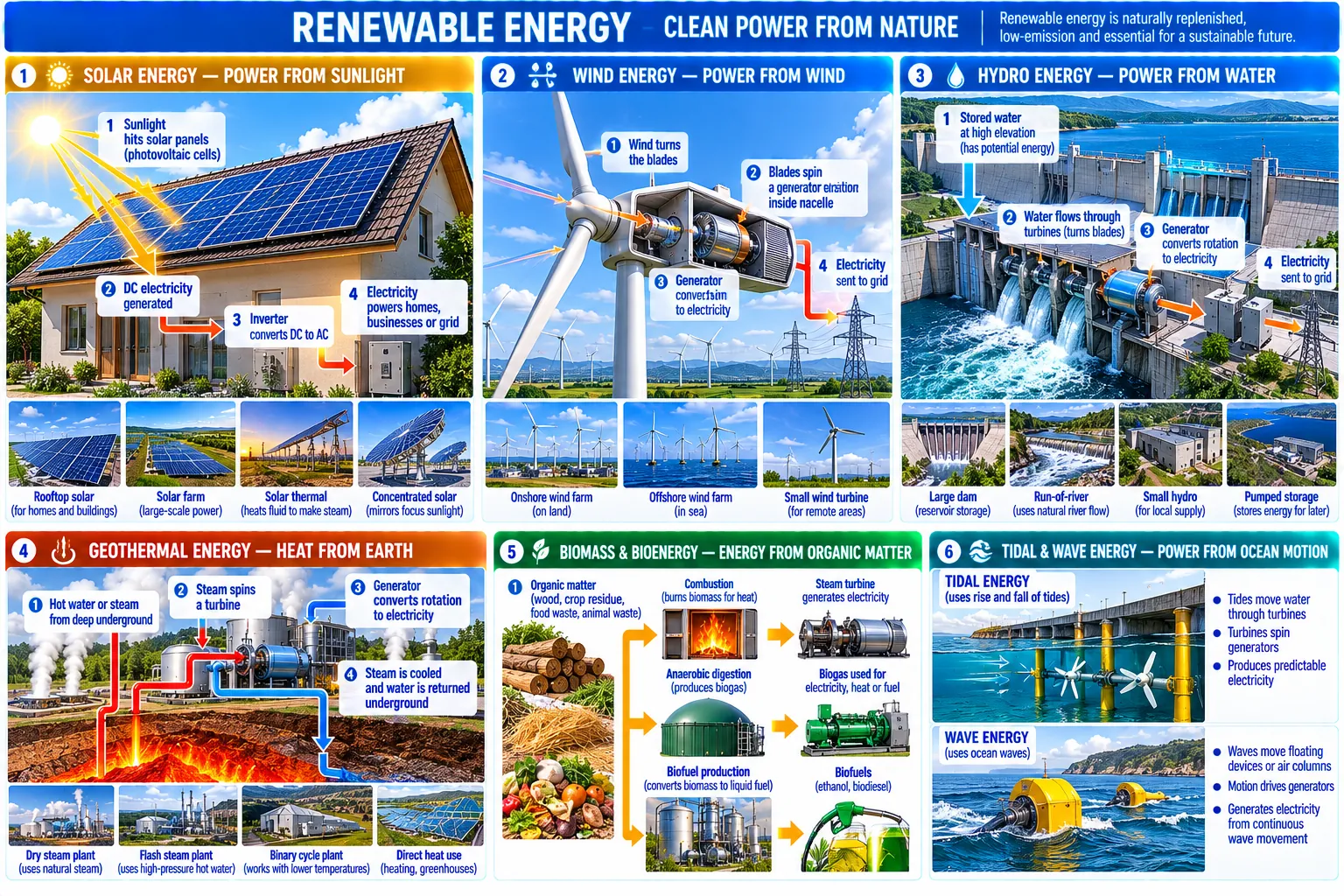
Six panels, one per source: solar, wind, hydro, geothermal, biomass, and tidal and wave. Each has a numbered picture of how it works and small pictures of its main kinds.
Renewable energy: how each source works On: Energy sources: Renewable sources side by side
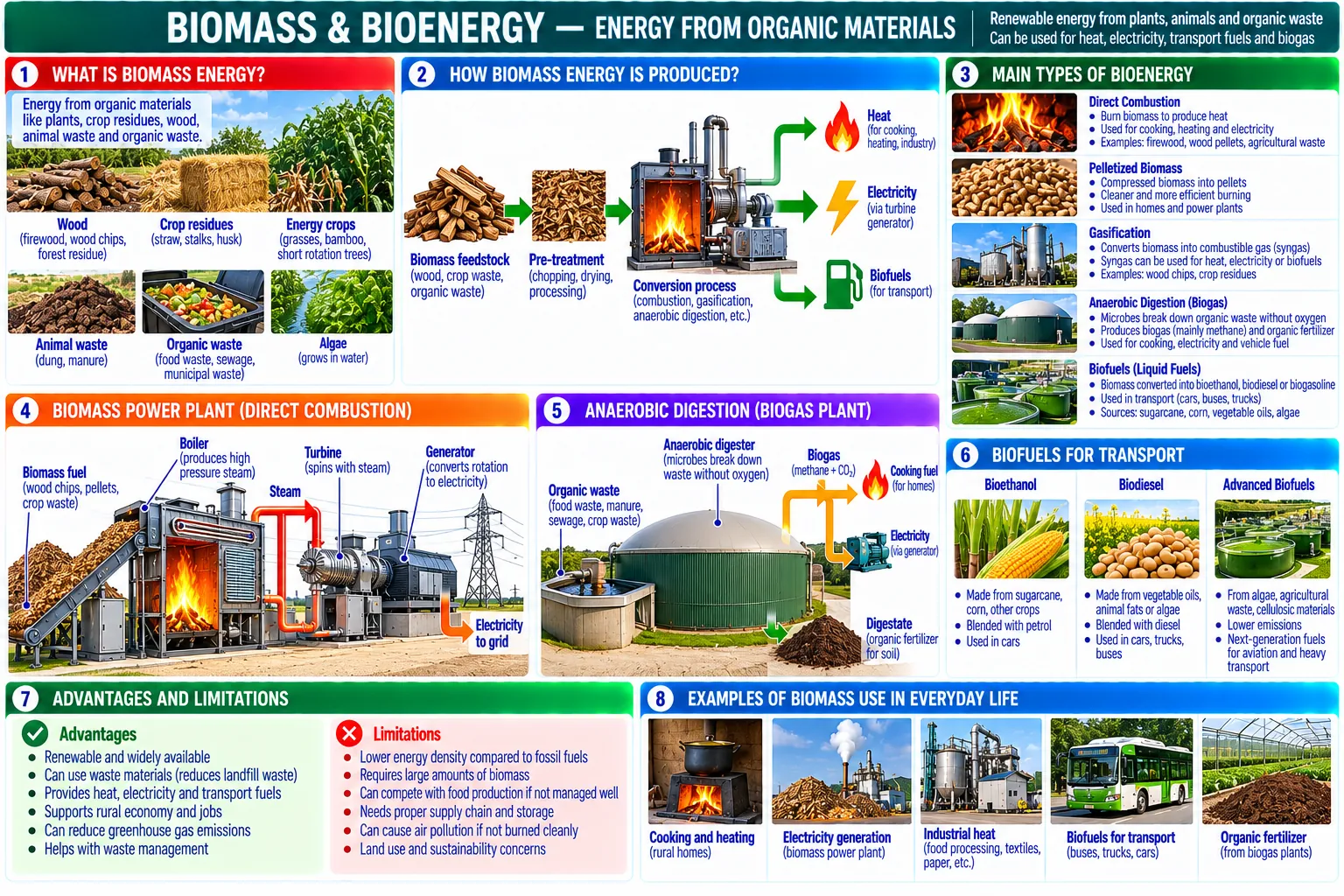
Eight panels: the kinds of biomass, how it becomes heat, electricity and fuel, the main routes (burning, pellets, gasification, biogas and liquid biofuels), a biomass power plant, a biogas digester, transport biofuels, advantages and limits, and everyday uses.
Biomass and bioenergy On: Energy sources: Biomass and biogas
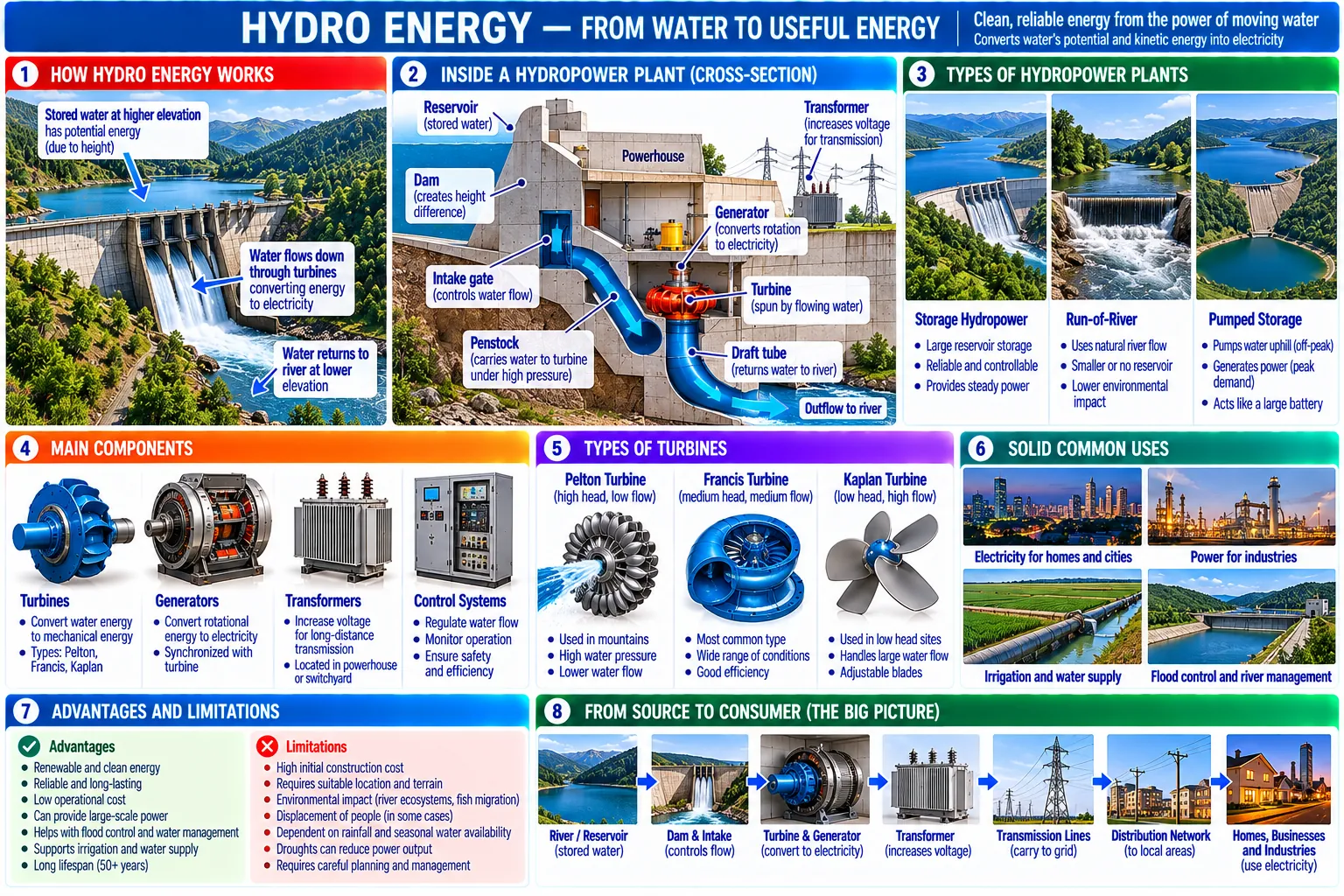
Eight panels: how falling water becomes electricity, a dam and powerhouse in section, storage, run-of-river and pumped-storage plants, the main components, the Pelton, Francis and Kaplan turbines, uses, advantages and limits, and the chain from river to consumer.
Hydro energy: from water to useful energy On: Energy without the carbon bill · Energy sources: Falling water
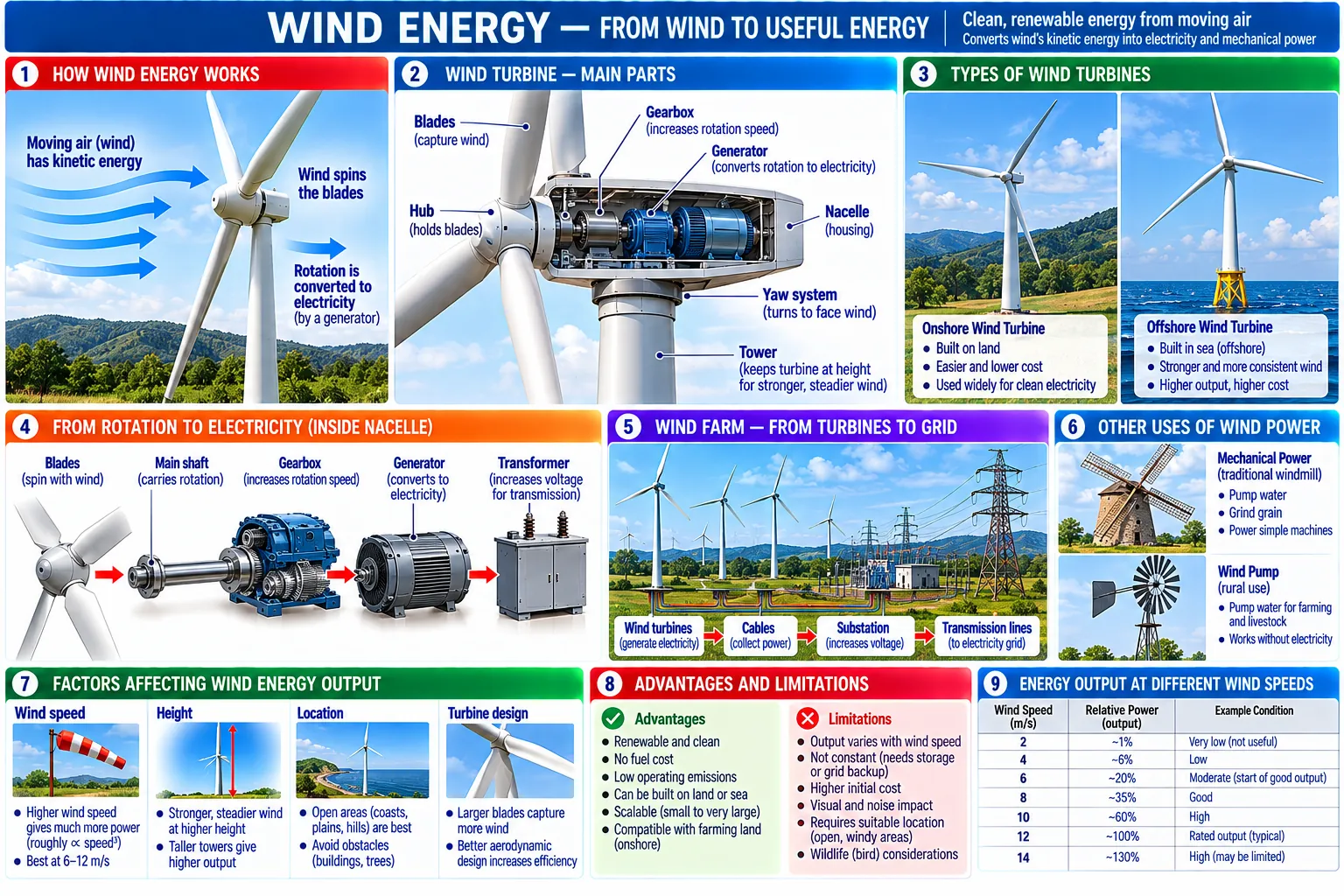
Nine panels: how wind turns a rotor, the parts of a turbine, onshore and offshore machines, the drive train inside the nacelle, a wind farm feeding the grid, windmills and wind pumps, what affects output, advantages and limits, and a table of output against wind speed.
Wind energy: from wind to useful energy On: Energy sources: Wind
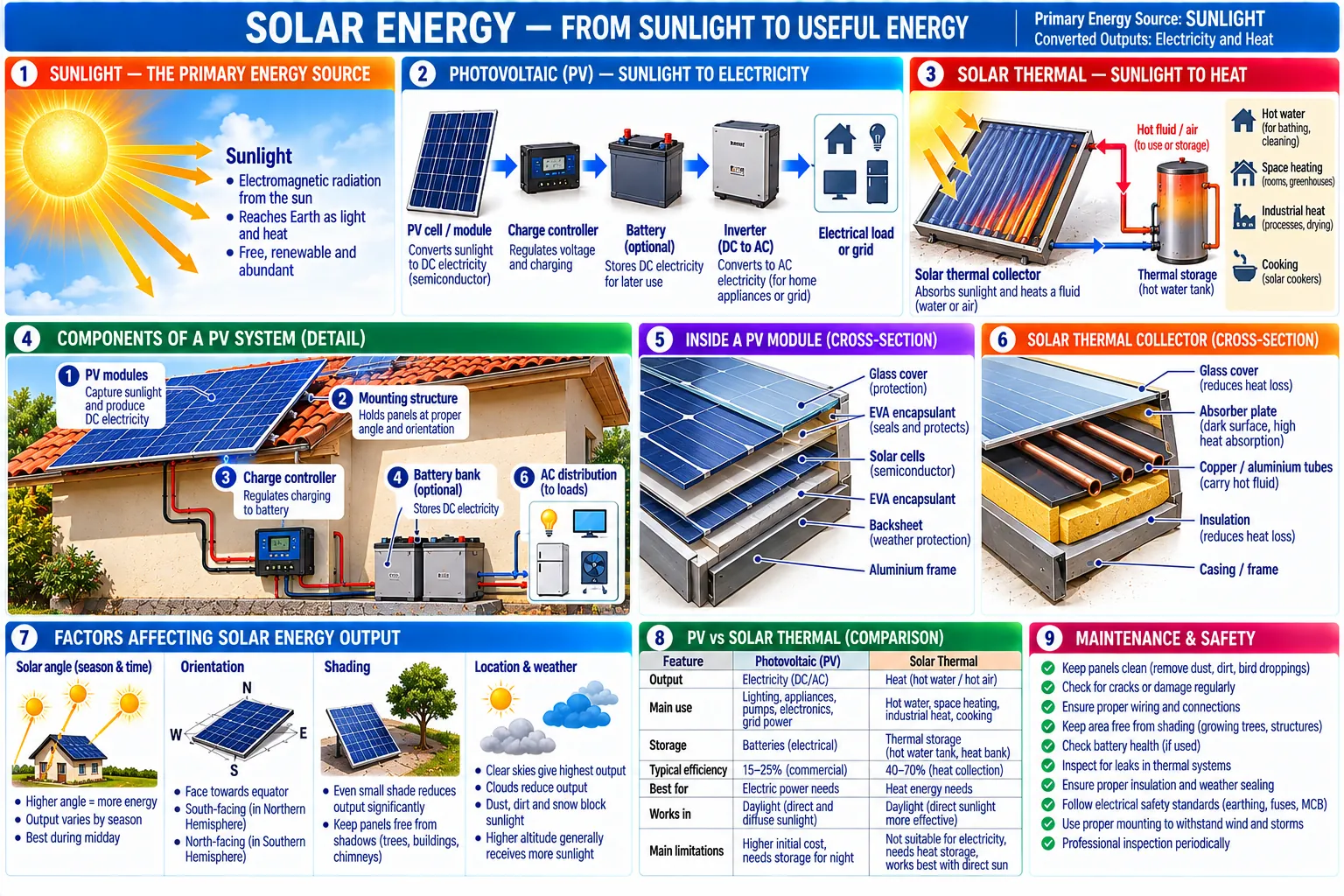
Nine panels: sunlight, the photovoltaic chain from panel to load, solar water and space heating, the parts of a home system, a module and a thermal collector in section, what affects output, photovoltaic against solar thermal, and maintenance and safety.
Solar energy: from sunlight to useful energy On: Energy sources: Sunlight
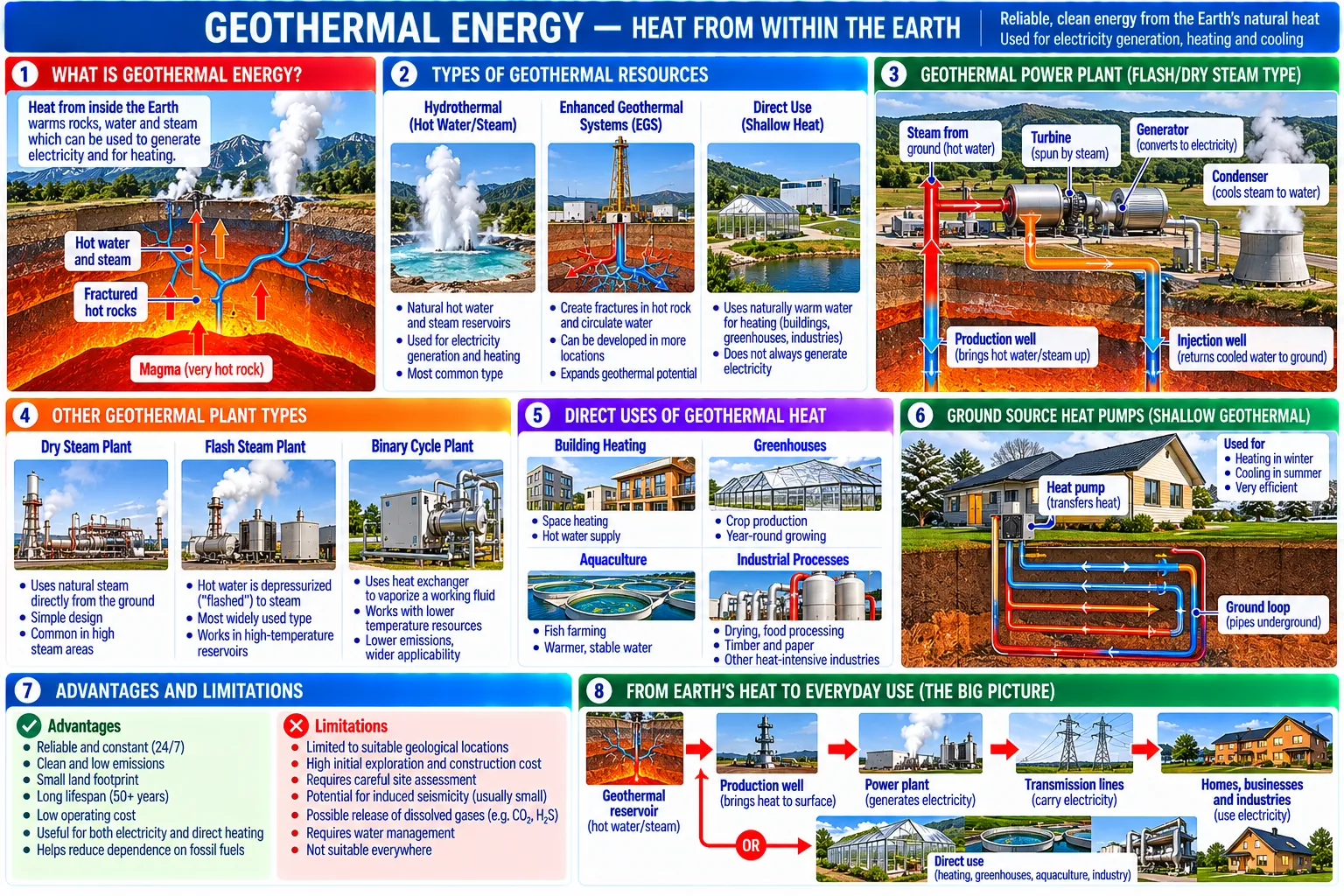
Eight panels: where the Earth's heat comes from, hydrothermal, enhanced and shallow resources, a geothermal power plant, dry-steam, flash and binary plants, direct uses of the heat, ground-source heat pumps, advantages and limits, and the chain from reservoir to use.
Geothermal energy: heat from within the Earth On: Energy sources: Heat from the Earth
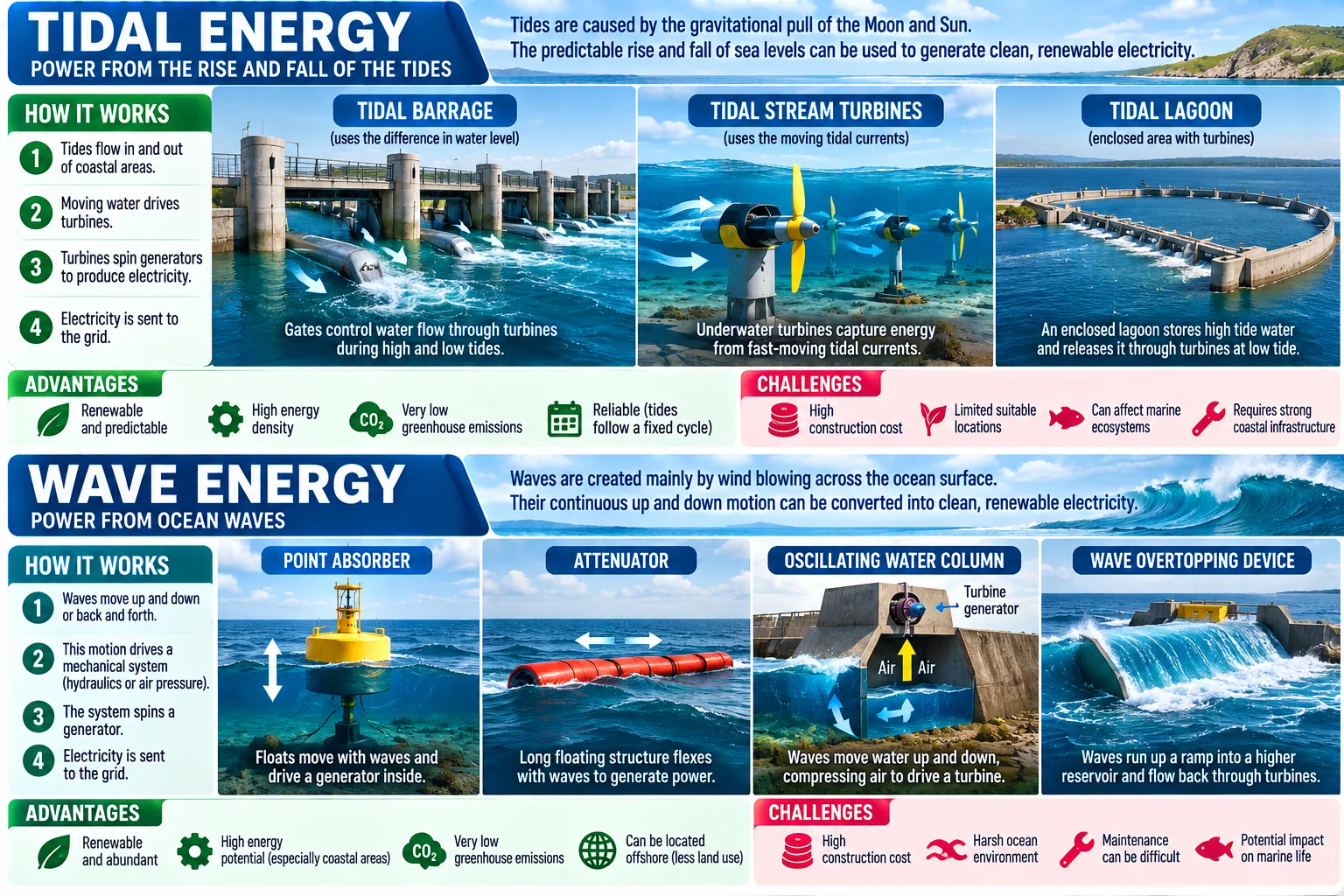
Two halves. Tides: how they drive turbines, a tidal barrage, tidal-stream turbines and a tidal lagoon, with advantages and challenges. Waves: point absorbers, attenuators, oscillating water columns and overtopping devices, with advantages and challenges.
Tidal and wave energy On: Energy sources: Tides and waves
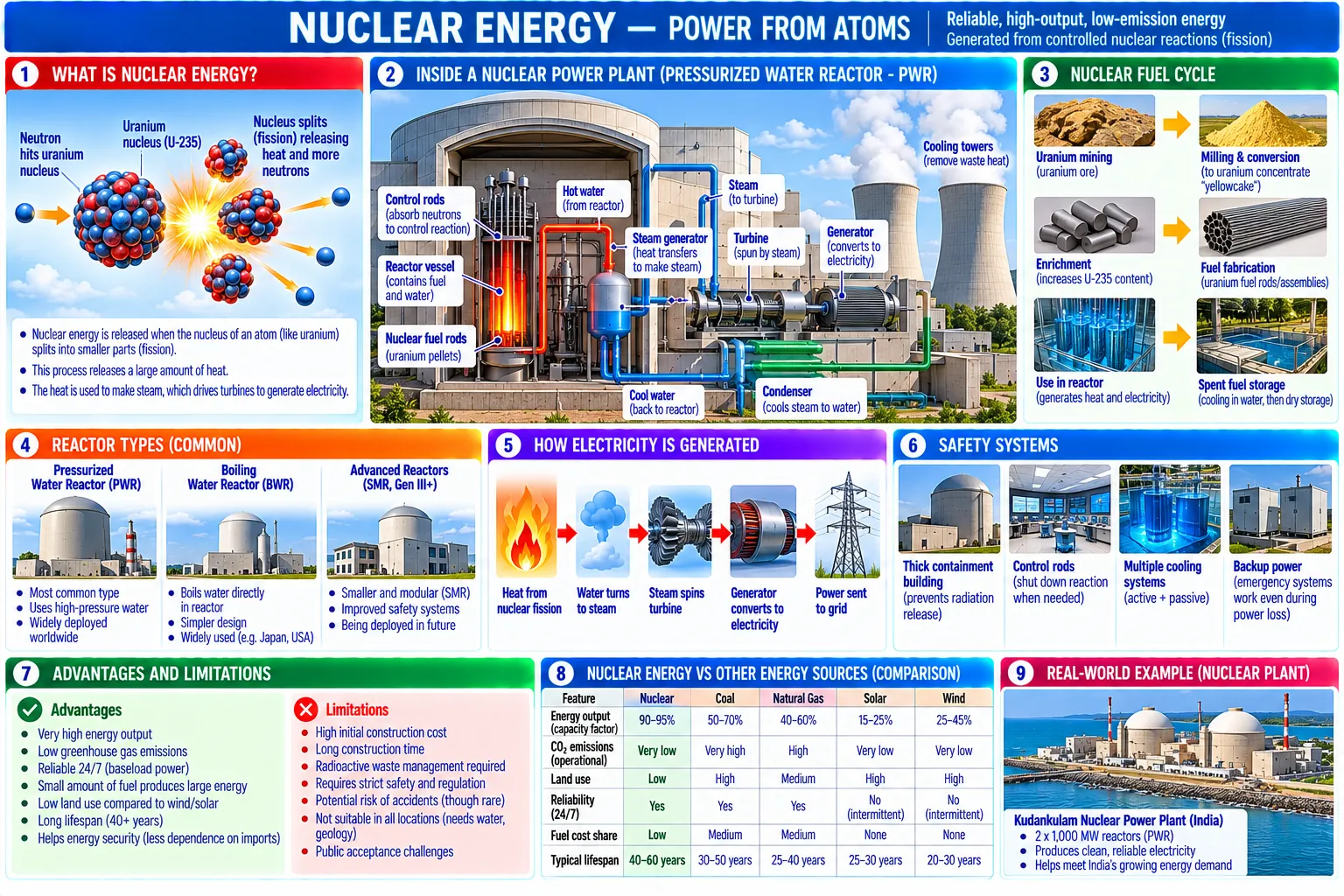
Nine panels: fission of uranium-235, a pressurised water reactor plant in cutaway, the fuel cycle from mine to spent-fuel storage, common reactor types, how the heat becomes electricity, safety systems, advantages and limits, a comparison with other sources, and a named example plant.
Nuclear energy: power from atoms On: Energy sources: Nuclear fission
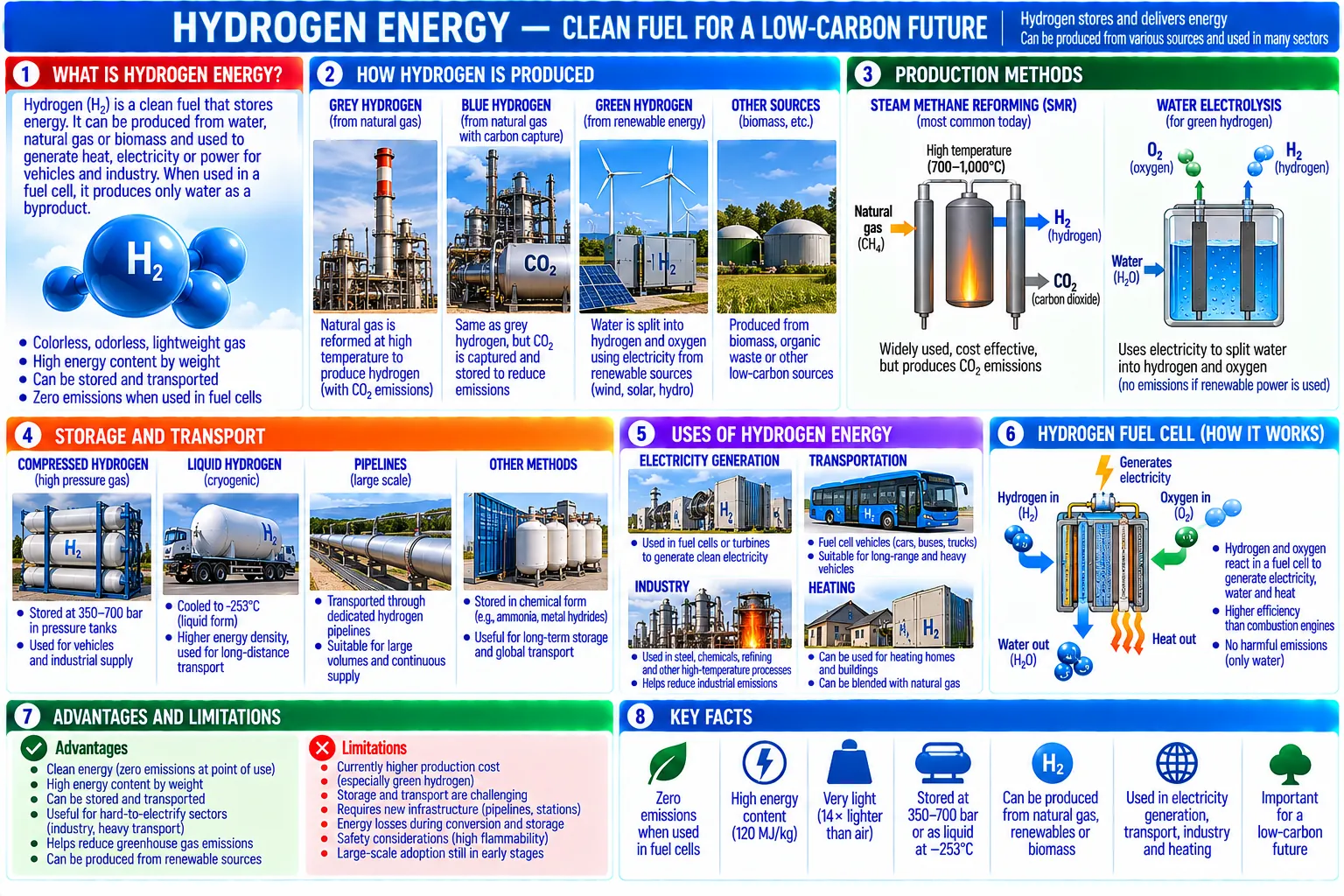
Eight panels: what hydrogen is, grey, blue, green and other hydrogen, steam methane reforming and electrolysis, storage and transport, its uses, how a fuel cell works, advantages and limits, and key facts.
Hydrogen energy: clean fuel for a low-carbon future On: Energy sources: Hydrogen
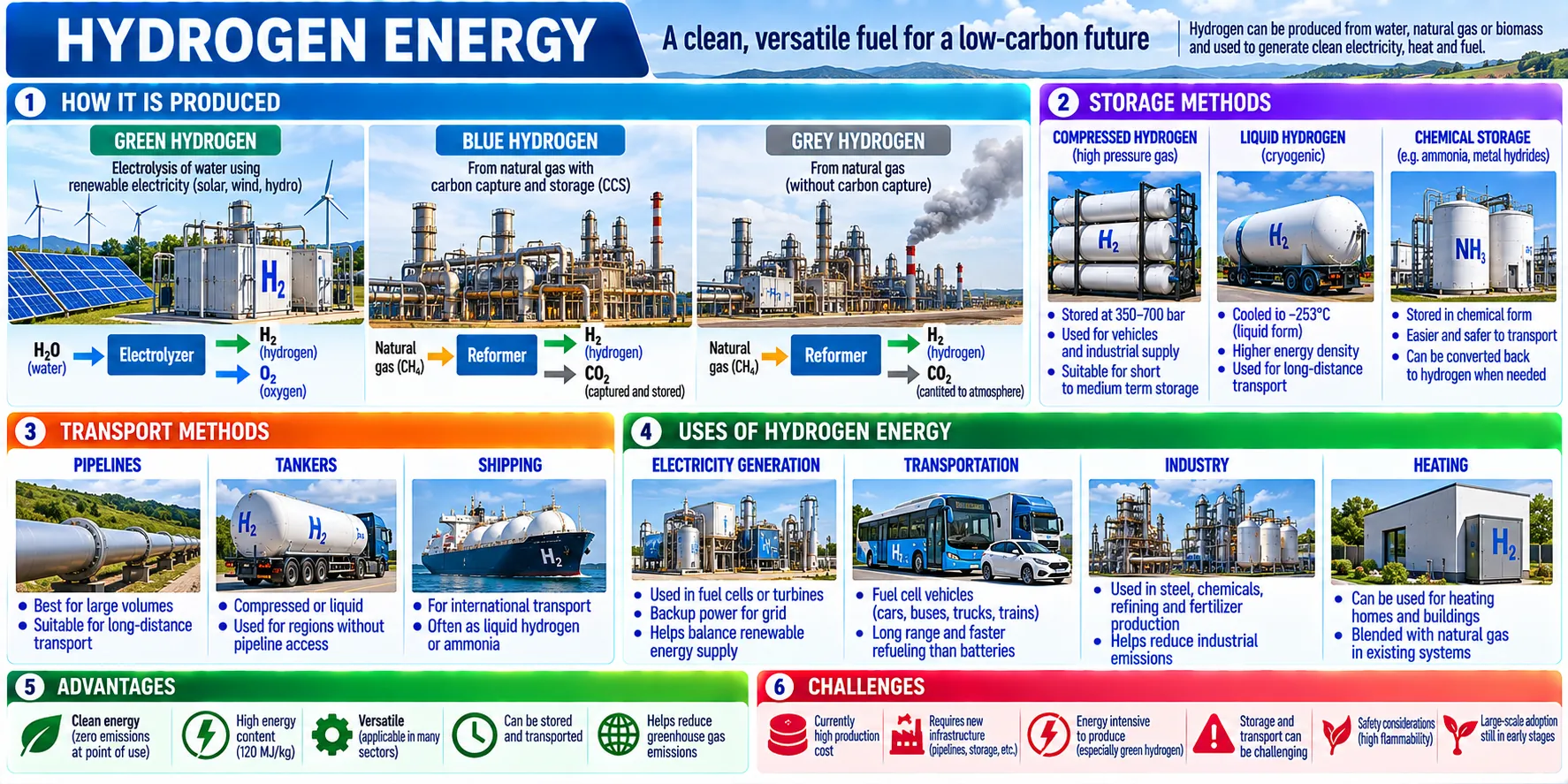
Six panels: green, blue and grey hydrogen, storage as compressed gas, as a liquid or in chemicals, transport by pipeline, tanker and ship, its uses, advantages, and challenges.
Hydrogen energy: production, storage, transport and use On: Energy sources: Hydrogen
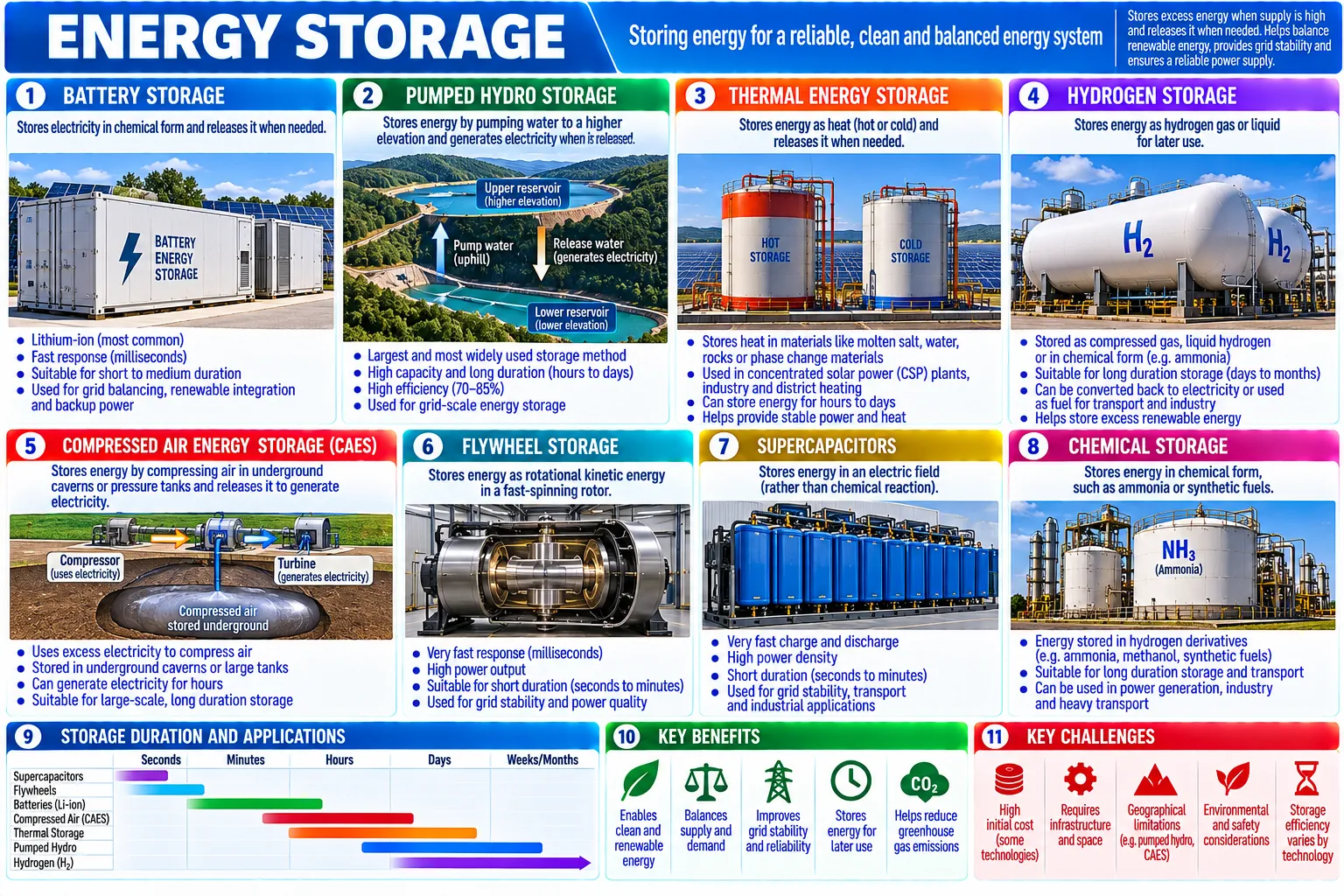
Eleven panels: batteries, pumped hydro, heat storage, hydrogen, compressed air, flywheels, supercapacitors and chemical storage, each with its uses; a chart of how long each can store; benefits and challenges.
Energy storage On: Energy without the carbon bill · Electricity: Storing it: batteries and the alternatives · Energy sources: Storing energy

Books and archives

Other tracks in Energy